
DJI Mavic 3 Thermal
N/A
A foldable 920 g thermal drone for inspections and mapping.
Best for: Portable thermal inspections and mapping
- Lightest and most compact of the three when folded
- Longest listed flight time at 45 minutes
- 640×512 thermal sensor
The DJI Matrice 30T is the pick for public safety and industrial inspection in bad weather. It has an IP55 rating, a built-in laser rangefinder and fast charging through the BS30 battery station, and it is designed to be unfolded and flying quickly at an…
N/A
A foldable 920 g thermal drone for inspections and mapping.
Best for: Portable thermal inspections and mapping
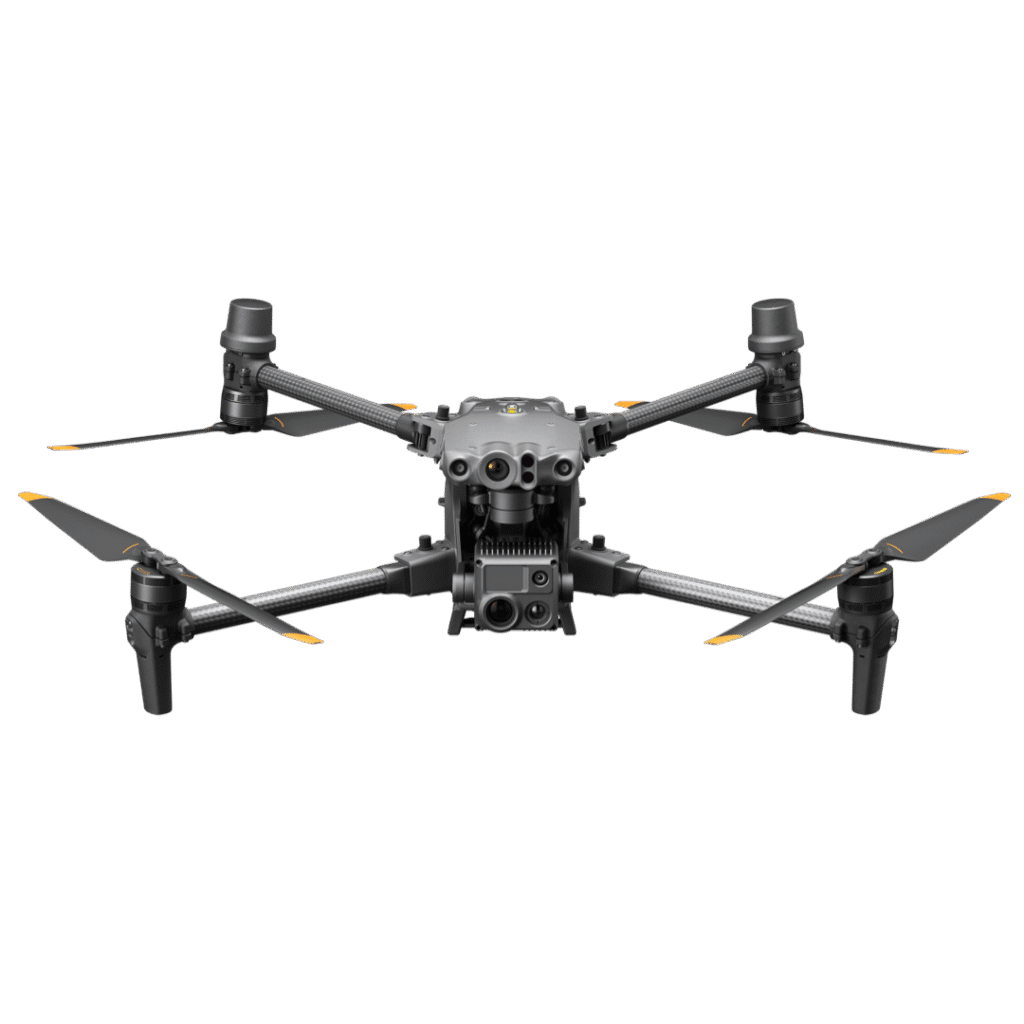
N/A
A weather-sealed thermal drone built for emergency work.
Best for: Public safety and industrial inspections in harsh conditions
N/A
A thermal drone with radar-assisted obstacle sensing.
Best for: Autonomous missions and complex environments
| Feature | DJI Mavic 3 Thermal | DJI Matrice 30T | Autel EVO Max 4T |
|---|---|---|---|
| Weight | 920 g | 3770 g | 1665 g |
| Dimensions | 221×96.3×90.3 mm (folded) | 365×215×195 mm (folded) | 563×657×147 mm (unfolded, incl. propellers) |
| Volume | 1923 cm³ | 15290 cm³ | 54360 cm³ |
| Max Speed | 21 m/s | 23 m/s | 23 m/s |
| Max Flight Distance | 32 km | N/A | 25 km |
| Sensor Size | 1/2-inch CMOS (Zoom), 1/2-inch CMOS (Wide), Uncooled VOx Microbolometer (Thermal) | 1/2-inch CMOS (Zoom), 1/2-inch CMOS (Wide), Uncooled VOx Microbolometer (Thermal) | 1/2-inch CMOS (Zoom), 1/2-inch CMOS (Wide), Uncooled VOx Microbolometer (Thermal) |
| Megapixels | 48 MP (Wide), 12 MP (Tele), 640x512 (Thermal) | 48M (Zoom), 12M (Wide), 640x512 (Thermal) | 48M (Zoom), 48M (Wide), 640x512 (Thermal) |
| Max ISO | 25600 | 25600 | 6400 (Visual), 550°C (Thermal Max) |
| Flight Time | 45 minutes | 41 minutes | 42 minutes |
| Max Resolution | 4K@30fps (Visual), 640x512@30fps (Thermal) | 3840×2160 (Visual), 640×512 (Thermal) | 4000×3000@30fps (Visual), 640×512@30fps (Thermal) |
| Movie Bitrate | 85 Mbps (4K), 6 Mbps (Thermal) | N/A | 60Mbps (Visual), 10Mbps (Thermal) |
| Field of View | 84° (Wide), 15° (Tele), 61° (Thermal) | 84° (Wide), 61° (Thermal) | 40°-10.3° (Zoom), 83.4° (Wide), 61° (Thermal) |
| Transmission Range | 15 km (FCC) | 15 km (FCC) | 15 km (FCC) |
| Wind Resistance | 12 m/s | 12 m/s | 12 m/s |
| Obstacle Avoidance | Omnidirectional binocular vision system | Omnidirectional Vision Systems + Infrared Sensing Systems | Visual Obstacle Avoidance Sensing System + Millimeter-Wave Radar Sensing System |
| Battery Power | 5000 mAh | 5880 mAh | 9248 mAh |
| Charge Time | N/A | Approx. 50 min (0-100% with BS30) | Approx. 120 minutes |
| Internal Storage | N/A | N/A | 128GB |
| GPS | Yes | Yes | Yes |
| Obstacle Detection | Yes | Yes | Yes |
| Return to Home | Yes | Yes | Yes |
| Removable Battery | Yes | Yes | Yes |
| Shoots RAW | Yes (DNG for Wide) | No | Yes (DNG) |
| HDR Mode | No | No | No |
| Weather Sealed | No | Yes (IP55) | No (RC IP43) |
| Best For | Portable thermal inspections and mapping | Public safety and industrial inspections in harsh conditions | Autonomous missions and complex environments |
| IP Rating | N/A | IP55 | N/A (RC IP43) |
| Laser Rangefinder | No | Yes (3-1200m) | Yes (5-1200m) |
| Thermal Pixel Pitch | 12 μm | 12 μm | 12 μm |
| Omnidirectional Obstacle Avoidance | Vision System | Vision + Infrared | Vision + Millimeter-Wave Radar |
| Foldable | Yes | Yes | Yes |
The DJI Matrice 30T is the pick for public safety and industrial inspection in bad weather. It has an IP55 rating, a built-in laser rangefinder and fast charging through the BS30 battery station, and it is designed to be unfolded and flying quickly at an emergency.
The Mavic 3 Thermal is the better buy if portability matters more than weatherproofing: at 920 g it is far lighter than the 3,770 g Matrice 30T, has the longest listed flight time (45 minutes) and takes an RTK module for mapping. It has no laser rangefinder and a lower IP rating.
The Autel EVO Max 4T sits between them at 1,665 g, with millimeter-wave radar alongside its vision sensors, hot-swappable batteries and 128 GB of storage.
The listed figures are 920 g, 45 minutes and 21 m/s for the Mavic 3 Thermal; 1,665 g, 42 minutes and 23 m/s for the EVO Max 4T; and 3,770 g, 41 minutes and 23 m/s for the Matrice 30T. The Mavic folds into a small case. The Matrice 30T also folds, but at four times the weight it needs a bigger case and may fall under different operating permissions. The EVO Max 4T is the largest of the three when unfolded.
All three use an uncooled VOx microbolometer at 640×512 alongside 1/2-inch wide and zoom cameras. The differences are in what surrounds the thermal sensor. The Matrice 30T and EVO Max 4T both carry a laser rangefinder for measuring distance to a target; the Mavic 3 Thermal does not. The Mavic and the Autel support DNG (RAW) photos from their visual cameras, while DJI does not list RAW support for the Matrice 30T.
The Mavic 3 Thermal uses omnidirectional binocular vision. The Matrice 30T adds infrared sensing to its omnidirectional vision, and the EVO Max 4T pairs visual sensing with millimeter-wave radar, which is meant to help in poor weather and with thin objects such as power lines. No obstacle system makes a drone collision-proof: wires, reflective surfaces, low light and high speed remain hard cases, so route planning and a watching pilot still matter.
The Matrice 30T's IP55 rating makes it the most suitable of the three for rain and dust. The Mavic 3 Thermal has a lower rating, and the EVO Max 4T's controller is rated only IP43. Range, speed and flight-time figures here are manufacturer maximums; wind, cold and reserve requirements cut them in practice, and visual-line-of-sight rules apply regardless of radio range.
I compare these drones from manufacturer specifications, regulatory filings and documented owner reports. I have not flown them, so flight feel and real-world battery life are not judged here.
This comparison helps buyers choose between DJI Mavic 3 Thermal, DJI Matrice 30T, and Autel EVO Max 4T by translating the specification table into camera, flight, safety, workflow and value decisions. Recommendations are matched to user needs rather than based on a single headline number.