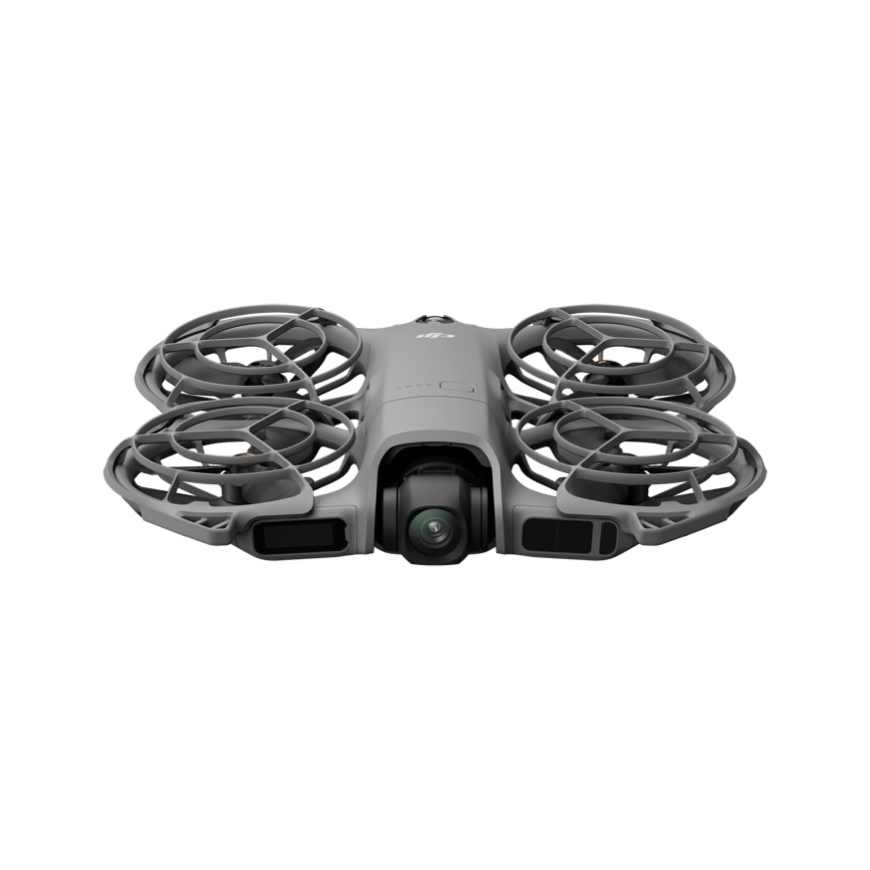
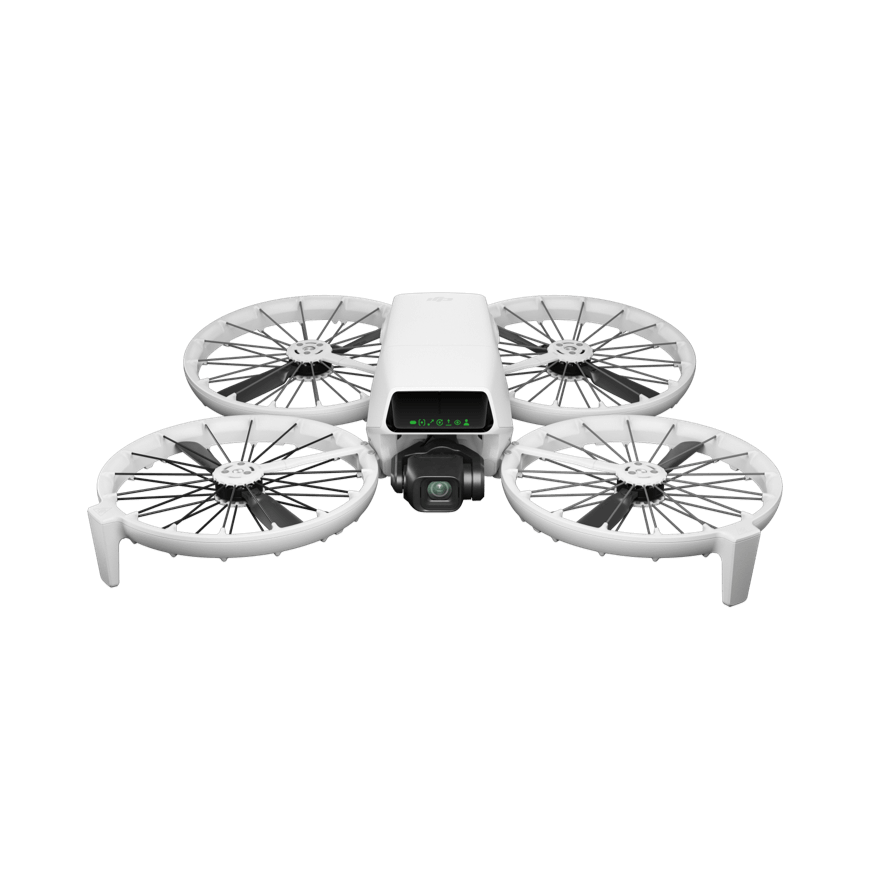
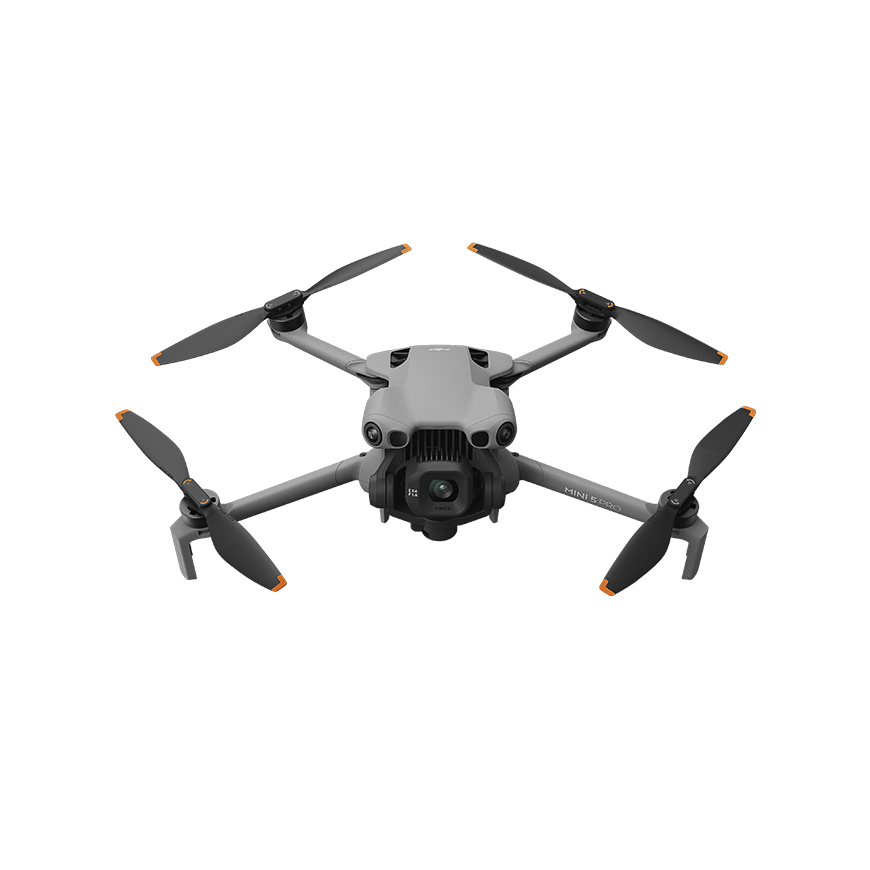
Camera: the Flip is the real step up from the Neo 2
The Neo 2's small sensor and JPEG-only photos suit ready-to-share clips. The Flip's 48 MP 1/1.3-inch sensor, DNG photos, D-Log M and 4K slow motion give you much more room to edit, along with longer flights. The Mini 5 Pro's 1-inch, 50 MP sensor is for people who judge footage on a large screen or deliver it to clients.
How you control each one
The Neo 2 is the most hands-off: launch from your palm, let it track you, done. The Flip keeps that automation but behaves more like a conventional camera drone, with a three-axis gimbal and controller options. The Mini 5 Pro rewards deliberate route planning and composition, although its intelligent modes take some of the work away. Pick the control style you will use every week.
Guards versus sensors
The Neo 2 and Flip lean on propeller guards, which limit the damage from contact. The Mini 5 Pro has open propellers but the widest sensing in the group, omnidirectional with forward LiDAR, to avoid contact in the first place. Neither approach makes close-in flying risk-free: branches, wires, glass and poor light remain hard cases, and tracking needs room to brake.
Endurance, wind and range
The Neo 2 has the shortest endurance and suits short flights close to the pilot. The Flip extends both flight time and distance. The Mini 5 Pro is faster, has the best wind rating and the longest transmission figure. All of these are manufacturer maxima; wind, cold and interference cut them in practice.
Rules depend on the exact setup
All three are sold as compact drones, but that label does not settle your legal obligations. Battery choice changes weight, especially the Mini 5 Pro's Plus battery, so check registration, Remote ID and flight category for your exact configuration. Our registration-by-weight guide covers the thresholds. Bundles and availability also differ by region.