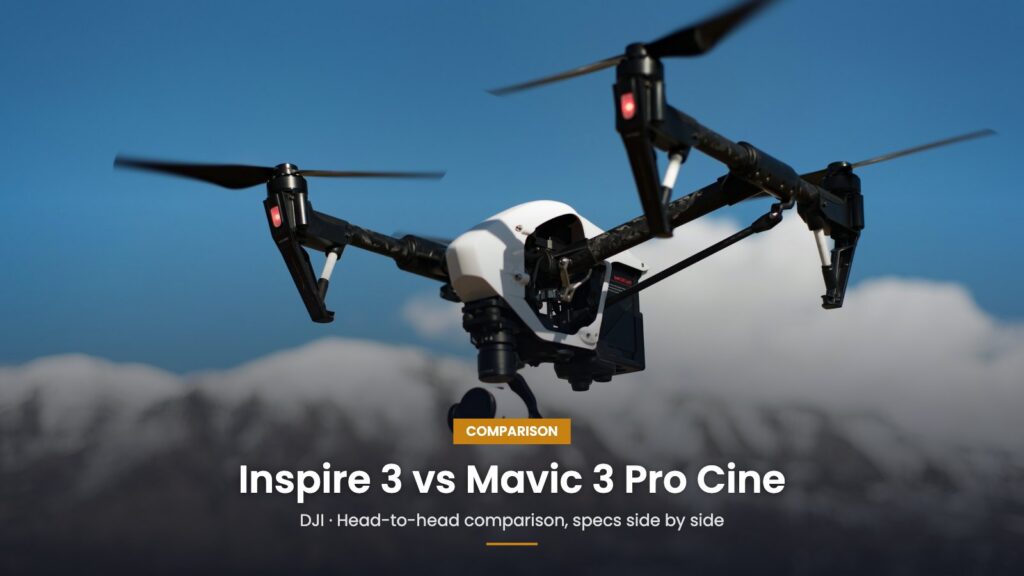
DJI Inspire 3 vs DJI Mavic 3 Pro Cine
For high-end film production, the Inspire 3 is the right tool. A full-frame sensor, 8K CinemaDNG and ProRes RAW, interchangeable DL-mount lenses, RTK positioning and dual-operator control are built for crewed sets. The Mavic 3 Pro Cine is the practical choice for most professional work…
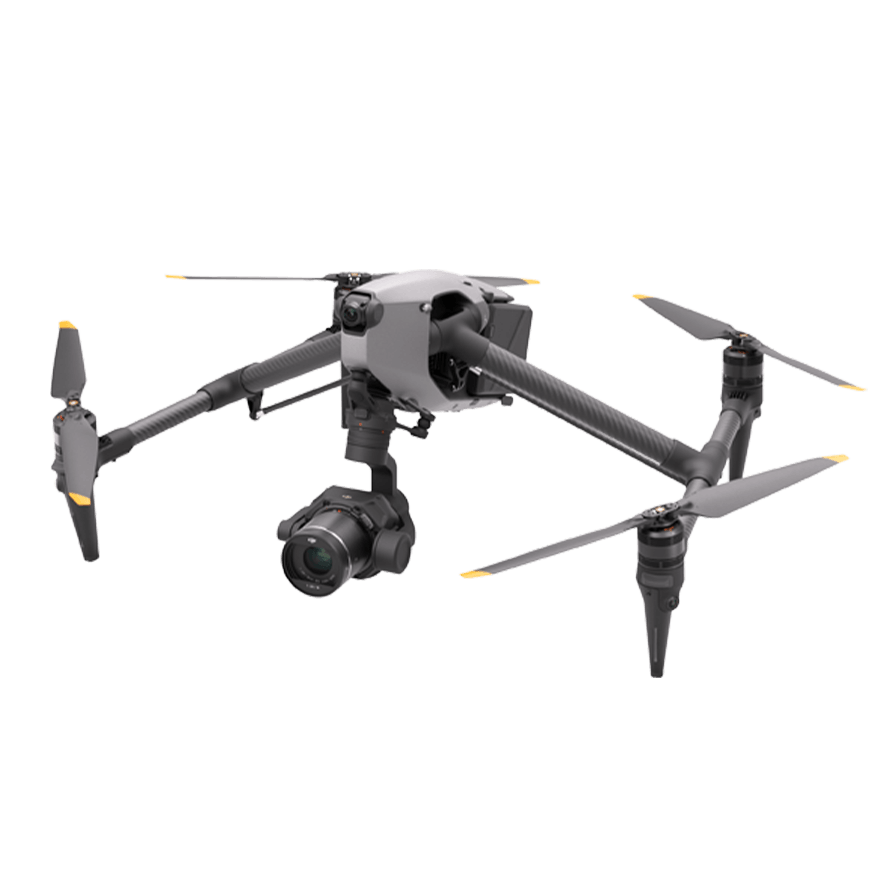
DJI Inspire 3
N/A
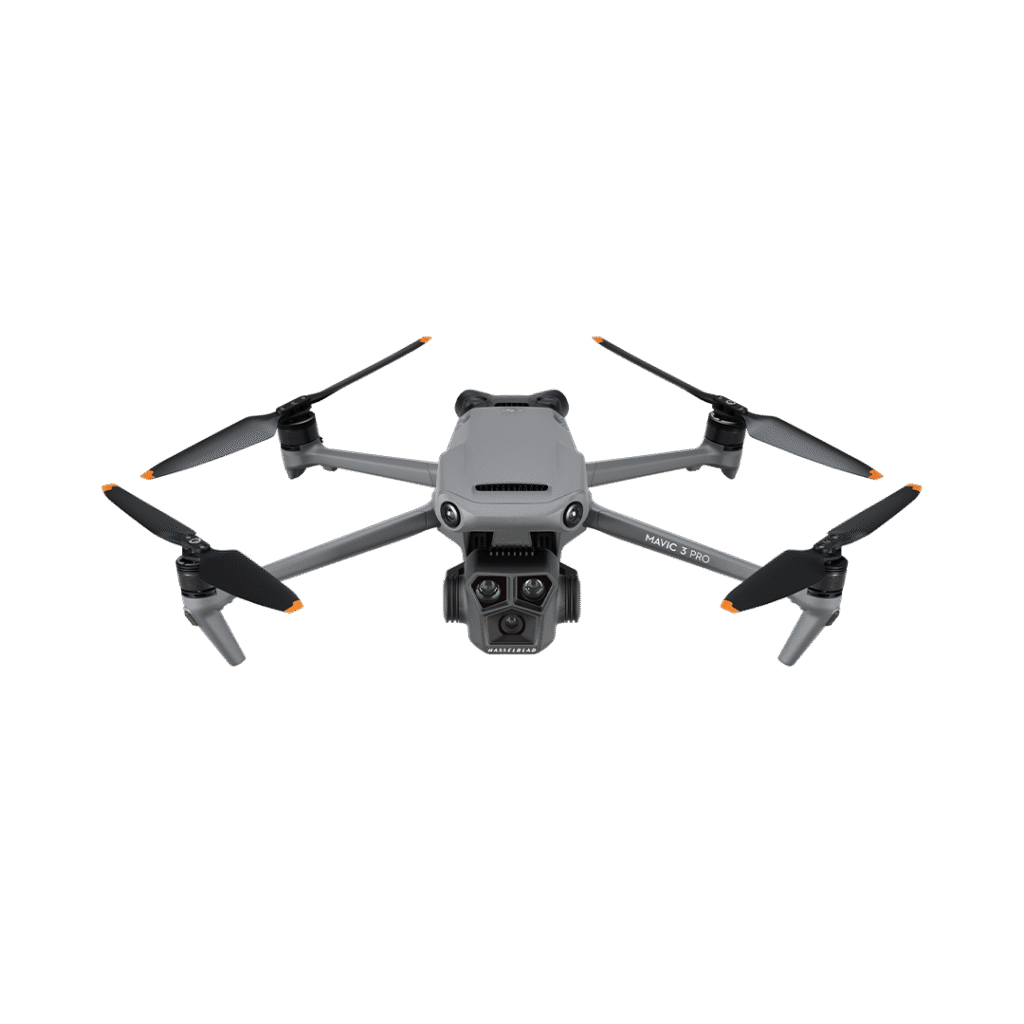
DJI Mavic 3 Pro Cine
N/A
Technical Specifications
Last updated: Oct 2026| Feature | DJI Inspire 3 | DJI Mavic 3 Pro Cine |
|---|---|---|
| Weight | 3995 g | 963 g |
| Dimensions | 709.8×500.5×176 mm (folded) | 231.1×98×95.4 mm (folded) |
| Volume | N/A | N/A |
| Max Speed | 94 km/h | 21 m/s |
| Max Flight Distance | N/A | 28 km |
| Sensor Size | 35 mm Full-Frame CMOS | 4/3 CMOS (Hasselblad), 1/1.3″ CMOS (Medium Tele), 1/2″ CMOS (Tele) |
| Megapixels | N/A | 20 MP (Hasselblad), 48 MP (Medium Tele), 12 MP (Tele) |
| Max ISO | 25600 (Photo), 6400 (Video) | 6400 (Video Normal), 12800 (Night), 6400 (Photo) |
| Flight Time | 28 mins | 43 mins |
| Max Resolution | 8K/75fps (CinemaDNG), 8K/25fps (ProRes RAW) | 5.1K/50fps (ProRes), 4K/120fps (H.264/H.265) |
| Movie Bitrate | N/A | 3772 Mbps (ProRes 422 HQ) |
| Field of View | N/A | 84° (Hasselblad) |
| Transmission Range | 15 km (FCC) | 15 km (FCC) |
| Wind Resistance | 14 m/s | 12 m/s |
| Obstacle Avoidance | Omnidirectional | Omnidirectional |
| Battery Power | 4280 mAh (TB51) | 5000 mAh |
| Charge Time | 35-80 mins | 70-96 mins |
| Internal Storage | 1 TB (PROSSD) | 1 TB |
| GPS | Yes | Yes |
| Obstacle Detection | Yes | Yes |
| Return to Home | Yes | Yes |
| Removable Battery | Yes | Yes |
| Shoots RAW | Yes | Yes |
| HDR Mode | N/A | N/A |
| Weather Sealed | N/A | N/A |
| Best For | High-end film and commercial productions with a dedicated crew | Professionals who need cinema-grade codecs in a portable drone |
| Sensor Type | Full-Frame CMOS | 4/3 CMOS (Hasselblad) |
| RAW Video | 8K CinemaDNG/ProRes RAW | 5.1K ProRes |
| Lens System | Interchangeable DL Mount | Fixed Triple Camera |
| RTK Positioning | Yes | No |
| Operating Temperature | -20°C to 40°C | -10°C to 40°C |
Full-frame 8K RAW against a three-camera ProRes drone
The Inspire 3 uses a 35 mm full-frame sensor and records 8K/75fps in CinemaDNG or 8K/25fps in ProRes RAW, with DL-mount lenses you can swap per shot. The Mavic 3 Pro Cine pairs a 4/3 Hasselblad main camera with a 1/1.3-inch medium tele and a 1/2-inch tele, recording 5.1K/50fps in ProRes or 4K/120fps in H.264/H.265.
Both record ProRes, but at different levels: ProRes RAW on the Inspire 3, ProRes 422 HQ, 422 and 422 LT on the Mavic. Decide on the delivery format first. If the edit doesn't need RAW or full-frame depth, the Mavic's codecs and fixed focal lengths cover a lot of professional work.
Four kilograms versus under one
DJI lists the Inspire 3 at 3995 g, 28 minutes and 94 km/h; the Mavic 3 Pro Cine at 963 g, 43 minutes and 21 m/s. The Mavic's folding arms make it easy to carry and quick to launch, while the Inspire needs a bigger case, more setup and, depending on where you fly, different operating permissions. Check the rules by weight before planning a job.
What the Inspire 3 adds for crews
RTK gives the Inspire 3 centimeter-level positioning, which helps with repeatable shots and precise flight paths. Dual-operator control lets one person fly while another runs the camera. Both drones list omnidirectional obstacle sensing, though neither is collision-proof around wires or in low light.
DJI Inspire 3
Strengths
- 35 mm full-frame sensor
- 8K/75fps CinemaDNG and 8K/25fps ProRes RAW
- Interchangeable DL-mount lenses
- Dual-operator control
- RTK positioning for repeatable flight paths
Drawbacks
- 3995 g and far less portable
- 28-minute rated flight time
- Higher cost and more complex to run
- Needs specialized operators
DJI Mavic 3 Pro Cine
Strengths
- Three cameras: 4/3 Hasselblad, 1/1.3-inch medium tele, 1/2-inch tele
- 963 g and foldable
- 43-minute rated flight time
- ProRes 422 HQ/422/422 LT with 1 TB internal storage
Drawbacks
- 4/3 main sensor, smaller than full frame
- Fixed lenses
- 5.1K maximum resolution versus 8K
Do you need the Inspire 3, or will the Mavic 3 Pro Cine do?
For high-end film production, the Inspire 3 is the right tool. A full-frame sensor, 8K CinemaDNG and ProRes RAW, interchangeable DL-mount lenses, RTK positioning and dual-operator control are built for crewed sets.
The Mavic 3 Pro Cine is the practical choice for most professional work outside that. It weighs 963 g against 3995 g, folds, flies 43 minutes instead of 28, records ProRes 422 HQ to 1 TB of internal storage and carries three cameras.
My read: unless a production specifically needs full-frame RAW or lens changes, the Inspire 3 is more drone than the job requires.
Check DJI Inspire 3 price on Amazon →Affiliate link. We may earn a commission at no extra cost to you.
Context and limitations
This comparison helps buyers choose between DJI Inspire 3 and DJI Mavic 3 Pro Cine by translating the specification table into camera, flight, safety, workflow and value decisions. Recommendations are matched to user needs rather than based on a single headline number.
Limitations
The Friday Brief
One email a week on what changed in drones
FCC and FAA rule changes, DJI leaks checked against filings, and the week’s new comparisons. Every Friday, nothing else.
Free. Unsubscribe in one click. Sent with Kit; see our privacy policy.
Follow us on Google too: add Drone Ranker as a preferred source →

Alihan Demirdaş is the founder and editor of Drone Ranker. A software developer by profession, he researches drones the way he reads code: from the primary documents. Every review, comparison and news story on the site is written by him from manufacturer specification sheets, FCC and EU certification filings, aviation-authority rules and dated press releases, with the source linked. Unless a page is labelled hands-on, the analysis is documentary; when an aircraft is in his hands, the page says so and carries his own photographs and flight notes. He covers consumer, professional and agricultural drones and is based in Türkiye.