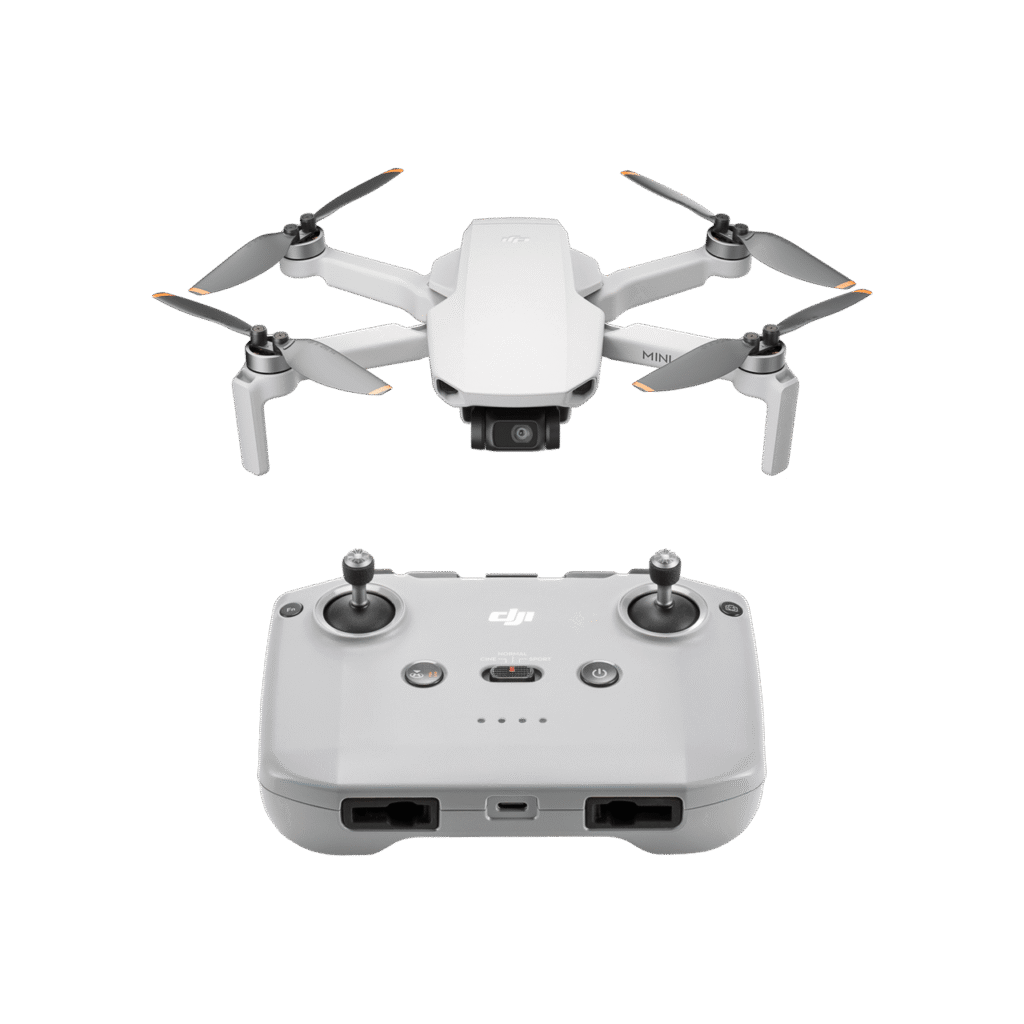
DJI Mini 4K
N/A
DJI's low-cost sub-250 g drone with 4K recording.
Best for: First-time pilots who want an affordable 4K DJI drone
- 4K video at up to 30fps
- Lightest of the three
- O2 transmission rated at 10 km (FCC)
Buy the Mini 3 if you can stretch the budget. Its larger 1/1.3-inch sensor, HDR video, rotating camera for vertical shots and 38-minute standard battery are real gains for both photos and social video. If price comes first, the Mini 4K still gives you 4K/30fps,…
N/A
DJI's low-cost sub-250 g drone with 4K recording.
Best for: First-time pilots who want an affordable 4K DJI drone

N/A
The older 4K Mini, worth it only below the Mini 4K's price.
Best for: Buyers who find a discounted or used bundle
N/A
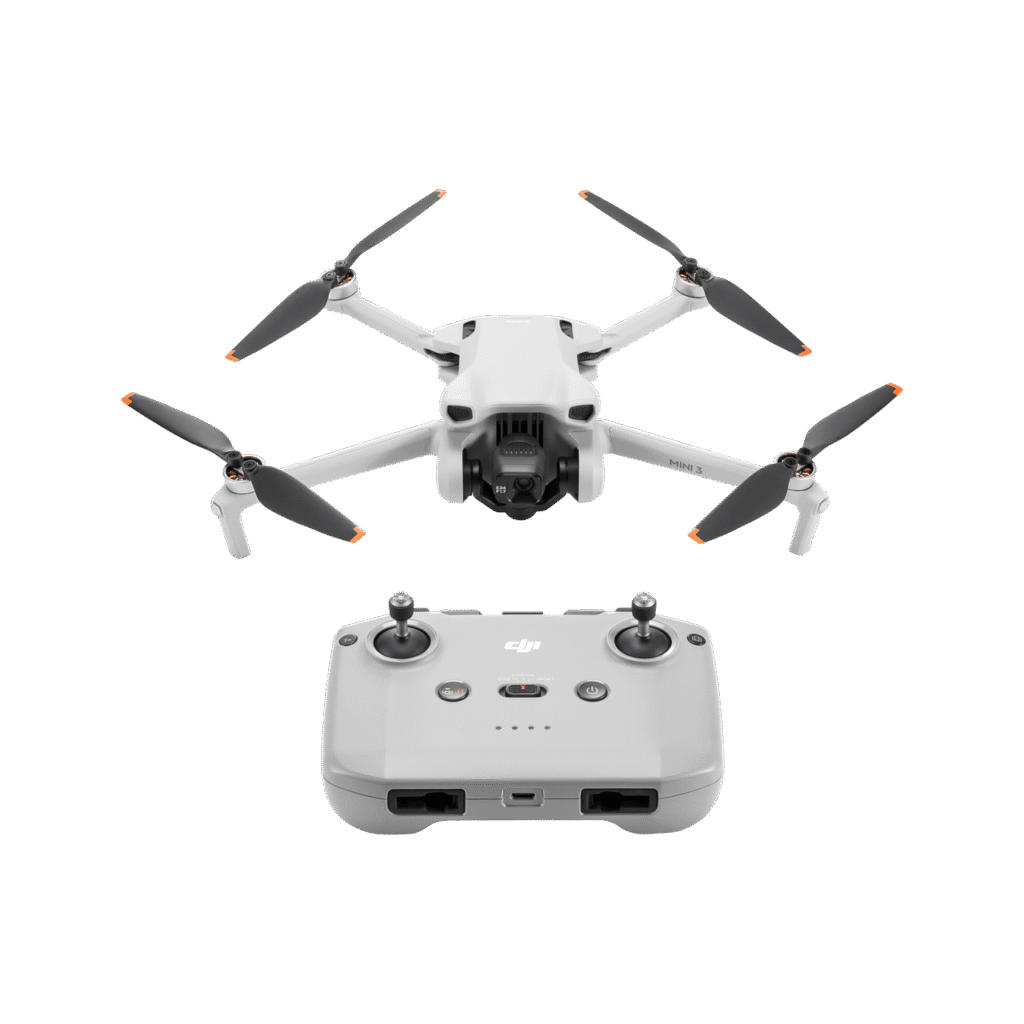
The Mini with a larger sensor, HDR video and true vertical shooting.
Best for: Content creators who want better image quality, vertical video and longer flights
| Feature | DJI Mini 4K | DJI Mini 2 | DJI Mini 3 |
|---|---|---|---|
| Weight | 246 g with standard battery | Under 249 g with standard battery | 248 g standard; approximately 290 g with Plus battery |
| Dimensions | 138×81×58 mm folded | 138×81×58 mm folded | 148×90×62 mm folded |
| Volume | 647 cm³ folded bounding-box volume | 647 cm³ folded bounding-box volume | 826 cm³ folded bounding-box volume |
| Max Speed | 16 m/s in Sport mode (manufacturer-stated) | 16 m/s in Sport mode (manufacturer-stated) | 16 m/s in Sport mode (manufacturer-stated) |
| Max Flight Distance | 15.7 km (manufacturer-stated) | 15.7 km (manufacturer-stated) | 18 km standard; 25 km Plus (manufacturer-stated) |
| Sensor Size | 1/2.3-inch CMOS | 1/2.3-inch CMOS | 1/1.3-inch CMOS |
| Megapixels | 12 MP | 12 MP | 48 MP |
| Max ISO | ISO 3,200 | ISO 3,200 | ISO 3,200 |
| Flight Time | 31 minutes (manufacturer-stated) | 31 minutes (manufacturer-stated) | 38 minutes standard; 51 minutes Plus (manufacturer-stated) |
| Max Resolution | 4K up to 30fps; 2.7K up to 60fps | 4K up to 30fps; 2.7K up to 60fps | 4K up to 30fps with HDR support |
| Movie Bitrate | 100 Mbps | 100 Mbps | 100 Mbps |
| Field of View | 83° | 83° | 82.1° |
| Transmission Range | 10 km FCC; 6 km CE/SRRC/MIC | 10 km FCC; 6 km CE/SRRC/MIC | 10 km FCC; 6 km CE/SRRC/MIC |
| Wind Resistance | 10.7 m/s (Level 5) | 8.5–10.5 m/s (Level 5) | 10.7 m/s (Level 5) |
| Obstacle Avoidance | Downward vision positioning only; no forward or rear obstacle avoidance | Downward vision positioning only; no forward or rear obstacle avoidance | Downward vision positioning only; no forward or rear obstacle avoidance |
| Battery Power | 2250 mAh, 17.32 Wh | 2250 mAh, 17.32 Wh | 2453 mAh standard; 3850 mAh Plus |
| Charge Time | Not specified in the supplied comparison data | Not specified in the supplied comparison data | Approx. 64 minutes with standard battery in aircraft |
| Internal Storage | None; microSD card required | None; microSD card required | None; microSD card required |
| GPS | Yes | Yes | Yes |
| Obstacle Detection | No dedicated obstacle avoidance; downward positioning sensors only | No dedicated obstacle avoidance; downward positioning sensors only | No dedicated obstacle avoidance; downward positioning sensors only |
| Return to Home | Yes | Yes | Yes |
| Removable Battery | Yes | Yes | Yes |
| Shoots RAW | Yes, DNG | Yes, DNG | Yes, DNG |
| HDR Mode | No dedicated HDR mode | No dedicated HDR mode | Yes, HDR video up to 30fps |
| Weather Sealed | No official IP rating | No official IP rating | No official IP rating |
| Best For | First-time pilots who want an affordable 4K DJI drone | Buyers who find a discounted or used bundle | Content creators who want better image quality, vertical video and longer flights |
| Standard Battery Takeoff Weight | 246 g | Under 249 g | 248 g |
| Standard Battery Flight Time | 31 minutes | 31 minutes | 38 minutes |
| Plus Battery Flight Time | Not available | Not available | 51 minutes |
| Standard Battery Flight Distance | 15.7 km | 15.7 km | 18 km |
| Plus Battery Flight Distance | Not available | Not available | 25 km |
| Standard Battery Capacity | 2250 mAh, 17.32 Wh | 2250 mAh, 17.32 Wh | 2453 mAh, 18.1 Wh |
| Plus Battery Capacity | Not available | Not available | 3850 mAh, 28.4 Wh |
| Maximum 4K Frame Rate | 4K/30fps | 4K/30fps | 4K/30fps |
| HDR Video | No dedicated HDR mode | No dedicated HDR mode | Yes, up to 30fps |
| True Vertical Shooting | No | No | Yes |
| Maximum Photo Resolution | 12 MP | 12 MP | 48 MP |
| Camera Aperture | f/2.8 | f/2.8 | f/1.7 |
| Folded Size | 138×81×58 mm | 138×81×58 mm | 148×90×62 mm |
| Obstacle Sensing Coverage | Downward positioning only | Downward positioning only | Downward positioning only |
Buy the Mini 3 if you can stretch the budget. Its larger 1/1.3-inch sensor, HDR video, rotating camera for vertical shots and 38-minute standard battery are real gains for both photos and social video. If price comes first, the Mini 4K still gives you 4K/30fps, RAW photos, GPS, return-to-home and O2 transmission in a 246 g drone.
The Mini 2 is almost a twin of the Mini 4K on paper. It only makes sense when you find it cheaper or in a better bundle, for example with extra batteries.
Keep two limits in mind. None of the three has forward, backward or side obstacle avoidance. And the Mini 3 Plus battery lifts the drone to about 290 g, which can change registration and operating rules where you fly.
All three are folding sub-250 g drones with GPS, return-to-home and a three-axis gimbal. Speed and transmission range are close. The differences sit in the camera, the battery and the creator features.
The Mini 4K and Mini 2 list the same 1/2.3-inch 12 MP sensor, 4K/30fps at 100 Mbps, 31-minute flight time, 16 m/s top speed, 2250 mAh battery, 83° field of view and 10 km FCC range. Between those two, buy on price, bundle contents, warranty and condition: a new Mini 4K may give a clearer warranty path, while a discounted Mini 2 bundle may come with extra batteries.
The Mini 3 pairs a 1/1.3-inch sensor with an f/1.7 lens, against 1/2.3-inch and f/2.8 on the other two. On paper that gives it the best base for low light and bright skies. Its 48 MP mode adds room to crop, though it does not make photos four times better than 12 MP ones.
All three record 4K at up to 30fps and 100 Mbps, and all three shoot DNG RAW. The Mini 4K and Mini 2 add 2.7K at up to 60fps. The Mini 3 has no frame-rate edge, but it adds HDR video, which helps more than resolution when a bright sky sits over darker ground.
Only the Mini 3 rotates its camera into portrait, so it records vertical frames for TikTok, Reels and Shorts without heavy cropping. With the Mini 4K or Mini 2 you crop horizontal footage in editing, which works for occasional posts but costs resolution and means framing for the crop while you shoot.
The Mini 4K and Mini 2 are rated for 31 minutes on 2250 mAh packs. The Mini 3 gets 38 minutes from its 2453 mAh standard battery, and the optional Plus battery raises that to 51 minutes and the rated flight distance to 25 km. The catch is weight: the Plus battery takes the Mini 3 from under 249 g to about 290 g.
In the US, a drone under 250 g flown purely for recreation generally does not need FAA registration, but every Part 107 drone must be registered. With the Plus battery, the Mini 3 no longer qualifies for that recreational exception. In the EU, camera drones under 250 g generally still need operator registration unless they count as toys. Use the registration-by-weight guide to check your country.
None of the three senses obstacles forward, backward, upward or to the sides. The downward sensors only help with hovering and landing. Around trees, buildings and cables that is your job, and before relying on return-to-home you need to set a return altitude that clears everything on the route.
All three list 10 km of transmission range under FCC rules and 6 km under CE, SRRC and MIC. Those are radio maximums in clean conditions, not a recommended distance, and visual-line-of-sight rules still apply. Rated flight times also drop in wind, cold and with older batteries.
The Mini 4K and Mini 2 fold to 138×81×58 mm. The Mini 3 folds to 148×90×62 mm. All three fit a small camera bag.
I compare these drones from manufacturer specifications, regulatory filings and documented owner reports. I have not flown them, so flight feel and real-world battery life are not judged here.
This comparison helps buyers choose between DJI Mini 4K, DJI Mini 2, and DJI Mini 3 by translating the specification table into camera, flight, safety, workflow and value decisions. Recommendations are matched to user needs rather than based on a single headline number.