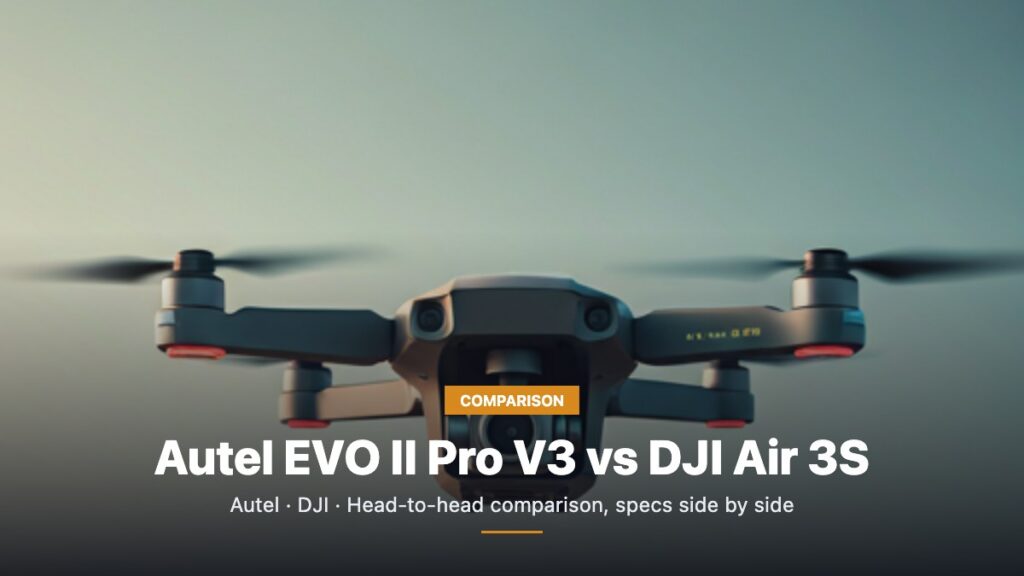
Autel EVO II Pro V3 vs DJI Air 3S
Buy the DJI Air 3S if you want the lighter, longer-flying drone with a second 70 mm camera and LiDAR-assisted sensing. Buy the Autel EVO II Pro V3 if you value an adjustable f/2.8–f/11 aperture and 5.5K video over carrying weight.
Autel EVO II Pro V3
Check retailer

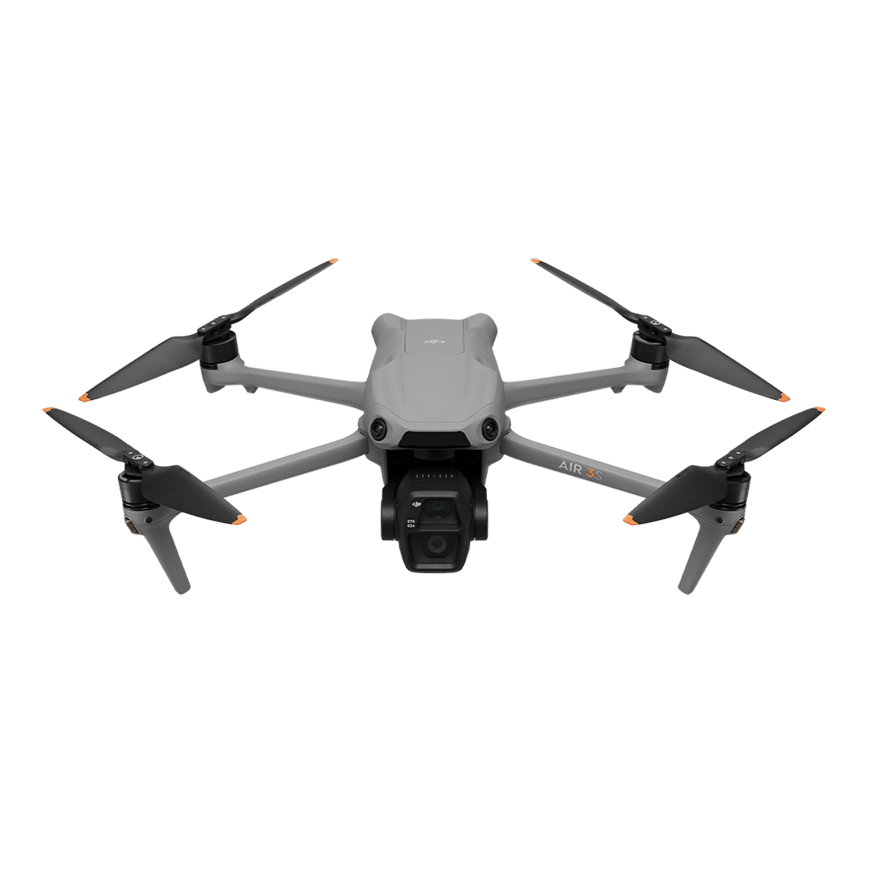
DJI Air 3S
$1,099
Technical Specifications
Last updated: Oct 2026| Feature | Autel EVO II Pro V3 | DJI Air 3S |
|---|---|---|
| Weight | 1191g | 724g |
| Dimensions | 230×130×108 mm (folded) | 214.19×100.63×89.17 mm |
| Volume | 3229 cm³ | 1924 cm³ |
| Max Speed | 20 m/s | 21 m/s |
| Max Flight Distance | 25 km | 32 km |
| Sensor Size | 1-inch CMOS (29 mm) | 1-inch CMOS (24 mm) + 1/1.3-inch (70 mm) |
| Megapixels | 20 MP | 50 MP |
| Max ISO | 6400 ISO (44000 night video) | 12800 ISO |
| Flight Time | 39 mins | 45 mins |
| Max Resolution | 5.5K/30fps (5472×3076), 4K/60fps | 4K/60fps HDR, 4K/120fps |
| Movie Bitrate | 120 Mbps | 130 Mbps |
| Field of View | 82° | 84° |
| Transmission Range | Not listed on Autel spec pages | 20km (O4) |
| Wind Resistance | Level 6 (12 m/s cruise) | Level 6 (12 m/s) |
| Obstacle Avoidance | Vision sensing in six directions | Omnidirectional vision + forward LiDAR |
| Battery Power | 7100 mAh (82 Wh) | 4276 mAh |
| Charge Time | 1.5 hours | 1.33 hours |
| Internal Storage | 8 GB | 42 GB |
| GPS | Yes | Yes |
| Obstacle Detection | Yes | Yes |
| Return to Home | Yes | Yes |
| Removable Battery | Yes | Yes |
| Shoots RAW | Yes (DNG) | Yes |
| HDR Mode | Yes (HDR photo mode) | Yes |
| Weather Sealed | No IP rating listed | Yes |
| Best For | Pilots who want adjustable aperture and 5.5K from one camera | Travel and landscape shooters who want two focal lengths |
| Main Camera Sensor | 1-inch CMOS, 20 MP | 1-inch CMOS, 50 MP |
| Second Camera | None | 70 mm medium tele, 1/1.3-inch 48 MP |
| Aperture | f/2.8–f/11 (adjustable) | f/1.8 fixed (wide), f/2.8 fixed (tele) |
| Highest Video Resolution | 5472×3076 at 30 fps | 3840×2160 at up to 120 fps |
| Takeoff Weight | 1191 g | 724 g |
| Rated Flight Time | 39 min | 45 min |
| Obstacle Sensing | Vision, 6 directions (forward 0.5–18 m) | Omnidirectional vision + forward LiDAR |
| Battery | 7100 mAh, 82 Wh | 4276 mAh |
| Internal Storage | 8 GB | 42 GB |
This comparison is built from Autel’s and DJI’s published specifications, not from flight tests. A reader asked for it through our comparison request form.
One adjustable camera against two fixed ones
Both drones use a 1-inch main sensor, so the difference is in what surrounds it. The Autel EVO II Pro V3 has a single 20 MP camera with an adjustable aperture from f/2.8 to f/11. That lets you control shutter speed and depth of field in bright light without stacking ND filters as often, which matters for video. The DJI Air 3S pairs a 50 MP 1-inch wide camera at a fixed f/1.8 with a 70 mm medium tele camera at f/2.8, which gives you a second, tighter framing that the Autel can only imitate with digital zoom.
On video, the Autel goes higher in resolution: 5472×3076 at up to 30 fps, plus 4K at 60 fps, at up to 120 Mbps. The Air 3S stops at 4K but records it at up to 120 fps for slow motion and at up to 130 Mbps. If you crop or reframe in post, the Autel’s extra pixels help; if you want slow motion or a tele look, the Air 3S is the better tool.
Weight, flight time and wind
The Air 3S weighs 724 g and the EVO II Pro V3 1191 g, so the DJI is far easier to carry, and both are over the 250 g line, which means FAA registration and Remote ID in the US. See our drone registration guide for the rules by country.
DJI rates the Air 3S at 45 minutes and the Autel at 39 minutes, both measured in still air, so expect less in practice. Autel lists 12 m/s wind resistance in cruise and 10.7 m/s for takeoff and landing; DJI lists 12 m/s. The Autel’s battery is much bigger, 7100 mAh and 82 Wh, but it is also carrying around 470 g more aircraft.
Obstacle sensing
Autel specifies vision sensors in six directions, with forward sensing from 0.5 to 18 m at speeds below 12 m/s and side sensing that only works below 5 m/s. The Air 3S adds a forward-facing LiDAR to omnidirectional vision, which helps in low light where camera-based sensing struggles. Neither replaces a clear line of sight, but the DJI system is the newer and more capable of the two on paper.
Can you buy them in the US?
Both brands are on the FCC’s Covered List, and Autel is named individually. Models that held FCC authorization before December 2025 can still be sold, which covers the Air 3S and, as an older model, the EVO II Pro V3. What neither company can do is get a new model authorized, so treat both as the last of their line in the US. Check current stock and who is selling before you buy; our US drone ban checker explains how to confirm a drone’s status.
Which one should you buy?
For most people, the DJI Air 3S. It is lighter, flies longer on paper, has better obstacle sensing and gives you a second focal length, all in a drone that is easier to take anywhere. Choose the Autel EVO II Pro V3 if an adjustable aperture and 5.5K video matter more to you than weight, or if you already own Autel batteries and accessories. If you want to compare the Air 3S with other DJI options, see Air 3S vs Mavic 3 Classic.
Autel EVO II Pro V3
Strengths
- Adjustable aperture, f/2.8 to f/11
- 5.5K video at 30 fps and 4K at 60 fps
- Large 7100 mAh, 82 Wh battery
- Night scene video mode up to ISO 44000
- Vision sensing in six directions
Drawbacks
- 1191 g: heavier and bulkier to carry
- Single camera; no optical tele
- Rated 39 minutes against the Air 3S’s 45
- Only 8 GB onboard storage
- Autel is named on the FCC Covered List: no successor can be authorized for the US
DJI Air 3S
Strengths
- Two cameras: 1-inch 50 MP wide and 70 mm medium tele
- 45-minute rated flight time on a 724 g airframe
- Omnidirectional sensing plus forward LiDAR
- O4 transmission rated to 20 km (FCC)
- 42 GB internal storage
Drawbacks
- Fixed f/1.8 aperture on the main camera
- Tops out at 4K; no 5K-class video mode
- At 724 g it still needs FAA registration
Air 3S for most people, EVO II Pro V3 for aperture control
Buy the DJI Air 3S if you want the lighter, longer-flying drone with a second 70 mm camera and LiDAR-assisted sensing. Buy the Autel EVO II Pro V3 if you value an adjustable f/2.8–f/11 aperture and 5.5K video over carrying weight.
Check DJI Air 3S price on Amazon →Affiliate link. We may earn a commission at no extra cost to you.
The Friday Brief
One email a week on what changed in drones
FCC and FAA rule changes, DJI leaks checked against filings, and the week’s new comparisons. Every Friday, nothing else.
Free. Unsubscribe in one click. Sent with Kit; see our privacy policy.
Follow us on Google too: add Drone Ranker as a preferred source →

Alihan Demirdaş is the founder and editor of Drone Ranker. A software developer by profession, he researches drones the way he reads code: from the primary documents. Every review, comparison and news story on the site is written by him from manufacturer specification sheets, FCC and EU certification filings, aviation-authority rules and dated press releases, with the source linked. Unless a page is labelled hands-on, the analysis is documentary; when an aircraft is in his hands, the page says so and carries his own photographs and flight notes. He covers consumer, professional and agricultural drones and is based in Türkiye.