DJI Lito 1 vs DJI Mini 3
Most new pilots should pick the Lito 1. Omnidirectional vision sensing, ActiveTrack, O4 transmission and 4K/60fps make it easier and safer to fly than the Mini 3, which only has downward positioning sensors and no subject tracking. The Mini 3 still has the better camera…
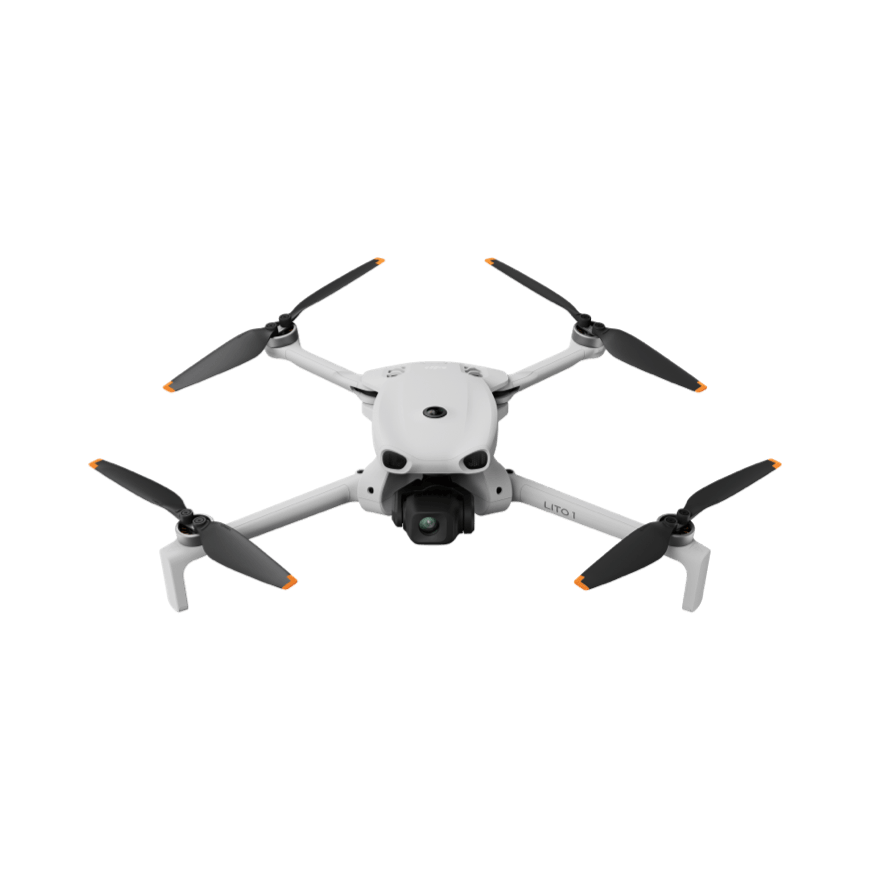
DJI Lito 1
Launched at €339 aircraft only (EU, April 2026); no official US price
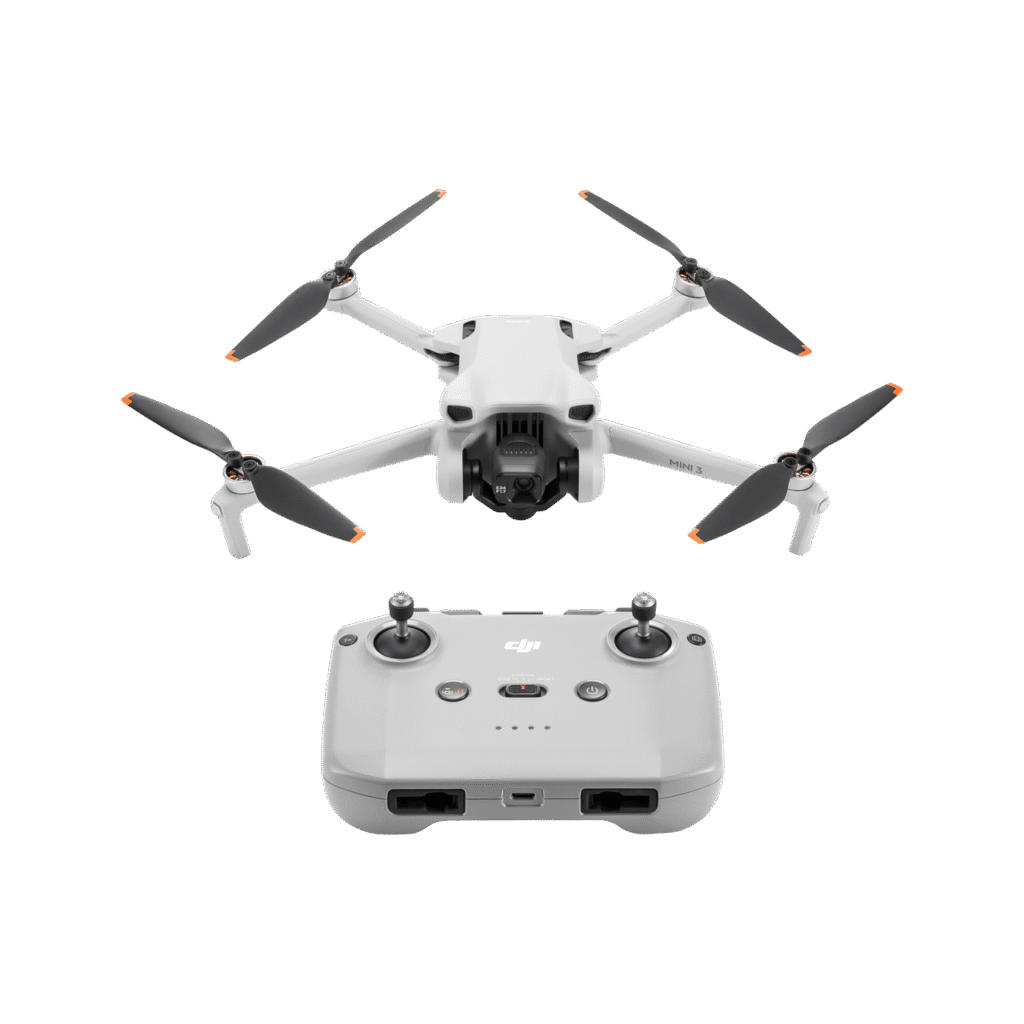
DJI Mini 3
Launched at $469 (aircraft only, 2022)
Technical Specifications
Last updated: Oct 2026| Feature | DJI Lito 1 | DJI Mini 3 |
|---|---|---|
| Weight | Approx. 249 g with standard battery | 248 g with standard battery; approx. 290 g with Intelligent Flight Battery Plus |
| Dimensions | 149×94×62 mm folded; 183×251×79 mm unfolded without propellers | 148×90×62 mm folded; 251×362×72 mm unfolded with propellers |
| Volume | Approx. 868 cm³ folded bounding-box volume | Approx. 826 cm³ folded bounding-box volume |
| Max Speed | 18 m/s Sport; 12 m/s Normal (manufacturer-stated) | 16 m/s (manufacturer-stated) |
| Max Flight Distance | 20 km with standard battery (manufacturer-stated) | 18 km standard; 25 km Plus (manufacturer-stated) |
| Sensor Size | 1/2-inch CMOS | 1/1.3-inch CMOS, dual native ISO |
| Megapixels | 48 MP | 48 MP |
| Max ISO | Video: ISO 100-12,800; 48 MP photo: ISO 100-3,200 | ISO 100-3,200 (video and photo) |
| Flight Time | 36 minutes with standard battery (manufacturer-stated) | 38 minutes standard; 51 minutes Plus (manufacturer-stated) |
| Max Resolution | 4K up to 60fps; 4K/100fps slow motion; 2.7K vertical crop up to 60fps; no HDR video mode | 4K/30fps; 2.7K and FHD up to 60fps; HDR video at 24/25/30fps |
| Movie Bitrate | 130 Mbps | 100 Mbps (H.264) |
| Field of View | 79° | 82.1° |
| Transmission Range | DJI O4: 15 km (IC); 8 km CE/SRRC/MIC | DJI O2: 10 km FCC; 6 km CE/SRRC/MIC |
| Wind Resistance | 10.7 m/s (Level 5) | 10.7 m/s (Level 5) |
| Obstacle Avoidance | Omnidirectional monocular vision with downward infrared; no LiDAR | Downward vision positioning only; no forward, rear, lateral or upward obstacle sensing |
| Battery Power | 2590 mAh, 18.96 Wh standard | 2453 mAh, 18.1 Wh standard; 3850 mAh, 28.4 Wh Plus |
| Charge Time | Approx. 73 min in aircraft (standard battery) | Standard: approx. 64 min in aircraft or 56 min in charging hub; Plus: approx. 101 min or 78 min (30W charger) |
| Internal Storage | None; microSD card required | None; microSD card required |
| GPS | Yes, GPS + Galileo + BeiDou | Yes, GPS + GLONASS + Galileo |
| Obstacle Detection | Yes, omnidirectional vision sensing | No; downward positioning sensors only |
| Return to Home | Yes | Yes |
| Removable Battery | Yes | Yes |
| Shoots RAW | Yes, JPEG and DNG RAW | Yes, JPEG and DNG RAW |
| HDR Mode | No dedicated HDR video mode | Yes, HDR video at 24/25/30fps and HDR photos |
| Weather Sealed | No official IP rating | No official IP rating |
| Best For | First-time pilots who want obstacle sensing, ActiveTrack and 4K/60fps | Photographers and travelers who care more about sensor size and endurance than automation |
| Subject Tracking | ActiveTrack up to 12 m/s | None (QuickShots only) |
| Vertical Shooting | 2.7K crop from the 4K frame | True Vertical Shooting (gimbal rotates 90°) |
| Slow Motion | 4K/100fps | None listed |
| Live View | 1080p/60fps (O4) | 720p/30fps (O2) |
| Lens Aperture | f/1.8, 26.2 mm equivalent | f/1.7, 24 mm equivalent |
| Launch Year | 2026 | 2022 |
The Mini 3 launched in December 2022 as DJI's affordable large-sensor Mini; the Lito 1 arrived in April 2026 as the entry model of the new Lito series. Both are aimed at first-time buyers, but they spend the money differently. The Mini 3 puts it into the sensor, the Lito 1 into sensing, tracking and transmission.
Mini 3 vs Lito 1 at a glance
- Sensor: 1/1.3-inch vs 1/2-inch
- Obstacle sensing: downward only vs omnidirectional vision
- Tracking: none vs ActiveTrack
- Video: 4K/30fps at 100 Mbps vs 4K/60fps and 4K/100fps at 130 Mbps
- Live view: 720p over O2 vs 1080p/60fps over O4
- Vertical: rotating gimbal vs 2.7K crop
The Mini 3 has the bigger sensor
Both list 48 MP stills, but the Mini 3's 1/1.3-inch sensor (the size DJI also used in the Mini 3 Pro and Mini 4 Pro) is physically larger than the Lito 1's 1/2-inch chip. In daylight the gap is modest. At dusk, in shade or in high-contrast scenes the larger sensor usually holds more detail, and the Mini 3 adds HDR video, which the Lito 1 does not list.
The Lito 1 answers with frame rate: 4K at up to 60fps and 4K/100fps slow motion, so fast subjects and pans look cleaner. Neither has a log profile; in the Lito family D-Log M is reserved for the Lito X1. For vertical clips, the Mini 3 rotates its gimbal and uses the full sensor, while the Lito 1 crops a 2.7K frame from 4K.
Obstacle sensing makes the Lito 1 easier to fly
The Mini 3 only uses downward sensors for positioning, so it will hit a branch if you steer it there. The Lito 1 uses omnidirectional monocular vision sensors plus a downward infrared sensor. That is a real safety margin for a new pilot during reveals and orbits, but vision sensing needs more than about 5 lux and some texture, so it won't save you in the dark or near thin wires. There is no LiDAR; that is reserved for the Lito X1.
ActiveTrack is the other big step. The Lito 1 can follow a walker, cyclist or car at up to 12 m/s, while the Mini 3 is limited to preset QuickShots. The 1080p/60fps live view also makes framing and focus checks easier than the Mini 3's 720p feed.
Weight, flight time and US availability
DJI lists about 249 g for the Lito 1 and 248 g for the Mini 3 with standard batteries; the Mini 3's Plus battery raises it to about 290 g, so check the registration rules by weight if you plan to use it. Rated flight time is 36 minutes for the Lito 1 and 38 (or 51 with the Plus battery) for the Mini 3; real flights are shorter for both.
DJI launched the Lito series with EU, UK and other regional prices but no US price, and press coverage reports it is not officially sold there. The Mini 3 was sold in the US before the December 2025 FCC Covered List update, so it is the easier one to find there, often used.
Which to buy
- First drone, flying near trees or buildings: Lito 1
- Filming yourself cycling or hiking: Lito 1
- Scenery stills and sunsets: Mini 3
- Full-sensor vertical clips: Mini 3
- Buying in the US: Mini 3
DJI Lito 1
Strengths
- Omnidirectional vision sensing
- ActiveTrack follows people, bikes and cars at up to 12 m/s
- 4K up to 60fps plus 4K/100fps slow motion
- O4 transmission with a 1080p/60fps live view
- 18 m/s top speed in Sport mode
Drawbacks
- Smaller 1/2-inch sensor
- No HDR video and no D-Log M
- Vertical video is a 2.7K crop
- No internal storage
- Not officially sold in the US
DJI Mini 3
Strengths
- Larger 1/1.3-inch sensor with dual native ISO
- True Vertical Shooting with a rotating gimbal
- 38 minutes rated, 51 with the Plus battery
- HDR video up to 30fps and HDR photos
- Easy to find used
Drawbacks
- No obstacle sensing beyond downward positioning
- No ActiveTrack
- 4K limited to 30fps at 100 Mbps
- O2 transmission with a 720p live view
- Software updates guaranteed only until the end of 2026
Which one should a first-time pilot get?
Most new pilots should pick the Lito 1. Omnidirectional vision sensing, ActiveTrack, O4 transmission and 4K/60fps make it easier and safer to fly than the Mini 3, which only has downward positioning sensors and no subject tracking.
The Mini 3 still has the better camera hardware on paper. Its 1/1.3-inch sensor is larger than the Lito 1's 1/2-inch, it offers HDR video and True Vertical Shooting, and its standard battery is rated at 38 minutes against 36.
Choose the Lito 1 if you are learning, want the drone to follow you, or fly near trees and buildings. Choose the Mini 3 for scenic stills in open space, or if you are buying in the US, where the Lito 1 has no official price.
Check DJI Lito 1 price on Amazon →Affiliate link. We may earn a commission at no extra cost to you.
Context and limitations
Lito 1 wins on sensing, tracking and O4 transmission; Mini 3 wins on sensor size, HDR, true vertical shooting and rated endurance. Beginners flying near obstacles should favor the Lito 1.
Limitations
Specification-based comparison; no hands-on test. Lito 1 figures come from DJI launch material and retailer copies of the DJI spec sheet; some sources disagree on Plus-battery support and operating temperature, so those are omitted. Lito 1 is not officially sold in the US.
The Friday Brief
One email a week on what changed in drones
FCC and FAA rule changes, DJI leaks checked against filings, and the week’s new comparisons. Every Friday, nothing else.
Free. Unsubscribe in one click. Sent with Kit; see our privacy policy.
Follow us on Google too: add Drone Ranker as a preferred source →

Alihan Demirdaş is the founder and editor of Drone Ranker. A software developer by profession, he researches drones the way he reads code: from the primary documents. Every review, comparison and news story on the site is written by him from manufacturer specification sheets, FCC and EU certification filings, aviation-authority rules and dated press releases, with the source linked. Unless a page is labelled hands-on, the analysis is documentary; when an aircraft is in his hands, the page says so and carries his own photographs and flight notes. He covers consumer, professional and agricultural drones and is based in Türkiye.