DJI Lito 1: What €339 Buys, and What It Leaves Out

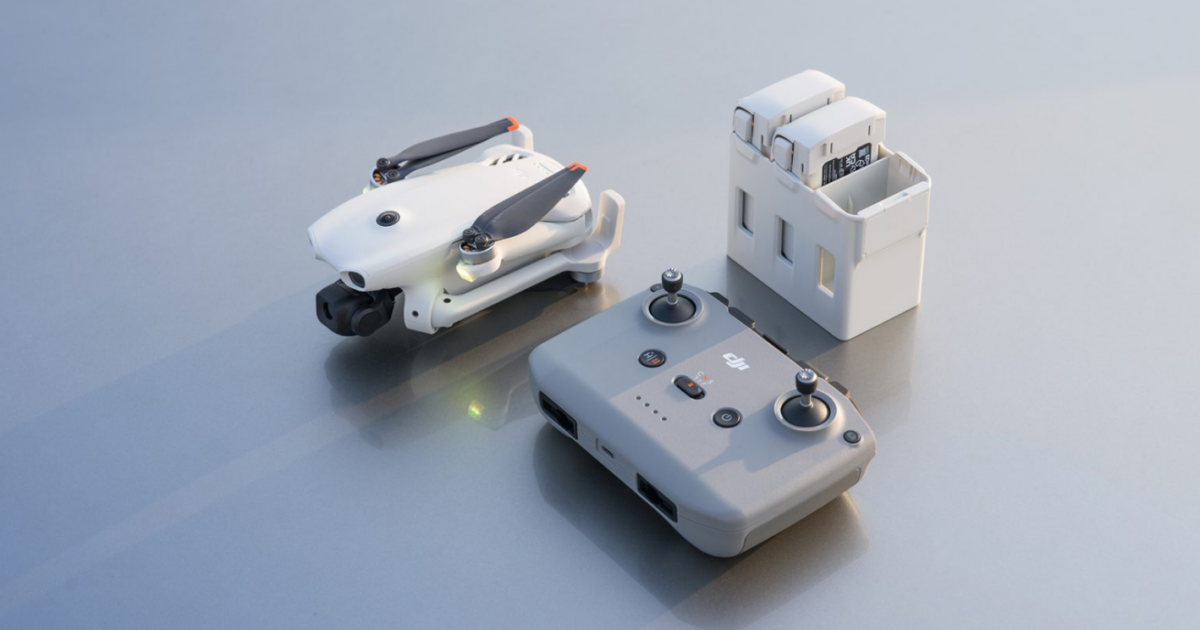
The DJI Lito 1 is a sub-249 g folding drone with a 48 MP 1/2-inch sensor, 4K/100fps video, omnidirectional obstacle sensing and DJI’s O4 transmission. On paper it is a well-equipped small drone for travel and social video. The catch for American readers: as of October 2026 the Lito 1 has no FCC authorization and no amazon.com listing, so there is no US buy link here. For a sub-250 g drone you can buy in the US today, try our drone finder.
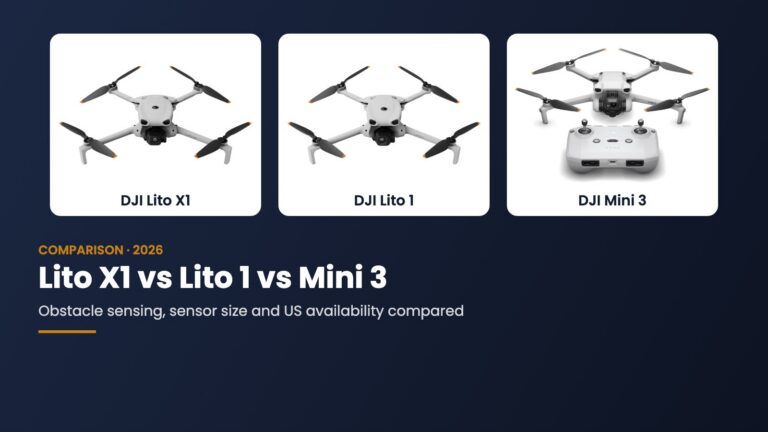
New, 13 October: how the Lito X1, Lito 1 and DJI Mini 3 compare on sensor, obstacle sensing and where you can buy them: Lito X1 vs Lito 1 vs Mini 3.
This analysis is based on DJI’s spec sheet and owner discussions, not flight tests.
Table of Contents
Weight and the battery choice
With the standard Intelligent Flight Battery, propellers and a microSD card, the Lito 1 weighs about 249 g, which puts it in the EU’s C0 class with the lightest operating limits. The Intelligent Flight Battery Plus takes it over 249 g. Owners on pilot forums point out that the Plus battery is not supported in the EU or UK, so there you are limited to the standard pack. Elsewhere, flying with the Plus generally means registering the drone with your aviation authority, such as the FAA in the US.
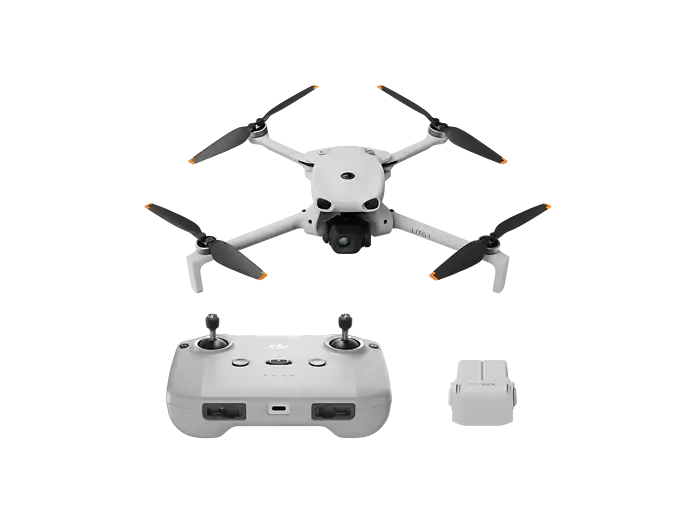
Folded without propellers it measures 149×94×62 mm; unfolded, 183×251×79 mm. It fits a small camera bag or a large jacket pocket.
DJI Lito 1 camera
The 1/2-inch CMOS sensor shoots 48 MP stills through an f/1.8 lens with a 79° field of view (26.2 mm equivalent). A 1/2-inch sensor is a reasonable compromise between light gathering and weight at this size, and the bright aperture helps at dusk and dawn.
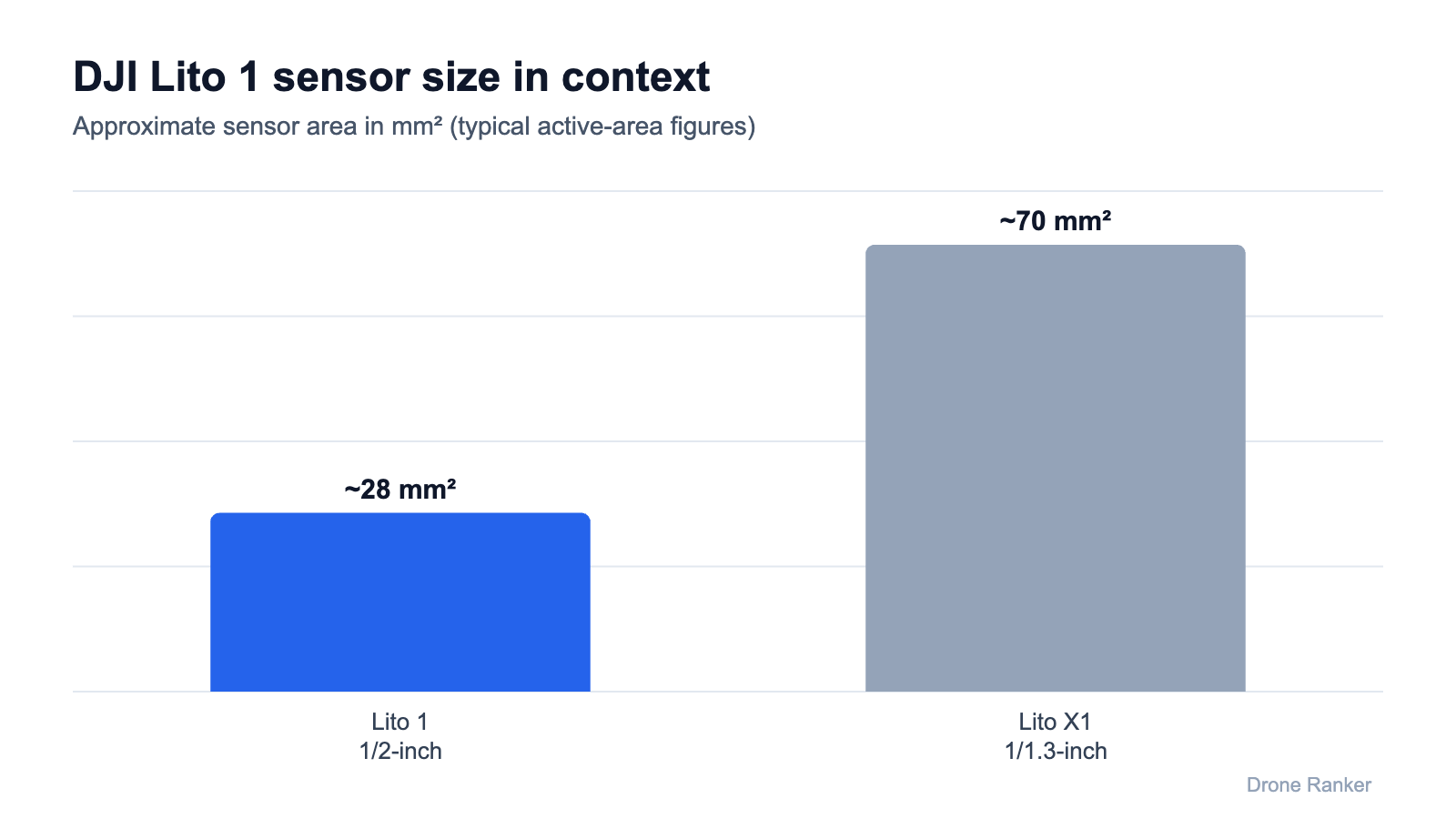
ISO runs from 100 to 12,800 for video, slow motion and 12 MP stills, but only 100 to 3,200 in 48 MP mode. That is typical of quad-Bayer sensors: full-resolution shots need plenty of light, while the binned 12 MP mode handles noise better. Shutter speeds range from 1/8000 s to 2 s, and the drone can simulate exposures of 2.5 to 8 seconds for smooth water or light trails without heavy ND filters.
Video is H.265 4K (3840×2160) at 24, 25, 30, 48, 50, 60 and 100fps, plus Full HD up to 100fps and a 2.7K vertical mode (1512×2688) at up to 60fps. At 4K/100fps the bitrate reaches 130 Mbps. Color is 8-bit 4:2:0 in H.264 or 10-bit 4:2:0 in H.265, the one to use if you plan to grade. Digital zoom goes to 3x in 4K, 2.7K vertical and both photo modes, and 4x in FHD. It costs some quality, but can help you frame from a safe distance.
DJI Lito 1 flight time: the two numbers to know
DJI publishes both a maximum and a typical flight time, and the gap between them is large.
The maximum is measured with no wind at sea level, at a steady 21.6 km/h, with obstacle avoidance off and recording at 1080p/24fps without active writes. Under those conditions the standard battery gives 36 minutes and the Plus 52 minutes.
The typical figure assumes light wind at sea level, a 1 km flight out at 12 m/s, active 4K/60fps recording with constant gimbal moves, and an automatic return to home with a safety margin. That gives about 23 minutes on the standard battery and 37 on the Plus. Plan your shoots around these numbers, not the headline ones.
| Standard battery | Battery Plus | |
|---|---|---|
| Capacity | 2,590 mAh | 4,680 mAh |
| Weight | About 79 g | About 118 g |
| Nominal voltage | 7.32 V | 7.16 V |
| Energy | 18.96 Wh | 33.51 Wh |
| Max flight time | 36 min | 52 min |
| Typical flight time | 23 min | 37 min |
| Max flight distance | 20 km | 32 km |
| Takeoff weight | Under 249 g | Over 249 g |
Wind and speed
DJI rates it for wind up to 10.7 m/s (about 38.5 km/h), with a maximum tilt angle of 35°. That is respectable for a sub-249 g drone, though owners note that very light drones are less steady in gusty coastal wind than heavier models.
- Sport: up to 18 m/s horizontal (standard battery) and 7 m/s vertical.
- Normal: 12 m/s horizontal, 5 m/s vertical, with obstacle sensing fully active.
- Cine: horizontal and vertical speeds capped at 3 m/s for smoother footage.
Obstacle sensing
An omnidirectional monocular vision system, plus an infrared sensor underneath, lets the drone brake or steer around obstacles in almost every direction. Forward sensing covers 0.5 to 20 m at speeds up to 12 m/s. Backward, side, upward and downward vision covers 0.5 to 15 m, effective up to 8 m/s backward and sideways and 5 m/s up and down. The vision sensors need textured surfaces and more than 5 lux (normal indoor light or outdoor twilight). The bottom infrared sensor reads 0.3 to 8 m on surfaces with more than 10% diffuse reflectivity.
O4 transmission
O4 runs on 2.4, 5.1 and 5.8 GHz and delivers a 1080p/60fps live view. Rated unobstructed range is 8 km under CE rules and 15 km under IC (Canada). DJI’s own real-world estimates are more useful: 1.5 to 3 km in dense cities, 3 to 8 km in suburbs, 8 to 15 km in open rural or coastal areas, and 0 to 3 km once trees or buildings block the path.
Charging and controller
DJI recommends its 65W Portable Charger, but any USB Power Delivery charger works. A standard battery takes about 73 minutes to charge in the drone with a 65W charger, or 45 minutes on the Battery Charging Hub. The hub can charge three identical batteries in parallel with a PD charger of 45W or more: it brings the two lowest up to the level of the highest, then charges all three together, finishing three standard batteries in about 87 minutes.
The bundled DJI RC-N3 (about 320 g) uses your phone as the screen through DJI Fly (iOS 13.0 or later, Android 7.0 or later). Its 2,600 mAh battery takes about 2 hours to charge and lasts up to 3.5 hours, or 1.5 hours if it is also charging your phone.
Who it suits
There is no internal storage, so budget for a fast microSD card that can handle 130 Mbps; DJI’s spec sheet recommends the Lexar Silver Plus and Kingston Canvas Go! series.
The Lito 1 makes most sense for travelers and vloggers who want a small drone with a 2.7K vertical mode, and for beginners who will value omnidirectional sensing while learning. The standard battery keeps it in the lightest rule category almost everywhere; the Plus battery, where legal, turns it into a drone with more than 35 minutes of realistic flight. My view: the typical 23-minute figure on the standard battery is the honest limit to plan around, so budget for at least one spare. And if you are in the US, the lack of FCC authorization settles the question; look at the alternatives below.
See our DJI Lito coverage for the rest of the line.
Closest alternatives sold in the US
Under 249 g, 3-axis gimbal, 4K/30. The cheapest DJI camera drone with a real gimbal.
DJI Flip (RC-N3)
Under 249 g with full propeller guards, 1/1.3-inch sensor, 4K/60 HDR.
As an Amazon Associate, Drone Ranker earns from qualifying purchases. We do not quote prices because Amazon’s change by the hour.
The Friday Brief
One email a week on what changed in drones
FCC and FAA rule changes, DJI leaks checked against filings, and the week’s new comparisons. Every Friday, nothing else.
Free. Unsubscribe in one click. Sent with Kit; see our privacy policy.
Follow us on Google too: add Drone Ranker as a preferred source →
Continue Reading
All News