FCC Votes 29 October on 800 MHz for Drones and an End to China’s Test Labs

The FCC will vote on 29 October 2026 on two items that touch the drone market from opposite directions. One would open the 800 MHz cellular band to drones for the first time since the airborne ban of the 1980s. The other would end FCC recognition of electronics test labs in mainland China from 1 December 2028, which matters because those labs tested 82% of devices that applied for FCC approval in 2025.
Both are drafts. Chairman Brendan Carr announced them on 7 October and the FCC published the texts a day later. Here is what each would do, who it helps, and what it does not change for DJI owners.
Quick answer
| 800 MHz drone spectrum | Test lab recognition | |
|---|---|---|
| FCC item | Draft Report and Order, WT Docket 22-323 (FCC-CIRC2610-03) | Draft Third Report and Order, ET Docket 24-136 (FCC-CIRC2610-05) |
| Vote | 29 October 2026 open meeting | 29 October 2026 open meeting |
| What it does | Lets drones use 824–849 and 869–894 MHz on carrier networks | Ends recognition of labs in non-reciprocal economies, including mainland China |
| When it bites | 30 days after Federal Register publication, if adopted | 1 December 2028 |
| Who gains | Carriers and BVLOS operators using LTE/5G links | US and allied-country labs |
| Effect on consumer DJI drones | None: their 2.4/5.8 GHz links are not covered | None new: DJI drones already cannot get new FCC grants |
Vote 1: drones on the 800 MHz cellular band
Section 22.925 of the FCC’s rules bars airborne use of cellular handsets on the 800 MHz band, a policy from 1984 aimed at phones on airplanes and codified in 1991. The draft adds a new paragraph (b) that exempts uncrewed aircraft and adds a primary mobile allocation for drones in the US Table of Frequency Allocations. The FCC’s argument is that the original concern about aircraft phones does not apply to drones.
- The band: 50 MHz of licensed cellular spectrum at 824–849 MHz and 869–894 MHz, held by carriers since the 1980s.
- Who asked for it: AT&T, Verizon, T-Mobile and CTIA, with engineering support from Ericsson and Qualcomm, plus Zipline, Skydio, Lockheed Martin, the Commercial Drone Alliance, the Small UAV Coalition and AUVSI. The draft cites no opposing commenters.
- Limits: drones act as mobile stations talking to carrier base stations, within licensed service areas and under all FAA rules. In the 890–894 MHz slice they get no interference protection.
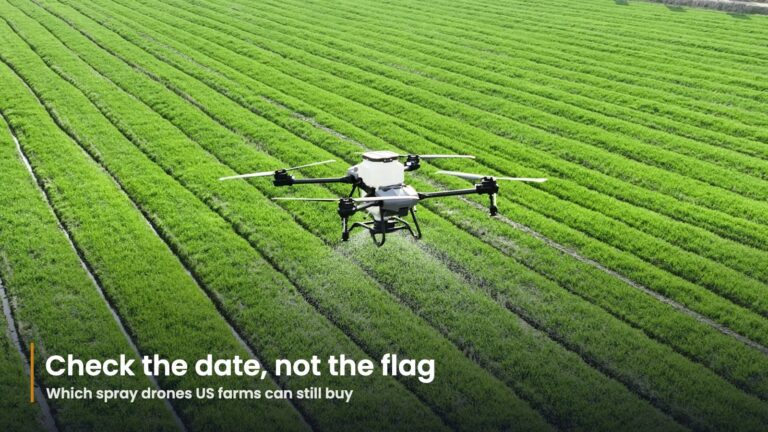
- What it is for: beyond-visual-line-of-sight work such as delivery, inspection, agriculture and search and rescue, where a cellular link supplements or replaces the radio link to the pilot.
Drones can already use carrier spectrum at 700 MHz and in the 1.9 GHz PCS band, which have no airborne restriction, so the change mostly gives networked operators more capacity. It does not touch the 2.4 and 5.8 GHz unlicensed links that consumer drones use, or the 5030–5091 MHz band set aside for drone control links in 2024. It also lines up with the FAA’s pending Part 108 BVLOS rule, which would make routine BVLOS operations possible in the first place.
Vote 2: the end of China-based test labs
Every radio device sold in the US needs FCC equipment authorization, and the testing behind it is usually done by private labs the FCC recognises. The draft would stop recognising labs and certification bodies in economies without a mutual recognition agreement or reciprocal trade deal with the US. Mainland China is not on that list; Hong Kong and Taiwan are.
- Deadline: recognition ends on 1 December 2028. Grants issued before then stay valid, and pending applications follow the current rules.
- Scale: labs in China tested 82% of devices that applied for FCC authorization in 2025, against under 4% for US labs. Of 609 recognised labs, 25.1% are in China, 18.4% in Taiwan and 17.9% in the US.
- Pushback: the Consumer Technology Association, ITI and carmakers asked for three to five years; the FCC is offering about two. China’s WTO enquiry point objected to the rule.
What this means for DJI and drone buyers
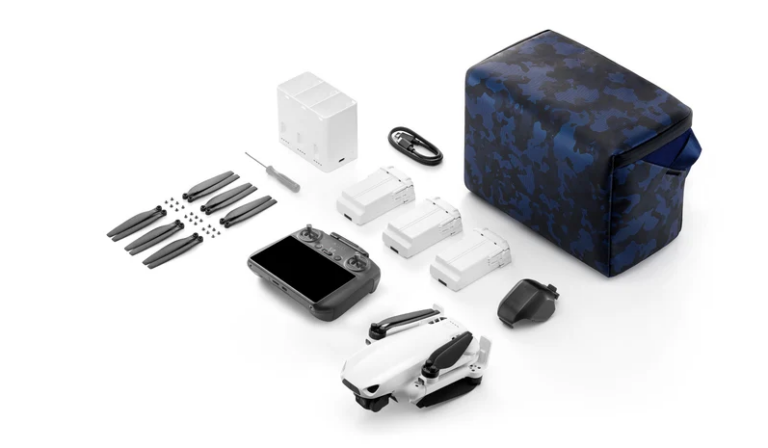
For DJI drones, very little changes. Since the FCC added foreign-made drones and critical components to its Covered List on 22 December 2025, new DJI aircraft cannot get FCC grants at all, and models authorized before that date stay legal to sell. Our US drone ban checker tracks which ones.
The lab rule reaches further. It would affect DJI products outside the Covered List, such as Osmo cameras, Chinese-made chargers and accessories, and Western brands that test their hardware in Shenzhen. DroneXL notes that the Osmo Pocket 4P was tested by SGS-CSTC in Shenzhen. Combined with the component rule that takes effect on 13 October, the direction is the same: Chinese hardware and the Chinese supply chain behind US approvals are being squeezed out step by step.
What happens next
- 29 October: the FCC votes at its open meeting. Drafts can change before the vote.
- If adopted: the 800 MHz rule takes effect 30 days after Federal Register publication; the lab rule’s cut-off is 1 December 2028.
- We will update this page after the vote with the final text.
Frequently asked questions
What is the FCC voting on for drones on 29 October 2026?
Two items: a draft order letting drones use the 800 MHz cellular band (WT Docket 22-323), and a draft order ending FCC recognition of test labs in mainland China and other non-reciprocal economies from 1 December 2028 (ET Docket 24-136).
Can drones use cellular networks in the US?
Yes, on the 700 MHz and 1.9 GHz PCS bands, which have no airborne restriction. The 800 MHz cellular band has been closed to airborne use since a 1984 policy; the draft order would exempt uncrewed aircraft.
Does the 800 MHz change affect my DJI drone?
No. Consumer drones control and stream video over unlicensed 2.4 and 5.8 GHz links, which the order does not cover. It is aimed at networked commercial and BVLOS operations.
Will the test lab rule ban DJI products?
Not directly. DJI drones already cannot receive new FCC grants under the December 2025 Covered List action. The lab rule would affect products that can still be authorized, such as Osmo cameras and accessories, if they are tested in mainland China after 1 December 2028.
Do existing FCC approvals stay valid?
Yes. Under the draft, grants issued before 1 December 2028 remain valid, and pending applications are processed under the current rules.
Sources
Sources
Primary references used for factual claims in this article.
The Friday Brief
One email a week on what changed in drones
FCC and FAA rule changes, DJI leaks checked against filings, and the week’s new comparisons. Every Friday, nothing else.
Free. Unsubscribe in one click. Sent with Kit; see our privacy policy.
Follow us on Google too: add Drone Ranker as a preferred source →
Continue Reading
All News