DJI Lito X1 vs DJI Mini 4 Pro
For most new buyers the DJI Lito X1 is the slightly better pick: it adds forward LiDAR to omnidirectional sensing, is rated for 36 minutes (52 with the Plus battery) and has 42 GB of internal storage. Choose the Mini 4 Pro if you want…
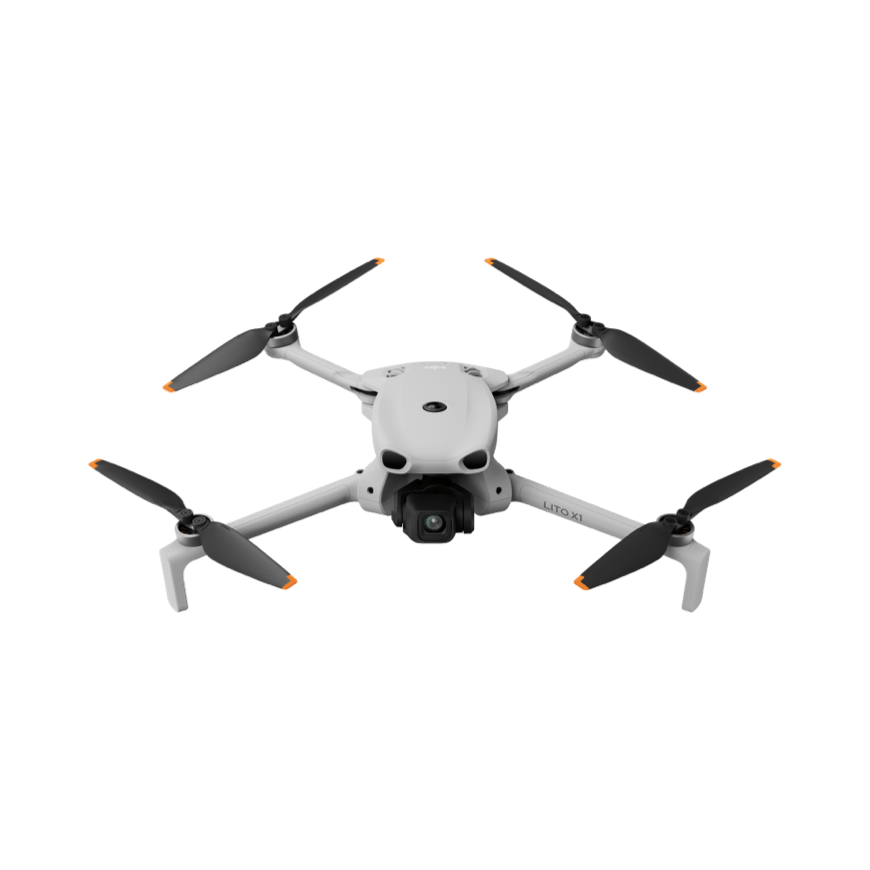
DJI Lito X1
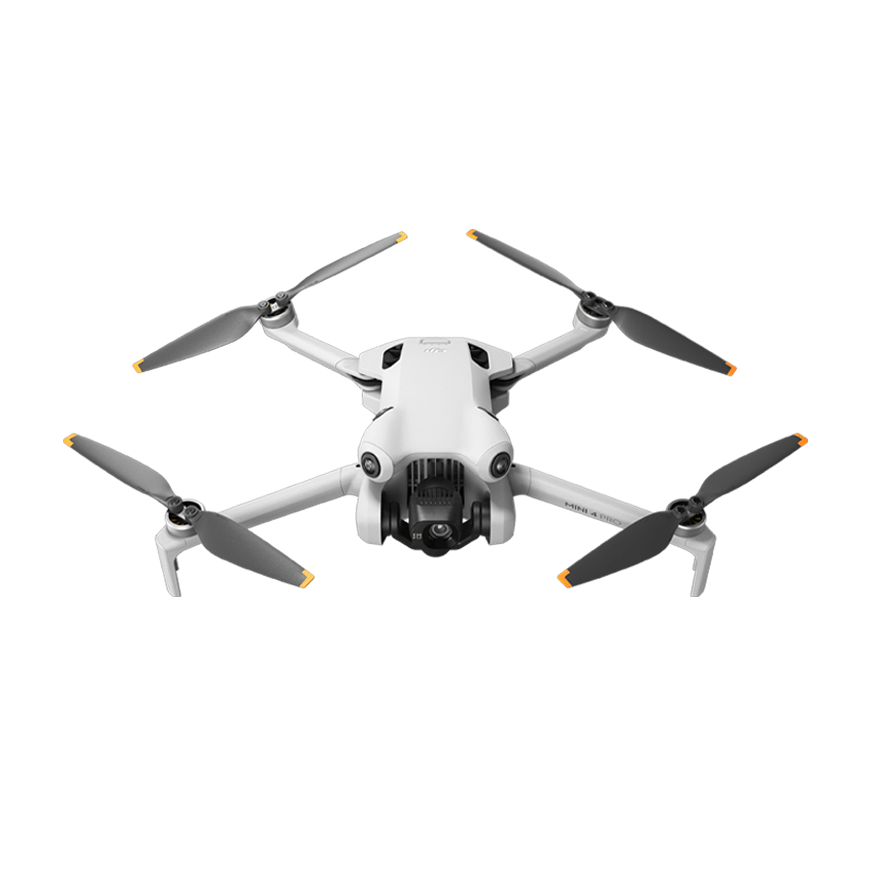
DJI Mini 4 Pro
Technical Specifications
Last updated: Oct 2026| Feature | DJI Lito X1 | DJI Mini 4 Pro |
|---|---|---|
| Weight | Under 249 g with standard battery; over 249 g with Intelligent Flight Battery Plus | <249 g with standard battery; over 249 g with Intelligent Flight Battery Plus |
| Dimensions | Not confirmed on the current global DJI product page reviewed for this update | 148×94×64 mm folded; 298×373×101 mm unfolded with propellers |
| Volume | Not calculated because confirmed dimensions were not available in the reviewed official global product material | Approx. 890 cm³ folded bounding-box volume |
| Max Speed | Not used as a headline comparison metric; the 18 m/s figure in the previous draft was not reconfirmed from the current official global product page | 16 m/s in Sport mode |
| Max Flight Distance | Not used as a headline metric; current official global material confirms transmission and battery endurance rather than the previous draft's 21 km physical-distance claim | 18 km standard; 25 km Plus (manufacturer-stated) |
| Sensor Size | 1/1.3-inch CMOS | 1/1.3-inch CMOS |
| Megapixels | 48 MP | 48 MP |
| Max ISO | Mode-dependent; not used as a headline winner because a complete official ISO table was not surfaced in the current global product material reviewed | Normal video up to ISO 6,400; Night video up to ISO 12,800 |
| Flight Time | 36 minutes standard; 52 minutes Plus (manufacturer-stated) | 34 minutes standard; 45 minutes Plus (manufacturer-stated) |
| Max Resolution | 4K/60fps HDR; 4K/100fps slow motion | 4K up to 60fps; 4K/100fps slow motion |
| Movie Bitrate | Not used as a confirmed headline value; the previous draft's 130 Mbps figure was not reconfirmed from the current global product page | 150 Mbps |
| Field of View | Not used as a confirmed headline value in this update | 82.1° |
| Transmission Range | DJI O4: up to 15 km under IC standard; 8 km CE/SRRC/MIC | DJI O4: 20 km FCC; 10 km CE/SRRC/MIC |
| Wind Resistance | Not used as a confirmed headline value in this update | 10.7 m/s |
| Obstacle Avoidance | Omnidirectional vision sensing with forward-facing LiDAR | Omnidirectional dual vision sensing with downward 3D infrared sensor |
| Battery Power | 2788 mAh, 19.52 Wh standard; 4680 mAh, 33.51 Wh Plus | 2590 mAh, 18.96 Wh standard; 3850 mAh, 28.4 Wh Plus where available |
| Charge Time | Approx. 45 minutes for one standard battery or 56 minutes for one Plus battery in the charging hub with DJI 65W Portable Charger | Approx. 70 minutes in aircraft or 58 minutes in charging hub with standard battery and DJI 30W charger |
| Internal Storage | 42 GB | 2 GB plus microSD expansion |
| GPS | Yes | Yes, GPS + Galileo + BeiDou |
| Obstacle Detection | Yes, omnidirectional vision sensing with forward-facing LiDAR | Yes, omnidirectional dual vision sensing |
| Return to Home | Yes, including route-memory assistance under supported conditions | Yes |
| Removable Battery | Yes | Yes |
| Shoots RAW | Yes | Yes, JPEG and DNG RAW |
| HDR Mode | Yes, 4K/60fps HDR | Yes |
| Weather Sealed | No official IP rating used in this comparison | No official IP rating |
| Best For | Buyers who want newer sensing, longer flights, ActiveTrack and built-in storage | Creators who want True Vertical Shooting, HLG and a fully documented spec sheet |
| Camera Sensor | 1/1.3-inch CMOS | 1/1.3-inch CMOS |
| Maximum Photo Resolution | 48 MP | 48 MP |
| Lens Aperture | f/1.7 | f/1.7 |
| 4K HDR Video | 4K/60fps HDR | 4K/60fps with HLG/D-Log M support |
| 4K Slow Motion | 4K/100fps | 4K/100fps |
| Dynamic Range | DJI states up to 14 stops in supported video capture | No directly comparable 14-stop headline claim on the Mini 4 Pro specs page |
| D-Log M | Yes, 10-bit | Yes, 10-bit 4:2:0 H.265 |
| HLG | Not confirmed in the current global Lito X1 product material reviewed | Yes, 10-bit 4:2:0 H.265 |
| Maximum Confirmed Video Bitrate | Not reconfirmed from current global product page | 150 Mbps |
| True Vertical Shooting | Not confirmed in the current global product material reviewed | Yes, gimbal rotates vertically |
| Standard Takeoff Weight | Under 249 g | Under 249 g |
| Standard Battery Capacity | 2788 mAh, 19.52 Wh | 2590 mAh, 18.96 Wh |
| Plus Battery Capacity | 4680 mAh, 33.51 Wh | 3850 mAh, 28.4 Wh |
| Standard Flight Time | 36 minutes | 34 minutes |
| Plus Flight Time | 52 minutes | 45 minutes |
| Obstacle Sensing | Omnidirectional vision + forward-facing LiDAR | Omnidirectional dual vision + downward 3D infrared |
| Forward LiDAR | Yes | No |
| Forward Vision Detection | LiDAR-assisted; exact 36 m figure from prior draft not reconfirmed here | 0.5-200 m detection range; 0.5-18 m measurement range |
| Transmission System | DJI O4 | DJI O4 |
| Published Headline Transmission | 15 km under IC standard | 20 km FCC |
| CE Transmission Range | 8 km | 10 km |
| Internal Storage | 42 GB | 2 GB |
| ActiveTrack | Yes | Yes, FocusTrack/ActiveTrack |
| Confirmed Dimensions | Not surfaced in the current global product material reviewed | 148×94×64 mm folded |
This comparison uses DJI's official product material. DJI's global Lito X1 page is less detailed than the Mini 4 Pro's spec sheet, so figures that could not be matched to it, including top speed, LiDAR range, bitrate and folded dimensions, are left out. Some earlier reports gave numbers for these; I'd wait for DJI to publish them.
Same sensor, different color options
Both drones use a 1/1.3-inch CMOS sensor with 48 MP stills and an f/1.7 aperture, record 4K up to 60fps and offer 4K/100fps slow motion. DJI markets the Lito X1 with up to 14 stops of dynamic range and 10-bit D-Log M. The Mini 4 Pro offers Normal, HLG and D-Log M, with HLG and D-Log M recorded as 10-bit 4:2:0 H.265, and a documented 150 Mbps maximum bitrate.
For vertical social video, the Mini 4 Pro is the safer choice: DJI documents True Vertical Shooting through gimbal rotation, and its Lito X1 material does not confirm an equivalent.
LiDAR is the Lito X1's clearest hardware upgrade
The Lito X1 pairs omnidirectional vision with a forward-facing LiDAR sensor, an extra ranging method beyond cameras. The Mini 4 Pro uses omnidirectional dual vision plus a downward 3D infrared sensor; DJI lists a forward detection range of up to 200 m and a forward measurement range of 0.5-18 m in supported conditions. How much LiDAR helps in practice, in darkness or around branches and wires, is something specs can't show.
Battery: 36/52 against 34/45 minutes
The Lito X1 uses a 2788 mAh standard and 4680 mAh Plus battery, rated for 36 and 52 minutes. The Mini 4 Pro is rated for 34 and 45 minutes. Its Plus battery is not sold in Europe. On both drones the Plus battery takes the weight above 249 g, which can change how the drone is regulated (see rules by weight).
Compare transmission figures under the same standard
DJI lists the Lito X1's O4 link at 15 km under the IC standard and 8 km under CE, SRRC and MIC. The Mini 4 Pro lists 20 km FCC and 10 km CE, SRRC and MIC. Putting 15 km next to 20 km mixes standards; under CE the Mini 4 Pro leads, 10 km to 8 km.
42 GB against 2 GB
The Lito X1's 42 GB lets you record a meaningful amount of footage without a microSD card. The Mini 4 Pro's 2 GB works as an emergency fallback but not as a replacement for a card when shooting 4K. If you often forget or fill cards, that alone favors the Lito X1.
Both are under 249 g with standard batteries. DJI lists the Mini 4 Pro's folded size as 148×94×64 mm and describes the Lito X1 only as palm-sized. For more on the newer drone, see our Lito X1 specs analysis.
DJI Lito X1
Strengths
- Forward LiDAR plus omnidirectional vision
- Rated for 36 minutes standard and 52 minutes Plus
- 42 GB internal storage
- 1/1.3-inch 48 MP sensor with f/1.7 lens
- 4K/60fps HDR, 4K/100fps and 10-bit D-Log M
- ActiveTrack and Smart RTH
Drawbacks
- 8 km CE range against the Mini 4 Pro's 10 km
- HLG and True Vertical Shooting not confirmed by DJI
- DJI's global page lists fewer detailed specs
- Plus battery takes it over 249 g
DJI Mini 4 Pro
Strengths
- True Vertical Shooting by gimbal rotation
- 150 Mbps maximum bitrate
- 10-bit HLG and D-Log M
- O4 at 20 km FCC and 10 km CE
- Same 1/1.3-inch 48 MP sensor and 4K/100fps
- Mature accessory and controller range
Drawbacks
- Rated for 34 minutes standard and 45 minutes Plus
- Only 2 GB internal storage
- No LiDAR
- Plus battery exceeds 249 g and is not sold in Europe
Lito X1 for LiDAR and battery life, Mini 4 Pro for vertical video
For most new buyers the DJI Lito X1 is the slightly better pick: it adds forward LiDAR to omnidirectional sensing, is rated for 36 minutes (52 with the Plus battery) and has 42 GB of internal storage. Choose the Mini 4 Pro if you want True Vertical Shooting, HLG and a documented 150 Mbps bitrate.
The cameras are closer than the age gap suggests. Both use a 1/1.3-inch 48 MP sensor with an f/1.7 lens, record 4K/60fps and shoot 4K/100fps slow motion, and both offer 10-bit D-Log M.
The Mini 4 Pro also has the longer transmission rating where the two can be compared directly: 10 km CE against 8 km. If you already own one and don't need LiDAR or the extra storage, I'd keep it.
Check DJI Lito X1 price on Amazon →Affiliate link. We may earn a commission at no extra cost to you.
Context and limitations
This comparison helps buyers choose between DJI Lito X1 and DJI Mini 4 Pro by translating the specification table into camera, flight, safety, workflow and value decisions. Recommendations are matched to user needs rather than based on a single headline number.
Limitations
The Friday Brief
One email a week on what changed in drones
FCC and FAA rule changes, DJI leaks checked against filings, and the week’s new comparisons. Every Friday, nothing else.
Free. Unsubscribe in one click. Sent with Kit; see our privacy policy.
Follow us on Google too: add Drone Ranker as a preferred source →

Alihan Demirdaş is the founder and editor of Drone Ranker. A software developer by profession, he researches drones the way he reads code: from the primary documents. Every review, comparison and news story on the site is written by him from manufacturer specification sheets, FCC and EU certification filings, aviation-authority rules and dated press releases, with the source linked. Unless a page is labelled hands-on, the analysis is documentary; when an aircraft is in his hands, the page says so and carries his own photographs and flight notes. He covers consumer, professional and agricultural drones and is based in Türkiye.