DJI Lito X1 vs Lito 1 vs Mini 3: Which Beginner DJI Drone Should You Buy?

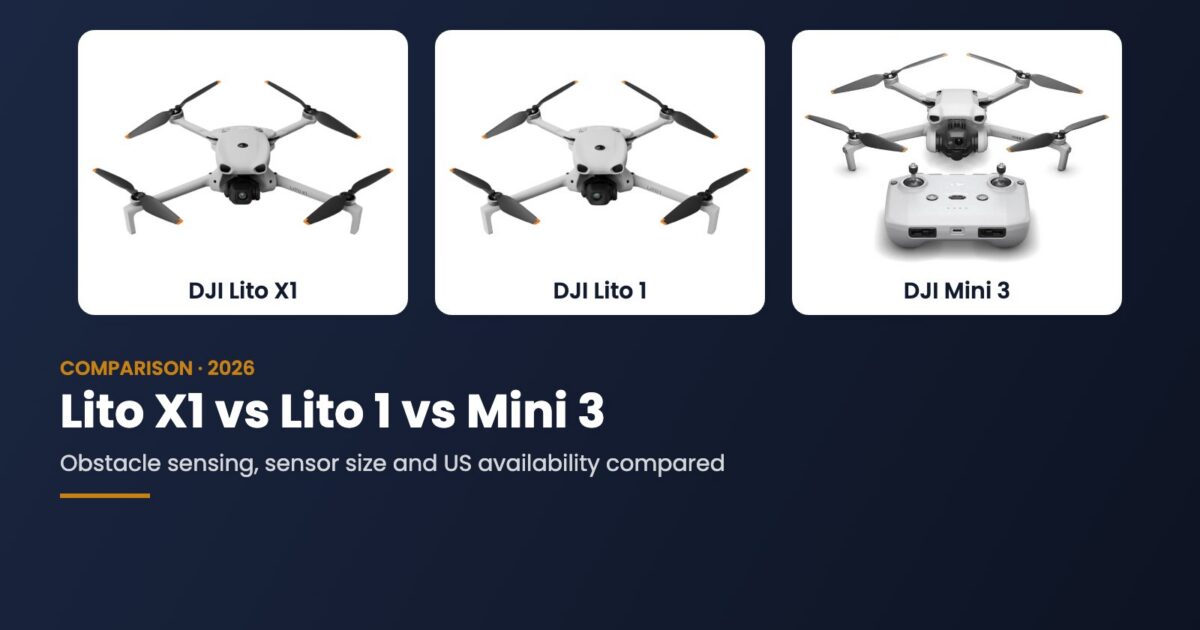
The DJI Lito X1, Lito 1 and Mini 3 all sit at about 249 g and all target first-time pilots, but they are not the same kind of drone. The two Litos, launched on 23 April 2026, bring obstacle sensing and O4 transmission to DJI’s cheapest camera drones. The Mini 3, on sale since December 2022, has a bigger sensor than the Lito 1 and a three-axis gimbal, but it cannot see obstacles at all.
Where you live decides half of this. The Litos are sold in Europe, the UK and other markets, but not in the US. The Mini 3 is still listed on Amazon US. Here is how the three compare on paper, and which one fits which buyer.
Quick answer
| DJI Lito X1 | DJI Lito 1 | DJI Mini 3 | |
|---|---|---|---|
| Launched | 23 April 2026 | 23 April 2026 | December 2022 |
| Weight | about 249 g | about 249 g | under 249 g |
| Sensor | 1/1.3-inch, 48 MP | 1/2-inch, 48 MP | 1/1.3-inch, 48 MP (12 MP native) |
| Max video | 4K/100 | 4K/100 | 4K/30 HDR |
| 10-bit D-Log M | Yes | Not listed | No |
| Obstacle sensing | Omnidirectional vision + forward LiDAR | Omnidirectional vision | Downward only |
| Transmission | O4, up to 15 km (FCC/IC) | O4, up to 15 km (IC) | O2, up to 10 km (FCC) |
| Max flight time | 36 min (52 with Plus) | 36 min (52 with Plus) | 38 min (51 with Plus) |
| Internal storage | 42 GB | None | None |
| Launch price | from €419 | from €339 / £299 | $409 (drone only) |
| Sold in the US | No | No | Yes |
Short version: in Europe or the UK, the Lito X1 is the one to buy unless the budget stops at the Lito 1. In the US, the choice is made for you: the Mini 3 is the only one of the three you can buy new.
Camera: the Lito 1 has the smallest sensor of the three
This is the detail most comparisons skip. The Lito X1 and the Mini 3 both use a 1/1.3-inch, 48 MP sensor. The Lito 1 drops to a 1/2-inch sensor, which has roughly half the surface area. In daylight the difference is small; at dusk, indoors or under heavy cloud, a smaller sensor means more noise sooner.
Video goes the other way. Both Litos record 4K at up to 100 fps, which gives slow motion that the Mini 3 cannot match: it tops out at 4K/30. Only the Lito X1 adds 10-bit D-Log M, the flat colour profile that holds more highlight and shadow detail for grading. If you never edit colour, that will not matter. If you do, it is the clearest reason to pay for the X1.
All three shoot true vertical video. The Mini 3 rotates its gimbal 90 degrees; the Litos record 2.7K vertical at up to 60 fps.
Obstacle sensing: the biggest gap
The Mini 3 has downward sensors for hovering and landing, and nothing facing forward, backward or sideways. If you fly it into a branch, it will not stop itself. That is the main reason the Litos exist.
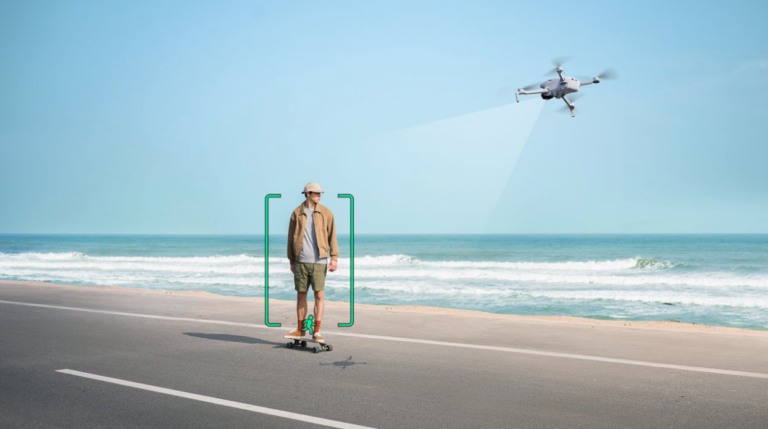
The Lito 1 has omnidirectional monocular vision with a downward infrared sensor; DJI rates its forward detection at 0.5–20 m. The Lito X1 adds a forward LiDAR sensor that measures large obstacles from 0.5 to 36 m, which helps in low light where cameras struggle. For a first drone, either Lito is a safer learning tool than the Mini 3.
One caveat for US readers: the FCC’s pending “military-grade” proposal targets foreign drones with LiDAR. The Lito X1 is not sold in the US anyway, but that proposal is why LiDAR comes up in US buying advice. Our LiDAR proposal explainer has the detail.
Transmission and flight time
Both Litos use DJI’s O4 system, rated up to 15 km under IC/FCC rules and 8 km under CE rules, with a 1080p/60 live feed. The Mini 3 uses the older O2 system: up to 10 km (FCC) with a 720p/30 feed. In practice, O4 holds a cleaner picture in crowded radio environments such as towns and parks.
Flight times are close on paper: 36 minutes for both Litos and 38 for the Mini 3 with standard batteries. DJI’s “typical” figure for the Litos is 23 minutes, which is a more honest planning number for any of the three. All three accept a Battery Plus pack, but it pushes each drone over 249 g. In the EU and UK the Lito Battery Plus is not sold at all.
Weight and registration
All three are designed to land just under 250 g with the standard battery, which keeps them in the lightest category in most countries. That does not mean no rules apply. In the EU and UK, the operator of a camera drone this size still has to register; in the US, recreational flyers with a sub-250 g drone skip FAA registration but still need the TRUST certificate. Our guides cover EU and UK rules and registration by weight.
Which one should you buy?
- Lito X1: the best all-round choice of the three for a European or UK beginner. Same sensor size as the Mini 3, faster video, D-Log M, LiDAR and internal storage.
- Lito 1: the cheapest way to get obstacle sensing and O4 from DJI. Accept the smaller sensor, and budget for a microSD card because it has no internal storage.
- Mini 3: the right answer in the US, where neither Lito is sold. Elsewhere it only makes sense at a clear discount, and only if you are comfortable flying without obstacle avoidance.
Available on Amazon US
DJI Mini 3
1/1.3-inch sensor, 4K/30 HDR, up to 38 min. No obstacle sensing. The one of these three you can buy new in the US.
The cheaper US alternative: 1/2.3-inch sensor, 4K/30, 3-axis gimbal, also no obstacle sensing.
DJI Mini 4 Pro (RC-N2)
If you want obstacle sensing in the US: omnidirectional vision without LiDAR.
As an Amazon Associate, Drone Ranker earns from qualifying purchases. We do not quote prices because Amazon’s change by the hour.
For the full spec tables, see our comparisons of the Mini 3 vs Lito X1 and the Lito X1 vs Mini 3 Pro, and our reviews of the Lito X1 and Lito 1. If you are considering a non-DJI option, we also compared the Potensic Atom 3 with the Lito X1.
Frequently asked questions
Is the DJI Lito X1 better than the Mini 3?
On paper, yes for most buyers. It has the same 1/1.3-inch sensor size, 4K/100 instead of 4K/30, 10-bit D-Log M, O4 transmission and omnidirectional obstacle sensing with forward LiDAR. The Mini 3 has none of those, but it is sold in the US and the Lito X1 is not.
What is the difference between the DJI Lito 1 and Lito X1?
The Lito X1 has a larger 1/1.3-inch sensor (the Lito 1 uses 1/2-inch), 10-bit D-Log M, forward LiDAR on top of omnidirectional vision, and 42 GB of internal storage. The Lito 1 costs less: from €339 against €419 at launch.
Does the DJI Mini 3 have obstacle avoidance?
No. It only has downward sensors for hovering and landing. It will not stop for obstacles in front, behind or to the sides.
Can you buy the DJI Lito X1 or Lito 1 in the US?
No. Neither drone has been released in the US, and new DJI aircraft cannot get FCC authorization after the Covered List decision of 22 December 2025.
Do the Lito X1, Lito 1 and Mini 3 need to be registered?
In the US, recreational flyers do not have to register a drone under 250 g but need the TRUST certificate. In the EU and UK, the operator must register because the drones carry cameras. With a Battery Plus pack, all three go over 249 g.
Product links on this page are Amazon affiliate links. If you buy through them, Drone Ranker may earn a commission at no cost to you. We compare drones from manufacturer specifications and filings, not hands-on flight tests.
Sources
The Friday Brief
One email a week on what changed in drones
FCC and FAA rule changes, DJI leaks checked against filings, and the week’s new comparisons. Every Friday, nothing else.
Free. Unsubscribe in one click. Sent with Kit; see our privacy policy.
Follow us on Google too: add Drone Ranker as a preferred source →
Continue Reading
All News