DJI Flip vs Avata 2: Camera Drone or FPV? Which One to Buy in 2026

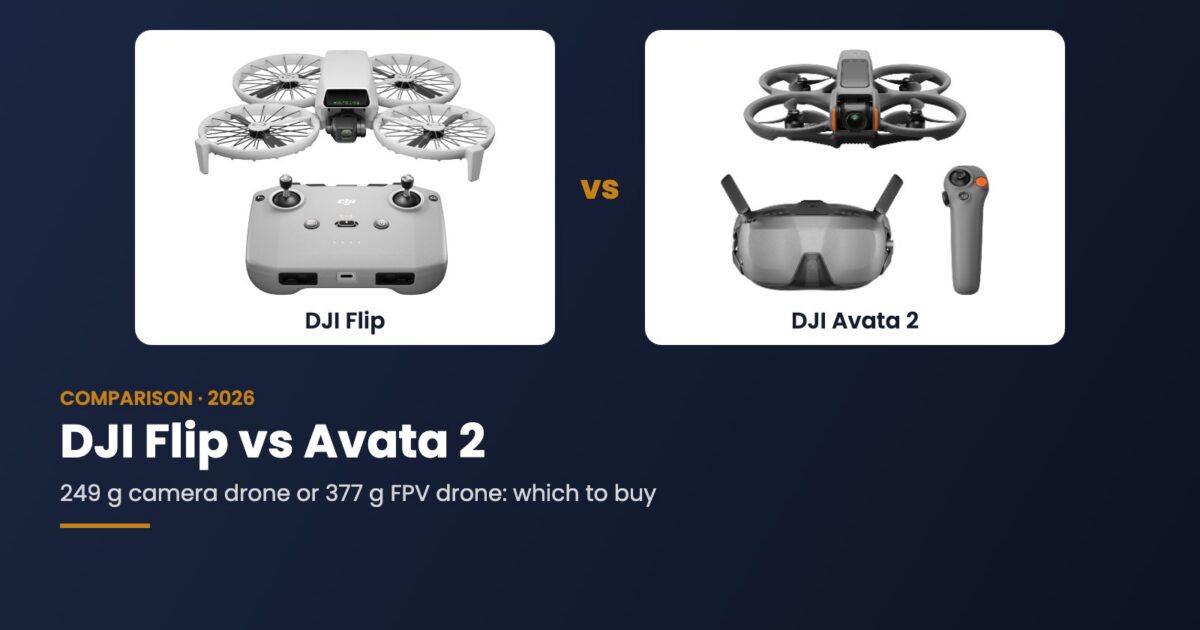
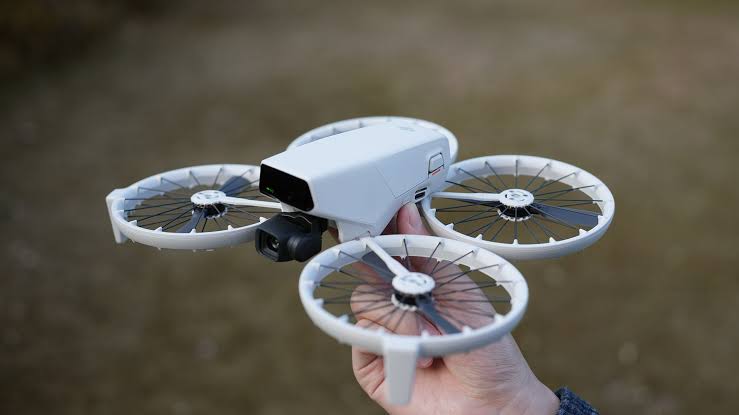
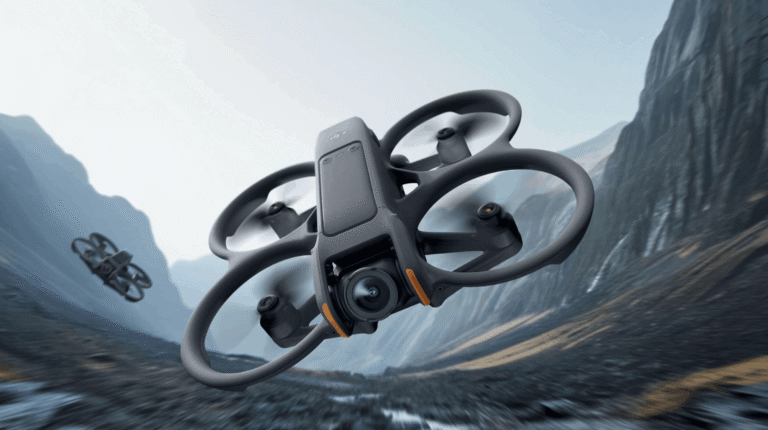
The DJI Flip and the DJI Avata 2 both fly with their propellers enclosed, which is why they get compared. After that they have little in common. The Flip is a folding 249 g camera drone you fly like any DJI Mini, with a gimbal and a phone or RC-N3 controller. The Avata 2 is a 377 g FPV drone you fly through goggles, built for immersive dives, flips and close passes.
So the real question is not which one is better, but which kind of flying you want. Here is how they compare on paper.
Quick answer
| DJI Flip | DJI Avata 2 | |
|---|---|---|
| Type | Folding camera drone with full prop guards | FPV drone with built-in prop guards |
| Launched | January 2025 (US) | April 2024 |
| Weight | under 249 g | 377 g |
| Sensor | 1/1.3-inch, 48 MP | 1/1.3-inch, 12 MP |
| Video | 4K/60 HDR, 4K/100 slow motion | 4K/60 HDR, 155° ultra-wide |
| Stabilisation | 3-axis mechanical gimbal | Single-axis gimbal + electronic stabilisation |
| How you fly it | Phone app or RC-N3 / RC 2 | Goggles 3 + RC Motion 3 or FPV Remote Controller 3 |
| Max flight time | 31 min | 23 min |
| Transmission | O4, up to 13 km (FCC), 8 km (CE) | O4, up to 13 km (FCC), 10 km (CE) |
| Obstacle sensing | Forward 3D infrared, downward vision + infrared | Downward and backward vision, downward ToF |
| Launch price (US) | $439 with RC-N3 | $999 Fly More Combo |
| FAA registration (recreational) | Not required, TRUST needed | Required (over 250 g) |
Short version: the Flip is the better buy for travel, vlogging and steady aerial video. The Avata 2 is the better buy if you want to feel like you are flying, and you are willing to wear goggles and register the drone.
Camera and footage
Both use a 1/1.3-inch sensor, but they are tuned for different results. The Flip has 48 MP stills, a three-axis gimbal and 4K/100 slow motion, so its footage looks like a conventional drone: level horizon, smooth pans, sharp photos.
The Avata 2 shoots 12 MP stills and 4K/60 video with a 155-degree field of view. It uses a single-axis gimbal with electronic stabilisation (RockSteady and HorizonSteady) to smooth the image. The result is wide, immersive and dynamic, the look of FPV footage rather than a tripod in the sky. Both offer 10-bit D-Log M for grading.
How you fly them
This is the deciding difference. The Flip flies like any DJI Mini: take off from your palm, frame the shot on a phone, use ActiveTrack or QuickShots. DJI pitches it at vloggers, and it can be flown without a controller for its automated modes.
The Avata 2 is flown through DJI Goggles 3. In the standard Fly More Combo you steer with the RC Motion 3, a one-handed motion controller that turns the drone in the direction you point. It also supports one-tap flips and rolls (Easy ACRO). An FPV Remote Controller 3 adds full manual (acro) flying for those who want to learn it. In the US, flying with goggles means you need a visual observer next to you who keeps the drone in sight.
Safety, range and battery
The Flip’s full-coverage propeller guards make it the more forgiving drone around people and indoors, and it has a forward 3D infrared sensor to help avoid obstacles in front. The Avata 2 also has ducted propellers and can bump through light contact, but it has only downward and backward sensing, so avoiding obstacles ahead is down to the pilot.
On paper the Flip flies longer (31 minutes against 23). Both use O4 and are rated to 13 km under FCC rules; under CE rules the Flip is rated to 8 km and the Avata 2 to 10 km. Real-world FPV flights are usually shorter than the rated time because they are flown harder.
Weight and rules
At under 249 g, the Flip stays in the lightest category: US recreational flyers do not register it, though they still need the TRUST certificate. The 377 g Avata 2 must be registered with the FAA and broadcast Remote ID. In the EU and UK both need operator registration; see our EU and UK rules guide and registration by weight.
Which one should you buy?
- Buy the Flip if you want travel and vlog footage, a drone that fits in a bag, longer flights and no FAA registration.
- Buy the Avata 2 if the goal is the FPV experience itself: immersive flying, close passes, flips. Budget for registration and a visual observer.
- Consider neither if you mostly want landscape photos. A Mini 4 Pro gives a better camera and omnidirectional sensing at a similar weight to the Flip.
The drones in this comparison
DJI Flip (RC-N3)
249 g, three-axis gimbal, 4K/60 HDR, 31 min, full prop guards.
DJI Avata 2 Fly Smart Combo
377 g FPV drone with Goggles 3 and RC Motion 3 in the box.
DJI Mini 4 Pro (RC-N2)
The alternative if photos matter most: omnidirectional sensing, 4K/60 HDR.
As an Amazon Associate, Drone Ranker earns from qualifying purchases. We do not quote prices because Amazon’s change by the hour.
The full spec table is in our Flip vs Avata 2 comparison, and each drone has its own review: DJI Flip and DJI Avata 2. If the Flip is on your list, see also Flip vs Mini 4 Pro.
Frequently asked questions
Is the DJI Flip an FPV drone?
No. It has full propeller guards like an FPV drone, but you fly it like a regular camera drone from a phone or controller. It does not support goggles for FPV flight.
Which is better for beginners, Flip or Avata 2?
For most beginners the Flip: it is lighter, needs no registration for recreational flying in the US, has a forward obstacle sensor and flies like any DJI Mini. The Avata 2 is beginner-friendly for FPV, but FPV is a different skill.
Does the Avata 2 need to be registered with the FAA?
Yes. At 377 g it is over the 250 g threshold, so it must be registered and broadcast Remote ID, even for recreational flying.
Which has better video, Flip or Avata 2?
They are built for different looks. The Flip’s three-axis gimbal gives smooth, level footage and 48 MP photos. The Avata 2 gives wide 155-degree FPV footage with electronic stabilisation.
Can you still buy the Flip and Avata 2 in the US?
Yes. Both received FCC authorization before the Covered List decision of December 2025 and are listed on Amazon US.
Product links on this page are Amazon affiliate links. If you buy through them, Drone Ranker may earn a commission at no cost to you. We compare drones from manufacturer specifications and filings, not hands-on flight tests.
Sources
The Friday Brief
One email a week on what changed in drones
FCC and FAA rule changes, DJI leaks checked against filings, and the week’s new comparisons. Every Friday, nothing else.
Free. Unsubscribe in one click. Sent with Kit; see our privacy policy.
Follow us on Google too: add Drone Ranker as a preferred source →
Continue Reading
All News