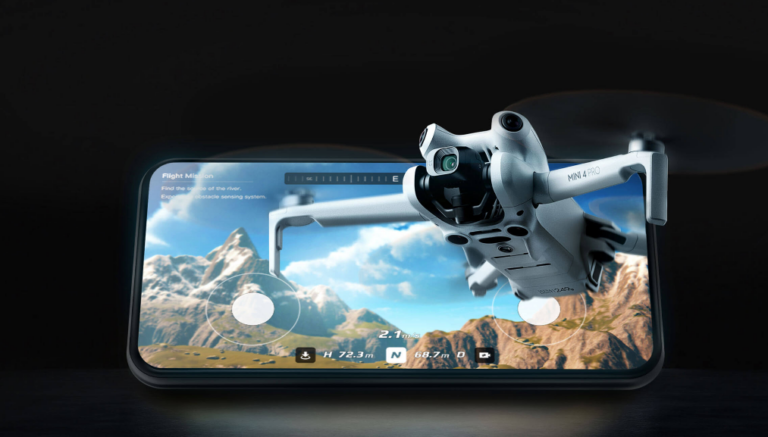
DJI Flip vs DJI Mini 4 Pro: Which Drone Should You Buy?

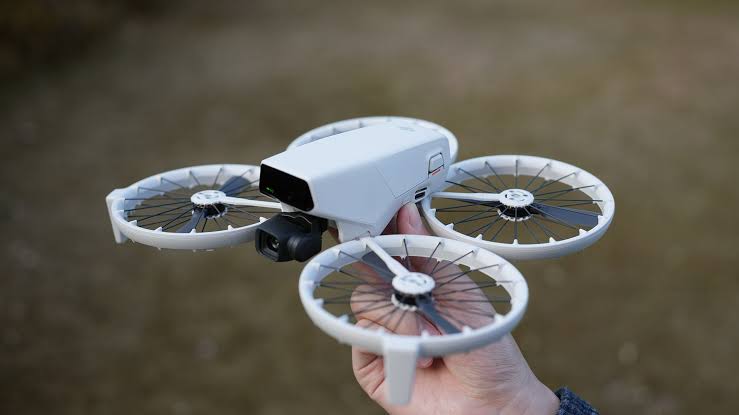
DJI Flip vs DJI Mini 4 Pro: buy the Flip if you want quick, guarded takeoffs and simple self-filming; buy the Mini 4 Pro if you need true vertical 4K, wider obstacle sensing and more control over complex shots. Both are sub-249 g camera drones with a 1/1.3-inch sensor, RAW photos, a three-axis gimbal and DJI O4 transmission. The choice turns on how you fly, not on the shared sensor headline.
This is a specification-based buying analysis checked against DJI’s published documents on 22 September 2026. We have not flown these two aircraft side by side, so the camera and flight comparisons below describe documented capabilities rather than measured image quality or real-world endurance.
Table of Contents
DJI Flip vs DJI Mini 4 Pro: quick verdict
- Choose DJI Flip for palm launch, foldable full-coverage propeller guards and short, spontaneous follow shots. Its camera already offers 4K/60fps HDR, 4K/100fps slow motion and D-Log M.
- Choose DJI Mini 4 Pro for true vertical shooting, omnidirectional obstacle sensing, ActiveTrack 360°, waypoint flight and a more complete camera-drone workflow.
- Keep what you own if the other model solves no problem in your current footage. A feature list is useful only when it changes the shots you can make.
DJI Flip vs DJI Mini 4 Pro specs at a glance
| Feature | DJI Flip | DJI Mini 4 Pro |
|---|---|---|
| Standard takeoff weight | Under 249 g | Under 249 g |
| Sensor / photos | 1/1.3-inch; up to 48 MP; JPEG and DNG | 1/1.3-inch; up to 48 MP; JPEG and DNG |
| Maximum 4K frame rate | 60fps normal; 100fps slow motion | 60fps normal; 100fps slow motion |
| Vertical video | 2.7K vertical mode | True vertical camera rotation; 4K/60fps HDR |
| Sensing | Forward 3D infrared and downward sensing | Omnidirectional vision plus downward 3D infrared |
| Propeller protection | Integrated foldable full-coverage guards | Open propellers in standard configuration |
| Rated maximum flight time | 31 minutes | 34 minutes with standard battery |
| Transmission | O4; up to 13 km FCC / 8 km CE | O4; up to 20 km FCC / 10 km CE |
| Internal storage | 2 GB | 2 GB |
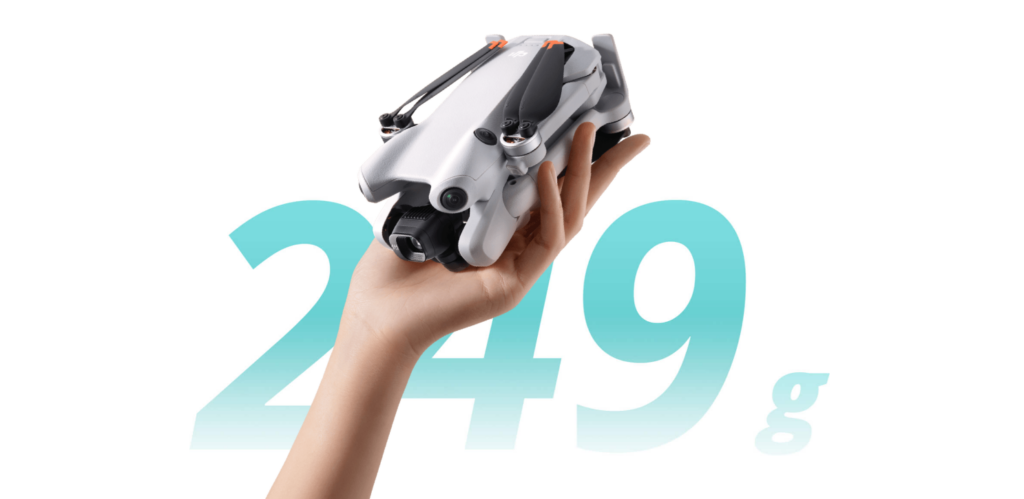
Those are manufacturer ratings under stated test conditions, not promises for a typical flight. DJI lists both aircraft in the EU C0 class. Check the rules for your aircraft, battery and location before flying.
DJI Flip vs DJI Mini 4 Pro camera and vertical video
Neither drone automatically wins image quality merely because its specification sheet says “48 MP.” Both use a 1/1.3-inch sensor class with an f/1.7, 24 mm-equivalent lens. Both support DNG photos, 4K recording up to 60fps in normal video and 100fps for slow-motion capture. DJI lists D-Log M for the Flip and D-Log M plus HLG for the Mini 4 Pro. Color processing and sharpness require controlled footage to judge; we have not measured either here.
The practical split is portrait composition. The Mini 4 Pro rotates its camera for true vertical shooting. Flip’s published specification lists a 2.7K vertical mode at up to 30fps. If most of your deliverables are vertical social clips and you want the maximum native portrait resolution, the Mini 4 Pro gives you more room. If horizontal 4K is your main output and portrait clips are occasional, Flip’s vertical mode may be sufficient.
For a closer look at the higher-end model on its own, see our DJI Mini 4 Pro review. Buyers working to a stricter budget should also read the Mini 4K review; it is a different camera and safety tier from either drone in this comparison.
DJI Flip vs DJI Mini 4 Pro safety and obstacle sensing
Flip’s distinctive feature is its foldable full-coverage propeller guard. DJI designed it for close, casual filming and palm takeoff. The guard reduces the exposure of spinning propellers during a hand launch or an accidental brush, but it does not make flying near people or obstacles risk-free.
The Mini 4 Pro instead uses omnidirectional binocular vision with a downward infrared sensor. Its sensing system covers more directions than Flip’s forward 3D infrared and downward sensors. That matters when you fly sideways or backward to track a subject or compose an orbit. Flip’s own FAQ warns that forward braking can be insufficient at higher follow speeds, so its guard should never be treated as a substitute for open space and pilot attention.
In simple terms: choose the Flip’s protected propellers if your priority is starting a shot quickly and filming yourself in clear, close-range spaces. Choose Mini 4 Pro’s broader sensing when the shot requires more demanding camera movement. Neither system guarantees that the aircraft will avoid thin branches, wires, poor light or every obstacle.
DJI Flip vs DJI Mini 4 Pro tracking and controls
DJI Flip can launch from the palm and record a follow shot without a remote controller. DJI also supports app, voice and conventional remote control, although its mobile app virtual sticks are for positioning and return rather than full manual flying. This makes Flip particularly appealing for a solo traveler who wants a short clip without assembling a larger shooting routine.
Mini 4 Pro is the stronger tool when the pilot wants to design the route. DJI documents ActiveTrack 360°, waypoint flight, cruise control and Advanced Return to Home. That does not mean every automated path is safe; it means there are more ways to plan and repeat camera motion. Our Neo 2 vs Flip comparison gives more context for readers choosing a self-filming drone rather than a conventional Mini.
DJI Flip vs DJI Mini 4 Pro battery life, range and weight
DJI rates Flip for up to 31 minutes and Mini 4 Pro for up to 34 minutes with its standard battery. The three-minute paper difference is small enough that wind, filming style, temperature and reserve for landing can matter more. Plan flights around a safe return margin, not the maximum printed on a product page.
Both use O4, but DJI’s ideal, unobstructed transmission figures differ: 13 km FCC / 8 km CE for Flip, versus 20 km FCC / 10 km CE for Mini 4 Pro. These numbers describe a controlled radio test, not a sensible flight target. Local rules, line of sight, interference and battery endurance still limit where you should fly.
Both standard aircraft are under 249 g and have EU C0 classification in DJI’s published specifications. Mini 4 Pro’s optional Plus battery takes it above 249 g, and DJI says that battery is not sold in Europe. Compare the actual kit and local rules rather than assuming every box or battery combination has identical treatment.
DJI Flip vs DJI Mini 4 Pro: which offers better value?
There is no evergreen answer based on a single sticker price: regional availability, controller bundles, discounts and used-condition vary. Compare the complete kit cost with the same number of batteries, the controller you will use, charger and storage. Flip is the better value when its guarded, controller-free workflow is the reason you are buying. Mini 4 Pro earns its premium when true vertical video, all-direction sensing or repeatable flight paths will be used regularly.
If you already own a Mini 4 Pro, Flip is a second, more spontaneous shooting tool rather than a camera upgrade on paper. If you own a Flip and consistently lose shots because you need native vertical 4K or broader sensing, the Mini 4 Pro is a meaningful step. If your next priority is a larger camera sensor, compare the Mini 5 Pro and Mini 4 Pro before buying either.
Frequently asked questions
Does DJI Flip have the same camera as Mini 4 Pro?
They share a 1/1.3-inch sensor class, 48 MP photo option and f/1.7 lens specification. That alone does not prove identical image quality. The clearest documented camera difference for many buyers is Mini 4 Pro’s true vertical shooting versus Flip’s 2.7K vertical mode.
Does DJI Flip have obstacle avoidance?
Flip has forward 3D infrared and downward sensing. It does not have the Mini 4 Pro’s omnidirectional vision coverage. Its enclosed propellers are a separate safety feature, not an all-direction obstacle-avoidance system.
Is Mini 4 Pro worth it over DJI Flip?
Yes if your work needs true vertical 4K, omnidirectional sensing or the Mini 4 Pro’s advanced flight modes often enough to justify the full kit cost. For casual self-filming in open spaces, Flip can meet the same core 4K camera need with a faster palm-launch workflow.
Which is better for beginners?
Flip is easier to start using for short, guarded self-filming shots. Mini 4 Pro gives a learner more sensing coverage for conventional remote-controlled flying. Neither removes the need to learn local rules, preflight checks and safe landing margins.
Final verdict
DJI Flip vs DJI Mini 4 Pro is a workflow decision. The Flip makes it easier to get a quick shot of yourself with guarded propellers. The Mini 4 Pro gives a deliberate pilot more framing and flight-planning options. Buy the capability you will actually use; the shared sensor size and 4K headline cannot decide that for you.
Editorial method: This article compares DJI’s published specifications and support documentation. It does not claim hands-on testing. Specifications were checked on 22 September 2026 and may change with firmware, region or product revisions.
Primary sources
Compare the figures directly in the official DJI Flip specifications and official DJI Mini 4 Pro specifications. DJI’s Flip FAQ explains palm control and sensing limits; the Mini 4 Pro FAQ documents its tracking and camera features.
Sources
Primary references used for factual claims in this article.
Continue Reading
All News