DJI Drone Weight Chart 2026: The Ultimate, Honest List of Every Model From 135 g to 9.7 kg

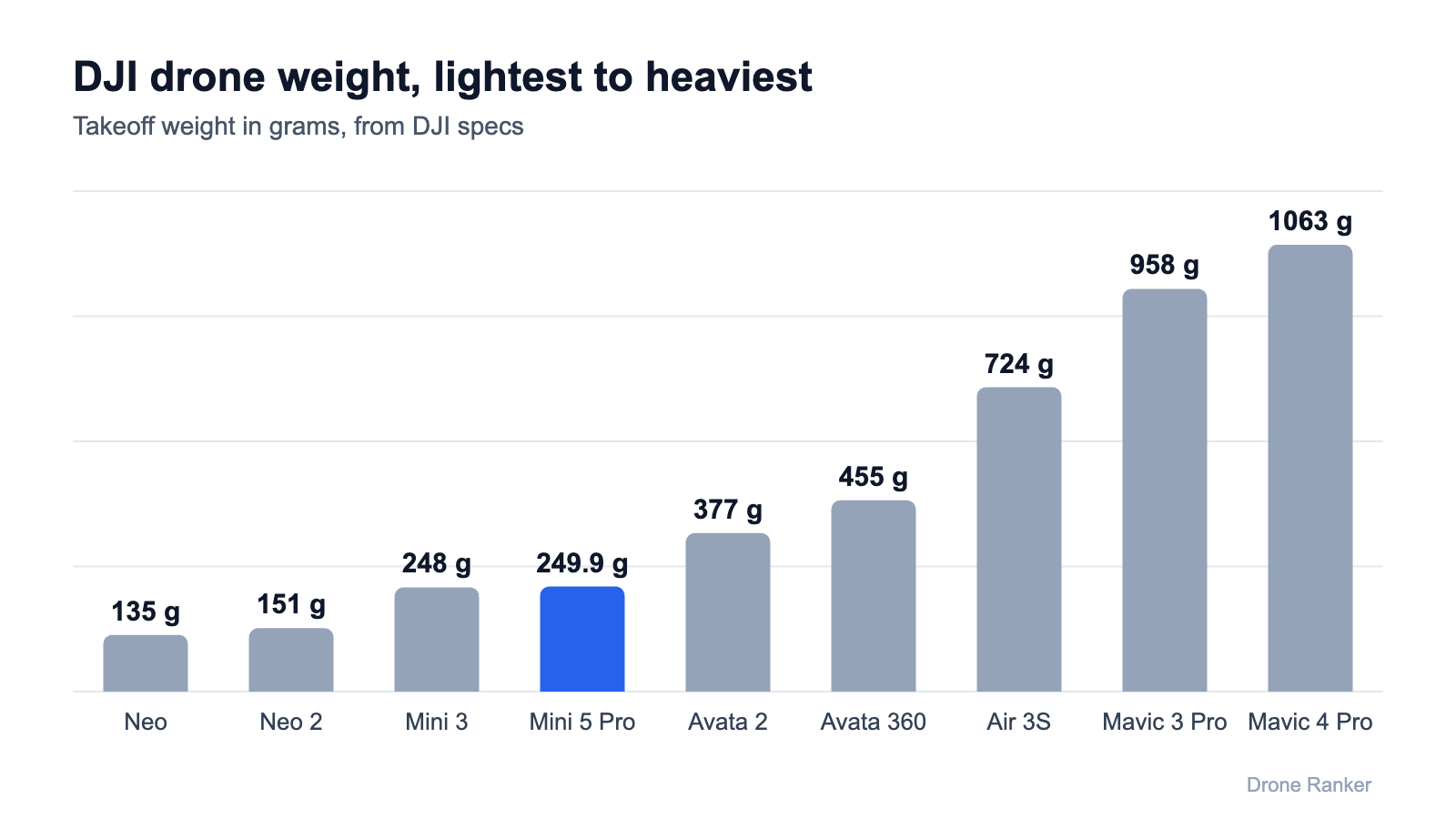
DJI drone weight now runs from 135 g for the original DJI Neo to 1,063 g for the Mavic 4 Pro, and all the way to 9.74 kg for the enterprise Matrice 400. We pulled every figure in this guide from DJI’s own spec pages, so you can compare the whole range in one place instead of opening fifteen tabs.
One thing to know before you read the numbers: DJI quotes takeoff weight, which includes the battery, propellers and usually a microSD card, and it notes that real units can vary slightly between production batches. That small tolerance matters most for the drones that sit right on the 250 g line.
In this guide
The full DJI drone weight chart
| Model | Takeoff weight | Note |
|---|---|---|
| DJI Neo | about 135 g | Lightest current DJI drone |
| DJI Neo 2 | 151 g | 160 g with the Digital Transceiver |
| DJI Mini 3 | 248 g | Standard battery |
| DJI Flip | under 249 g | Standard battery and microSD card |
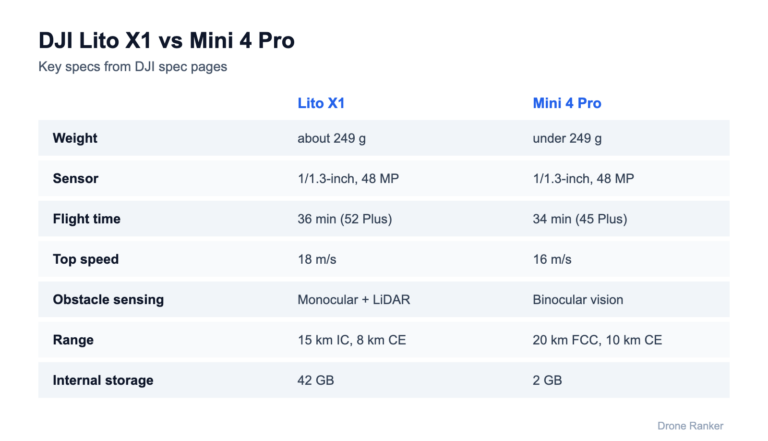
| DJI Mini 4 Pro | under 249 g | Standard battery |
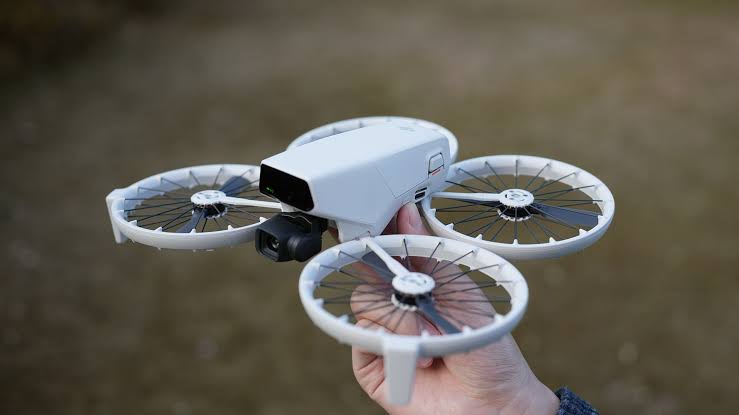
| DJI Lito 1 | about 249 g | Up to about 340 g max takeoff weight |
| DJI Lito X1 | about 249 g | Up to about 340 g max takeoff weight |
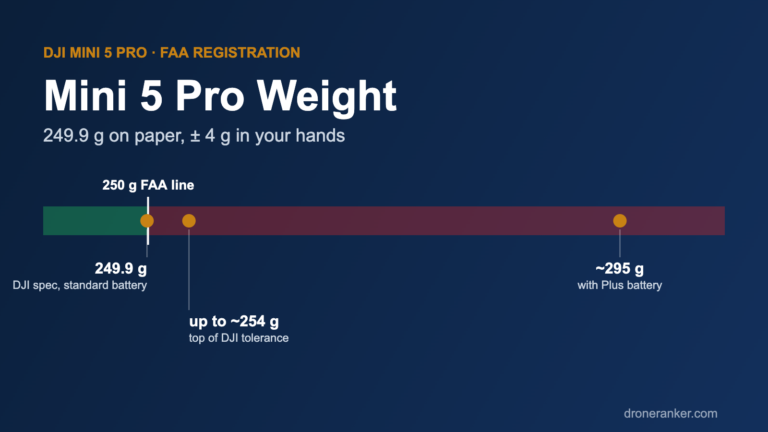
| DJI Mini 5 Pro | 249.9 g | DJI says plus or minus 4 g |
| DJI Avata 2 | about 377 g | FPV |
| DJI Avata 360 | about 455 g | 360-degree FPV |
| DJI Air 3S | 724 g | Dual camera |
| DJI Mavic 3 Pro | 958 g | 963 g for the Cine version |
| DJI Mavic 4 Pro | about 1,063 g | Heaviest consumer camera drone |
| DJI Inspire 3 | about 3,995 g | Max takeoff about 4,310 g |
| DJI Matrice 400 | 9,740 g | Max takeoff 15.8 kg |
Why the DJI drone weight line at 250 g matters
In the US, the FAA requires recreational pilots to register any drone that weighs more than 250 g, and every drone flown under the commercial Part 107 rule must be registered whatever it weighs. In the EU, 250 g is the top of the C0 class, which carries the lightest set of rules. That is why so much of DJI’s line-up is engineered to sit just under the limit.
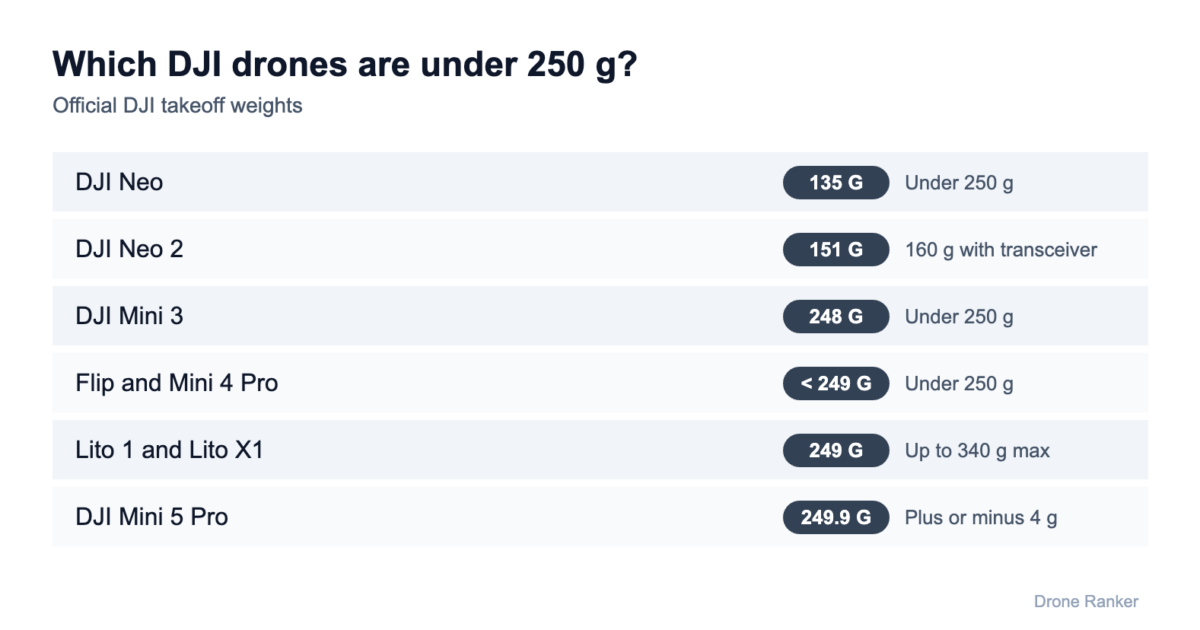
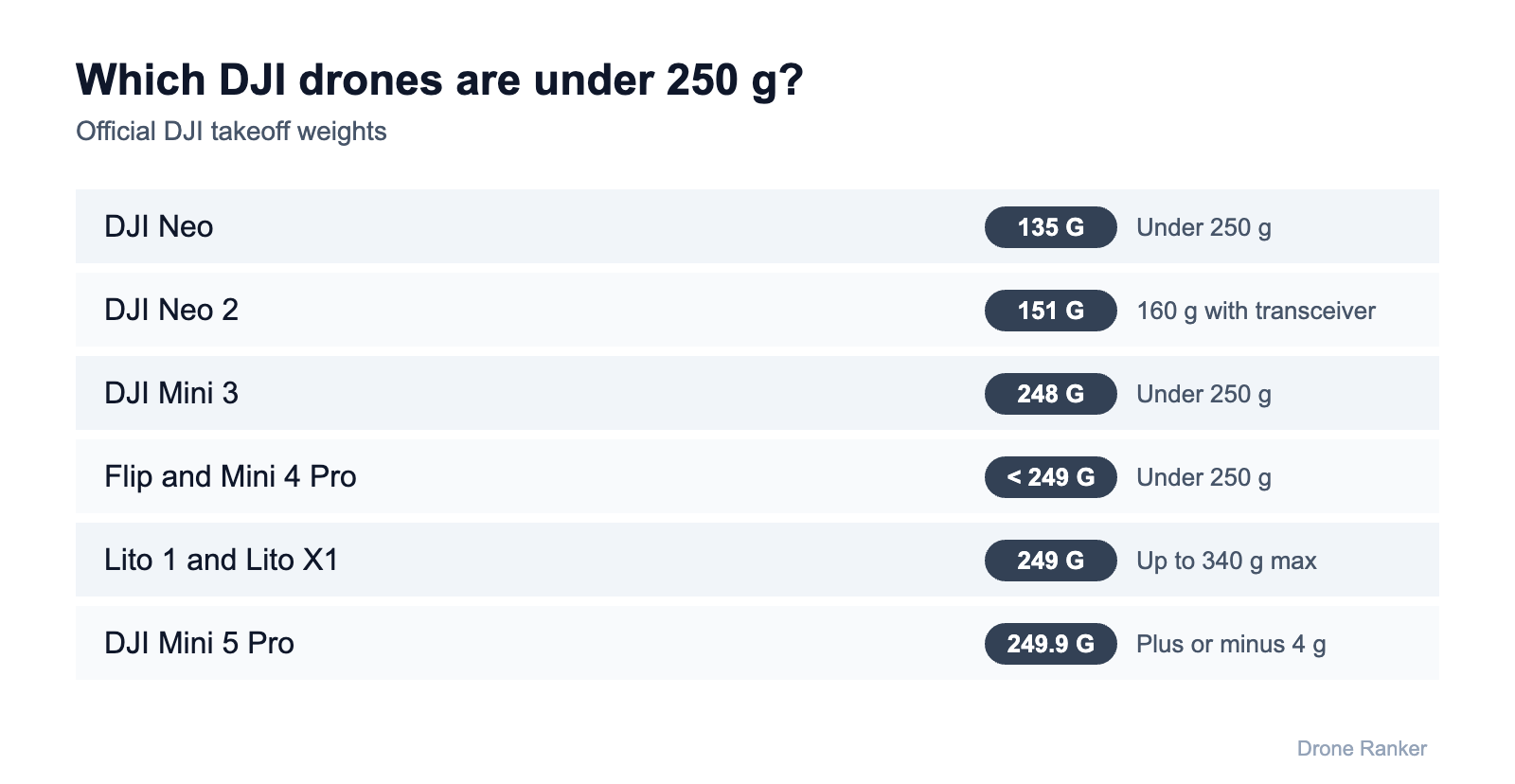
The edge cases are worth a closer look. The Mini 5 Pro is listed at 249.9 g with a plus or minus 4 g tolerance, so a heavier unit can tip over the line; we explain what that means in our DJI Mini 5 Pro weight guide. The Lito 1 and Lito X1 are about 249 g in standard form, but DJI gives a maximum takeoff weight of about 340 g once accessories are fitted.
The lightest DJI drones
At the bottom of the DJI drone weight range, the Neo family is in a class of its own. The original Neo weighs about 135 g and the Neo 2 151 g, or 160 g with the Digital Transceiver that adds goggles and remote controller support. Both leave plenty of room under 250 g, so there is no scale anxiety and no FAA registration for recreational flying.
Next come the folding sub-250 g camera drones: the Mini 3 at 248 g, and the Flip and Mini 4 Pro, which DJI lists as under 249 g. These are the best choice if you want a capable camera without the paperwork that comes with heavier aircraft.
FPV and the mid-weight jump
DJI’s FPV drones break the 250 g barrier straight away. The Avata 2 is about 377 g and the Avata 360 about 455 g. That extra mass buys prop guards, bigger batteries and more stable footage, but it also means recreational pilots in the US must register the drone and pass the free TRUST test before flying.
The Air 3S is the big step up in DJI drone weight within the folding range, at 724 g. Its dual cameras and larger battery make it far more stable in wind than any Mini, at the cost of nearly three times the weight.
Mavic weight: from the 3 Pro to the 4 Pro
If you are searching for DJI Mavic weight, the answer depends on the generation. The Mavic 3 Pro weighs 958 g, or 963 g for the Cine version, while the Mavic 4 Pro moves up to about 1,063 g. Our Mavic 4 Pro weight guide covers its battery, folded size and the airline rules for travelling with it.
That extra weight is not wasted. A heavier, larger drone resists gusts better and carries bigger sensors, which is why the Mavic line remains DJI’s choice for serious aerial photography.
Professional and enterprise DJI drone weight
At the top end, the Inspire 3 weighs about 3,995 g with its gimbal camera, two batteries, lens and storage, and can take off at about 4,310 g. The enterprise Matrice 400 is in another league at 9.74 kg ready to fly and 15.8 kg maximum takeoff weight, as we break down in our DJI Matrice 400 weight guide. Both still sit under the FAA’s 55 lb limit for the small drone rules.
How to choose a DJI drone by weight
If you travel a lot or want the fewest rules, start with the sub-250 g group: the Neo 2 for simple follow-me video, or the Mini 4 Pro and Mini 5 Pro for serious photos. If wind stability and image quality matter more than paperwork, the Air 3S is the sweet spot. Choose a Mavic only if you need its larger sensors, and treat anything heavier as a professional tool. Whatever you pick, check DJI’s current spec page before you register, because DJI drone weight figures can shift with accessories and batteries.
The Friday Brief
One email a week on what changed in drones
FCC and FAA rule changes, DJI leaks checked against filings, and the week’s new comparisons. Every Friday, nothing else.
Free. Unsubscribe in one click. Sent with Kit; see our privacy policy.
Follow us on Google too: add Drone Ranker as a preferred source →
Continue Reading
All News