Best Mini Drones in 2026: 5 DJI Models Compared

The best mini drone in 2026 is the DJI Mini 5 Pro, for its 1-inch sensor and forward LiDAR. DJI does not sell it in the US, so American buyers should look at the DJI Mini 4 Pro, which is still in DJI’s US store. Outside the US, the DJI Lito X1 is the best value, from €419 with O4 transmission and forward LiDAR (launched April 2026). The DJI Mini 4K is the budget pick, and the DJI Neo 2 is the one for selfies and quick social clips.
If you are tempted to wait: the Neo 3 is expected in October–November 2026, while DJI has not announced a Mini 6 Pro and our tracker expects it in 2027.
This guide compares five DJI drones: the Mini 5 Pro, Mini 4 Pro, Mini 3, Mini 4K and Neo 2. The ranking is based on DJI’s official specifications and published FAA and EASA guidance. We did not fly these aircraft for this article, so treat it as a spec-based editorial assessment. If you’re still unsure, try the 1-minute drone finder quiz, and if you’re comparing DJI’s cheapest models, see Lito X1 vs Lito 1 vs Mini 3.
Table of Contents
The five side by side
| Model | Best for | Standard weight | Camera | Max video | Max flight time | Obstacle sensing | Transmission |
|---|---|---|---|---|---|---|---|
| DJI Mini 5 Pro | Best overall | 249.9 g nominal | 50 MP, 1-inch CMOS | 4K/120fps | 36 min; 52 min with Plus battery | Omnidirectional binocular vision, forward LiDAR, downward infrared | O4+, up to 20 km FCC |
| DJI Mini 4 Pro | Premium value | Under 249 g | 48 MP, 1/1.3-inch CMOS | 4K/100fps | 34 min; 45 min with Plus battery | Omnidirectional binocular vision and downward infrared | O4, up to 20 km FCC |
| DJI Mini 3 | Camera and battery value | 248 g | 48 MP, 1/1.3-inch CMOS | 4K/30fps | 38 min; 51 min with Plus battery | Downward vision positioning | O2, up to 10 km FCC |
| DJI Mini 4K | Budget beginners | Approximately 246 g | 12 MP, 1/2.3-inch CMOS | 4K/30fps | 31 min | Downward vision positioning | O2, up to 10 km FCC |
| DJI Neo 2 | Palm-launched social content | 151 g; 160 g with transceiver | 12 MP, 1/2-inch CMOS | 4K/60fps; supported 4K/100fps slow motion | Approximately 19 min | Omnidirectional monocular vision, forward LiDAR, downward infrared | Wi-Fi up to 500 m; optional O4 up to 10 km FCC |
Flight times and ranges are DJI’s maximums under controlled conditions. Real results are lower.
Why a mini drone
A drone you actually carry is worth more than a bigger one left at home. All five fit a small camera bag, and the best of them now offer cameras and automation that used to need much larger aircraft. The Mini 5 Pro puts a 1-inch sensor, omnidirectional sensing, forward LiDAR and 42 GB of internal storage into a nominal 249.9 g body.
- DJI Mini 5 Pro: 157×95×68 mm folded
- DJI Mini 4 Pro: 148×94×64 mm folded
- DJI Mini 3: 148×90×62 mm folded
- DJI Mini 4K: 138×81×58 mm folded
- DJI Neo 2: 147×171×41 mm with propeller guards and without the Digital Transceiver
The four Minis fold. The Neo 2 doesn’t, but at 151 g with built-in guards, palm takeoff and controller-free shooting it is the quickest to get recording.
DJI Mini 5 Pro: best overall
The Mini 5 Pro has the strongest spec sheet here. Its 50 MP 1-inch sensor sits behind an f/1.8, 24 mm-equivalent lens, which gives it the best low-light potential of the five and the most room to hold highlight and shadow detail. It records up to 4K/120fps in Normal, HLG or D-Log M at up to 130 Mbps, and shoots JPEG or DNG RAW.
DJI rates it at 36 minutes with the standard battery and 52 with the Battery Plus. Its more conservative typical figures, from a test with 4K/60fps recording and return-to-home, are 21 and 33 minutes. O4+ transmission is rated at 20 km (FCC) and 10 km (CE), with a 1080p/60fps live view.
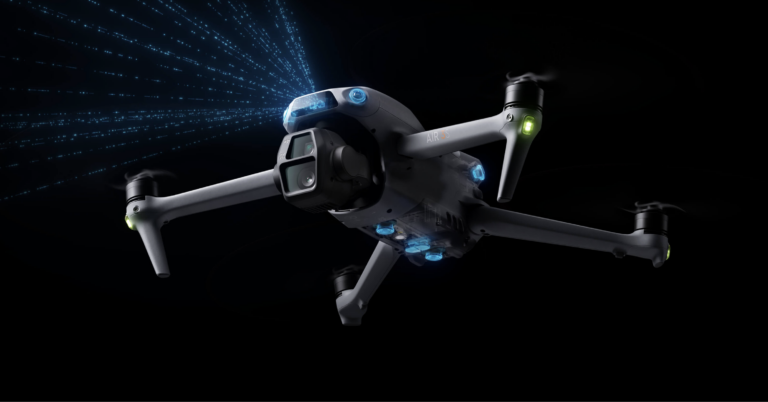
Sensing is the most complete in the group: omnidirectional binocular vision, forward LiDAR for low light and a downward infrared sensor, with forward detection published at up to 200 m in suitable conditions. It also has 42 GB of internal storage and the highest wind rating here, 12 m/s.
One European detail. DJI lists it at a nominal 249.9 g but says actual weight can vary by about 4 g. The standard Fly More Combo is C0-certified, the Fly More Combo Plus is C1, and fitting the Battery Plus to a C0 aircraft takes it over the C0 mass limit. Check the class label and battery on the drone you actually receive. More detail is in our Mini 5 Pro analysis and spec breakdown.
DJI Mini 4 Pro: the one to buy in the US
The Mini 4 Pro still holds up well against the Mini 5 Pro and usually costs less. It uses a 48 MP 1/1.3-inch sensor with an f/1.7, 24 mm-equivalent lens, records 4K at up to 100fps and Full HD at up to 200fps, and offers 10-bit D-Log M and HLG for grading.
Its 150 Mbps maximum bitrate is higher than the Mini 5 Pro’s, though bitrate alone doesn’t decide image quality; sensor size, processing, dynamic range and the lens count too. Flight time is 34 minutes, or 45 with the Battery Plus, which takes it over 249 g and is not officially sold in Europe. O4 is rated to 20 km (FCC) with 1080p/60fps live view, and it works with the DJI RC-N2 and RC 2.
Omnidirectional binocular sensing plus downward infrared gives it a big safety and tracking advantage over the Mini 3 and Mini 4K, and the camera rotates for true vertical video. Unless you need the 1-inch sensor, I think the Mini 4 Pro is the smartest buy of the five, and in the US it is the obvious one, especially at a discount.
DJI Mini 3: long battery, no obstacle avoidance
The Mini 3 sits between the entry-level and Pro models. It has the same 1/1.3-inch sensor size and f/1.7 aperture class as the Mini 4 Pro but a more limited video feature set: 4K at up to 30fps, 2.7K and Full HD at up to 60fps, and 100 Mbps H.264. The gimbal rotates for full-resolution vertical footage.
Battery life is its strength: 38 minutes with the standard battery and 51 with the Battery Plus, which is sold only in some regions and brings takeoff weight to about 290 g. It uses O2 transmission, rated at 10 km (FCC) with a 720p/30fps live view.
The catch is sensing. It has downward vision for positioning and stable hovering, but no forward, backward, lateral or upward obstacle avoidance, so it asks for more careful flying.
DJI Mini 4K: best budget pick
The Mini 4K is the cheapest conventional camera drone here, aimed at beginners who want GPS-assisted flight and a stabilized camera. It weighs about 246 g and folds to 138×81×58 mm.
The camera is a 12 MP 1/2.3-inch sensor with an f/2.8, 24 mm-equivalent lens. Despite some descriptions online, it does record genuine 4K, at 24, 25 or 30fps, plus 2.7K and Full HD at up to 60fps, at 100 Mbps H.264, with JPEG or DNG RAW stills. A 3-axis mechanical gimbal stabilizes tilt, roll and pan, a real step up from toy drones that rely on electronic stabilization alone.
It flies for up to 31 minutes, uses O2 at up to 10 km (FCC) with a 720p/30fps live view, and has only downward vision positioning. New pilots need to keep their distance from trees, buildings and wires.
DJI Neo 2: for palm-launched social clips
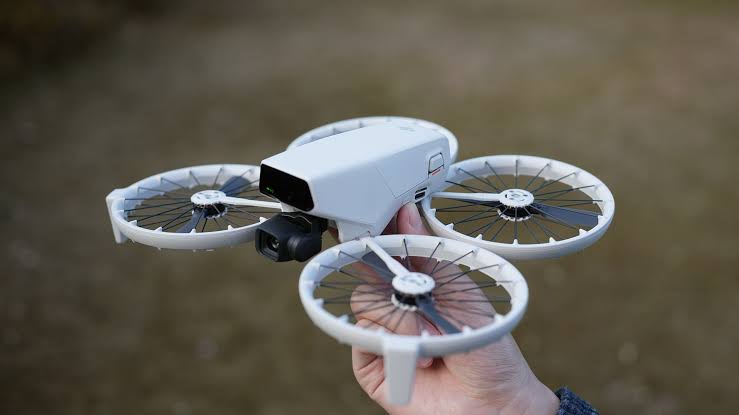
The DJI Neo 2 is built for quick, spontaneous recording, not long-distance aerial photography. It weighs 151 g, or 160 g with the Digital Transceiver, and has integrated propeller guards. It takes off from and lands on your palm, responds to gestures, runs automated shooting modes and subject tracking, and works with remote controllers and compatible FPV accessories. An onboard display lets you pick a mode without opening the app.
The camera is a 12 MP 1/2-inch sensor with an f/2.2, 16.5 mm-equivalent ultra-wide lens. It records 4K at up to 60fps, 4K/100fps slow motion when flown with a compatible motion controller or remote, and vertical video at up to 2.7K/60fps, at up to 80 Mbps. Stabilization comes from a 2-axis gimbal plus RockSteady, and the 49 GB of internal storage cannot be expanded with microSD.
Flight time is about 19 minutes without the transceiver, or about 17 under DJI’s test with the guards fitted. The rated 7 km maximum flight distance is not a transmission range. Phone control uses Wi-Fi, rated up to 500 m (FCC); the optional transceiver adds O4 at up to 10 km (FCC) or 6 km (CE). It also works with DJI goggles.
Sensing is omnidirectional monocular vision, forward LiDAR and downward infrared, which matters for a drone meant to fly near people. Don’t mix it up with the original Neo, which weighs about 135 g, records up to 4K/30fps, has a single-axis gimbal and no obstacle avoidance. The Neo 2 is great for short clips but no replacement for the flight time and larger cameras of the Mini series.
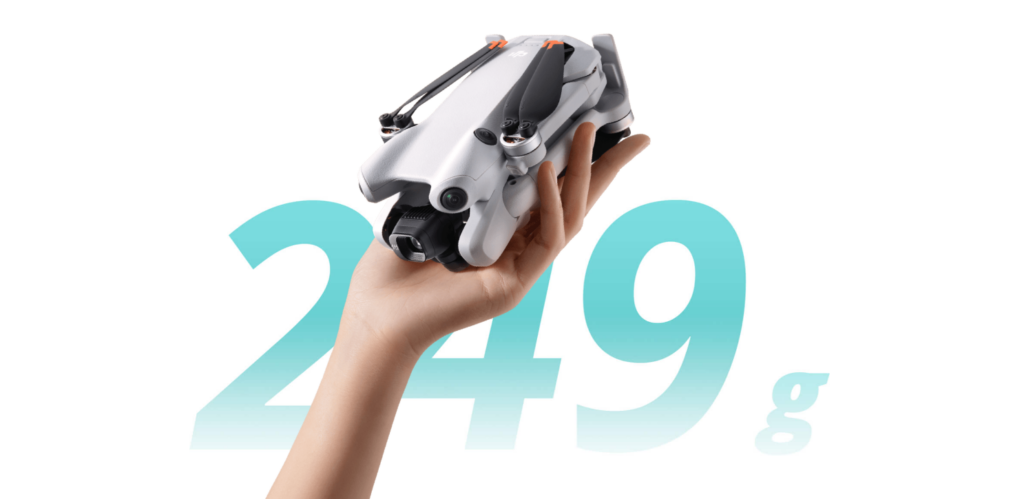
Weight and the 250 g line
| Model | Standard weight | What to watch |
|---|---|---|
| DJI Mini 5 Pro | 249.9 g nominal | Actual weight can vary; Plus configuration may be C1 in Europe |
| DJI Mini 4 Pro | Under 249 g | Plus battery raises weight above 249 g |
| DJI Mini 3 | 248 g | Plus battery raises weight to approximately 290 g |
| DJI Mini 4K | Approximately 246 g | Accessories eat into the remaining margin |
| DJI Neo 2 | 151 g or 160 g with transceiver | Well below 250 g in either configuration |
Takeoff weight includes everything: battery, propellers, memory card, guards, lights, filters, landing gear and trackers. If your compliance depends on staying under a threshold, weigh your actual setup.
The common claim that a sub-250 g drone never needs registration, training or Remote ID is wrong. It depends on where and why you fly, whether the drone has a camera and what is fitted to it.
United States
A drone of 250 g or less generally does not need FAA registration if it is flown only under the Exception for Limited Recreational Operations. Recreational pilots still have to pass the TRUST test and carry proof, follow the safety guidelines of an FAA-recognized community-based organization, keep visual line of sight, get any required airspace authorization, give way to crewed aircraft and obey temporary flight restrictions.
The exception does not apply to Part 107. Anyone flying under Part 107 needs the appropriate Remote Pilot Certificate, must register each drone whatever its weight and must comply with Remote ID unless an exception applies. A flight counts as non-recreational if it is for work, a business, an organization, an inspection or a paid job, even if you aren’t paid for that particular flight.
EU (EASA)
C0 drones can generally fly in the A1 subcategory of the Open category without a formal pilot exam. You must read the manufacturer’s instructions, stay below 120 m, keep visual line of sight, never fly over assemblies of people, avoid uninvolved people where possible, follow geographical-zone restrictions and respect privacy law.
Operator registration is generally still required for any drone with a camera that is not a toy, which covers all five here. Registration applies to the operator, not each Open-category aircraft, and the operator number has to be displayed or uploaded as the rules require. Battery choice can change the class, as the Mini 5 Pro’s C0 and C1 versions show. More in EU and UK drone rules.
Flight time, wind and range in practice
| Model | Standard battery | Plus battery | Max wind resistance |
|---|---|---|---|
| DJI Mini 5 Pro | 36 min | 52 min | 12 m/s |
| DJI Mini 4 Pro | 34 min | 45 min | 10.7 m/s |
| DJI Mini 3 | 38 min | 51 min | 10.7 m/s |
| DJI Mini 4K | 31 min | Not available | 10.7 m/s |
| DJI Neo 2 | About 19 min | Not available | 10.7 m/s |
These are not normal recording times. Wind, temperature, altitude, speed, hovering, resolution and frame rate, obstacle-sensing settings, battery age, accessories and your return-to-home reserve all cut into them. Plan to land well before the battery is empty.
The 10.7 m/s rating (roughly Level 5) is shared by four models, but that doesn’t mean they behave the same in gusts; weight, shape, propellers, motor power and battery level all affect stability. Treat the figure as a test result, not a comfortable operating condition.
Transmission range is the most misunderstood spec. A 10 km or 20 km figure is measured in open, low-interference conditions and is not a legal, safe or practical flying distance. Line-of-sight rules, battery, terrain, buildings and interference set much lower real limits. The O2 drones’ 720p live view only affects the preview, not what is recorded.
Obstacle sensing has limits
No consumer drone is collision-proof. The Mini 5 Pro has the most advanced setup here, the Mini 4 Pro and Neo 2 cover all directions, and the Mini 3 and Mini 4K only sense downward. Even the best systems struggle with thin branches, wires, glass, reflective or repetitive surfaces, featureless walls, darkness, rain, fog, snow and fast-moving objects. The pilot stays responsible for separation.
Two more sub-250 g DJI drones
DJI Lito X1. Launched on 23 April 2026 outside the US, from €419. It pairs a 1/1.3-inch 48 MP sensor with O4 transmission, all-round obstacle sensing and forward LiDAR at about 249 g, making it the cheapest DJI drone with LiDAR and the beginner pick outside the US if you want obstacle sensing for a little more than a Mini 4K. See our Lito X1 analysis and Lito X1 vs Mini 3.
DJI Flip. A sub-250 g drone with full propeller guards that folds flat, for vloggers who want a safer, hand-launched drone with a conventional camera. See DJI Flip vs Mini 4 Pro.
The mini drones in this guide
DJI Mini 4 Pro (RC-N2)
Under 249 g, omnidirectional sensing without LiDAR, still in DJI’s US line-up.
DJI Mini 4K
Under 249 g, 3-axis gimbal, 4K/30. The cheapest DJI camera drone with a real gimbal.
DJI Neo 2
151 g, 4K/60 and omnidirectional sensing. The current Neo you can buy in the US.
DJI Mini 5 Pro
1-inch sensor at 249.9 g. Never sold by DJI in the US; check the seller on Amazon. It carries LiDAR.
As an Amazon Associate, Drone Ranker earns from qualifying purchases. We do not quote prices because Amazon’s change by the hour.
Specifications were checked against DJI’s official product pages, spec sheets and support documents for each model, and the regulatory sections against published EASA and FAA guidance. Last verified: July 28, 2026; quick picks updated 7 October 2026.
The Friday Brief
One email a week on what changed in drones
FCC and FAA rule changes, DJI leaks checked against filings, and the week’s new comparisons. Every Friday, nothing else.
Free. Unsubscribe in one click. Sent with Kit; see our privacy policy.
Follow us on Google too: add Drone Ranker as a preferred source →
Continue Reading
All News