Best DJI Drones for Sale in 2026: Which Model Should You Buy?

For most people who want one serious camera drone, the DJI Air 3S is the best DJI drone to buy in 2026. The right pick still depends on the job: a traveler, a first-time pilot, an FPV flyer and a survey team each need a different aircraft. Below are my picks across nine categories, from the Mini 4K at the cheap end to the Matrice 4T for thermal work.
Short on time? Our 1-minute drone finder quiz asks five questions and narrows the list to three drones that fit what you will film, your budget and where you live.
These rankings of the best DJI drones are based on specifications, official DJI documentation and what each model is built for. Drone Ranker did not fly or test these aircraft. Prices and availability vary a lot by country, package, controller, battery bundle, dealer and warranty region, so check the package contents before you buy.
| Category | Model | Main strength | Main limitation |
|---|---|---|---|
| Best overall | DJI Air 3S | Versatile dual-camera system | Heavier than Mini models |
| Best budget | DJI Mini 4K | Affordable stabilized 4K video | No directional obstacle avoidance |
| Best for beginners | DJI Neo 2 | Palm launch and protected propellers | Shorter flight time |
| Best for travel | DJI Mini 5 Pro | 1-inch camera in a lightweight body | Premium pricing |
| Best camera quality | DJI Mavic 4 Pro | Triple-camera professional imaging | Size, cost and regulatory burden |
| Best traditional FPV | DJI Avata 2 | Immersive control and cinematic FPV | Shorter endurance than camera drones |
| Best 360-degree drone | DJI Avata 360 | Reframeable 8K 360° recording | No full manual flight mode |
| Best mapping drone | DJI Matrice 4E | Mechanical shutter and geospatial workflow | Enterprise-level cost and complexity |
| Best thermal drone | DJI Matrice 4T | Thermal imaging and inspection tools | Not designed primarily for mapping |
The ranking weighs more than resolution: intended use, sensor and lens, video options, flight time, weight, obstacle sensing, transmission, storage, controllers, enterprise features, regulatory implications and likely value for the target buyer. A cheaper drone can be the better buy when it gives a beginner everything they need, and a professional drone only earns its cost when its cameras, positioning or inspection tools bring in measurable business value.
Table of Contents
Best overall: DJI Air 3S
The DJI Air 3S is the drone I would point most enthusiasts and working creators to. It gives strong camera performance, two focal lengths, long flight time and advanced safety features without stepping up to the size and price of the Mavic 4 Pro.
It pairs a 50 MP 1-inch CMOS wide camera (24 mm equivalent) with a 48 MP 1/1.3-inch medium-telephoto camera (70 mm), records 4K at up to 120fps, and offers D-Log M and HLG. The 24 mm camera handles scenery, establishing shots and property; the 70 mm compresses the background and lets you frame a subject without flying as close. DJI rates it at 45 minutes, and it has omnidirectional vision sensing, forward LiDAR, a downward infrared sensor, O4 transmission and 42 GB of internal storage.
It is heavier than the sub-250 g models and faces more rules as a result, but that weight also buys better wind handling, a larger battery and a more flexible camera. Skip it if staying under 250 g is essential, if you only shoot casual daylight clips, if you want palm launch and prop guards, or if you need thermal or a mechanical shutter for mapping.
Best budget: DJI Mini 4K
The DJI Mini 4K is the cheapest way into a proper GPS camera drone rather than a toy. It weighs about 246 g and records real 4K at up to 30fps on a three-axis mechanical gimbal, which gives smoother footage than electronic stabilization alone.
It has a 12 MP 1/2.3-inch sensor, 100 Mbps maximum bitrate, JPEG and DNG RAW photos, a 31-minute rated flight time, DJI O2 transmission with up to 10 km stated range under FCC conditions, Return to Home and QuickShots.
Its biggest weakness is the lack of forward, backward, side and upward obstacle avoidance. The downward vision system helps with hovering and landing but will not stop it from hitting trees, poles or cables. It is a good drone for learning manual aerial photography. Look elsewhere if you need subject tracking, vertical recording, strong low-light performance, 4K/60 or 10-bit color, or if you often fly around trees and buildings.
Best for beginners: DJI Neo 2
The DJI Neo 2 is the easiest DJI drone to get footage from. It launches from your palm, has full propeller guards, gesture control, SelfieShot modes, ActiveTrack, omnidirectional obstacle sensing, forward LiDAR, 49 GB of storage, 4K video and optional O4 transmission. It weighs 151 g without its Digital Transceiver, uses a 1/2-inch sensor and is rated for Level 5 wind resistance.
It suits solo creators: a traveler, runner or cyclist can launch it and capture an automated shot without spending minutes setting up a conventional drone. The trade-offs are shorter flights, a smaller camera than the Mini Pro models, no DNG RAW, and a two-axis gimbal instead of three. If you want to learn conventional GPS camera-drone flying instead, the Mini 4K is the better beginner pick.
Best for travel: DJI Mini 5 Pro
The DJI Mini 5 Pro puts a 1-inch sensor in a body DJI lists at a nominal 249.9 g. The camera is 50 MP with an f/1.8 aperture, shoots 4K at up to 120fps in HLG and D-Log M, and sits on a gimbal with extended rotation. It also has omnidirectional sensing, forward LiDAR, 42 GB of storage and O4+ transmission.
DJI rates it at 36 minutes on the standard battery and 52 minutes with the Plus battery, which adds weight and may change its regulatory class. DJI notes that actual weight can vary, so check the class label and battery configuration of the exact package you buy. For travelers who want high-end image quality without carrying a one-kilogram flagship and its batteries, this is the one. It is the wrong choice if you want the lowest price or a telephoto camera, or if you already own a Mini 4 Pro and don’t need the bigger sensor.
What about the Mini 4 Pro?
The DJI Mini 4 Pro is still sensible when it is clearly cheaper than the Mini 5 Pro. It has a 48 MP 1/1.3-inch camera, 4K/100fps, 10-bit D-Log M and HLG, true vertical shooting and omnidirectional obstacle sensing. The Mini 5 Pro is the better travel drone, but a Mini 4 Pro in a clearance sale can be the better value.
Best camera quality: DJI Mavic 4 Pro
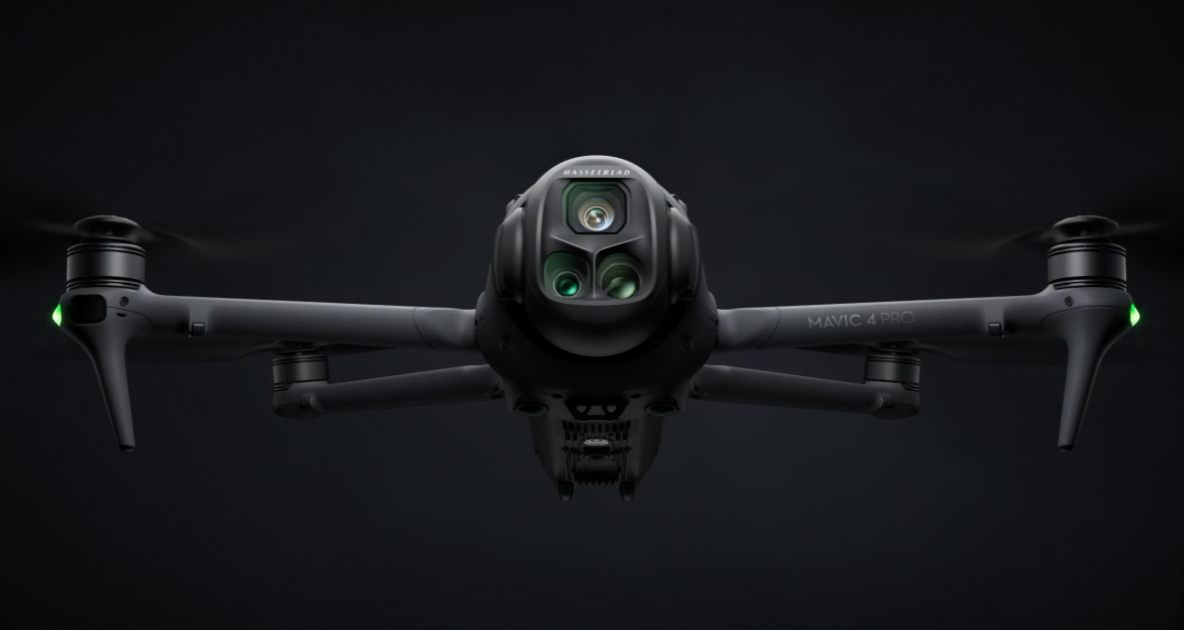
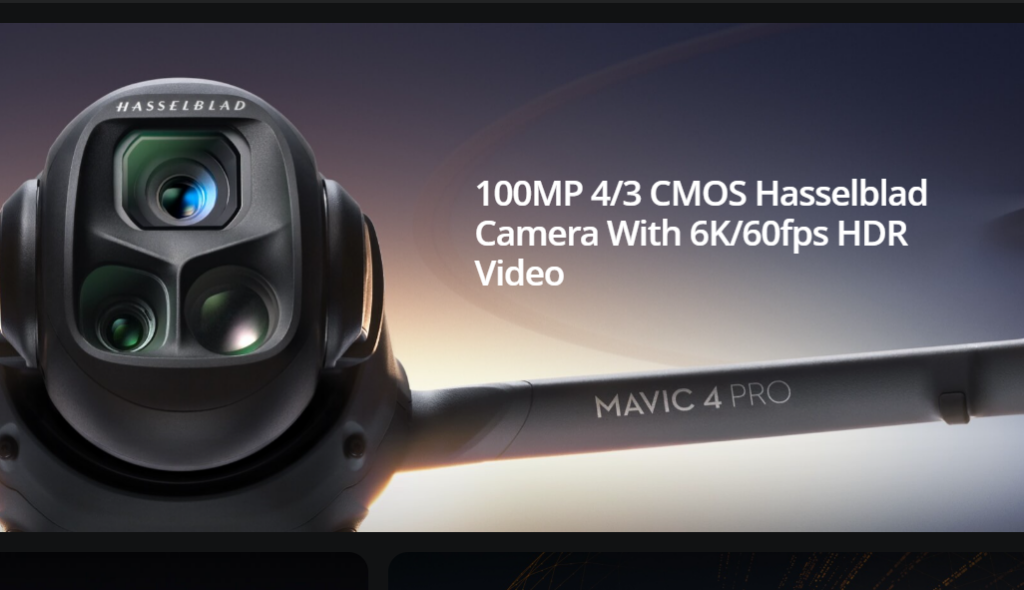
The DJI Mavic 4 Pro is for serious photographers, filmmakers and production teams. It carries three cameras: a 100 MP 4/3 CMOS Hasselblad main camera, a 48 MP 1/1.3-inch medium telephoto and a 50 MP 1/1.5-inch telephoto, at 28 mm, 70 mm and 168 mm equivalent. It records 6K/60fps HDR, offers high-frame-rate 4K, and mounts everything on a rotating Infinity Gimbal. DJI rates it at 51 minutes, with O4+ transmission reaching up to 30 km under FCC test conditions.
Three focal lengths change what you can shoot: wide scenery, compressed mid-telephoto scenes and distant subjects, without leaning on digital zoom.
It is not a casual buyer’s drone. It is bigger, more expensive and faces more rules than the Mini range, and its value comes from the camera and professional workflow, not convenience. If you rarely use telephoto, don’t color-grade, or a Mini or Air already meets your needs, save the money.
Best traditional FPV: DJI Avata 2
The DJI Avata 2 is DJI’s pick for goggles-based flying, motion control, manual flight and cinematic wide-angle footage. It weighs about 377 g, has a 1/1.3-inch sensor, records 4K at up to 100fps with a 155-degree field of view and D-Log M, flies for about 23 minutes, and has 46 GB of storage and built-in propeller guards.
It is built for flying through spaces, following terrain and first-person movement. It does not replace a Mini, Air or Mavic: FPV is a different flying style with a different risk profile, and it lacks a conventional three-axis gimbal, long endurance and top photo quality.
Best for 360-degree video: DJI Avata 360
The DJI Avata 360, introduced in March 2026 and described by DJI as its first 360-degree drone, records the whole sphere so you can choose the framing in the edit. It uses two 1/1.1-inch square CMOS sensors, which DJI says give coverage equivalent to a 1-inch system, and shoots 8K/60fps 360 video and 120 MP photos. It supports goggles, has obstacle sensing and O4+ transmission, flies for about 23 minutes and has 42 GB of storage.
It is not an Avata 2 replacement. It has no full Manual flight mode, so pilots who want traditional manual FPV should stay with the Avata 2. Also budget for the storage and editing load of 8K 360 footage.
Best mapping drone: DJI Matrice 4E
The DJI Matrice 4E is the pick for surveying, mapping, construction, mining and other geospatial work. Its wide camera has a 20 MP 4/3 CMOS sensor, a variable f/2.8–f/11 aperture and a mechanical shutter, backed by 48 MP medium-telephoto and telephoto cameras, a laser rangefinder, enterprise positioning and mission tools, and DJI’s enterprise software.
The mechanical shutter is the reason to buy it. It reduces rolling-shutter distortion when capturing images on the move, giving cleaner, more consistent photogrammetry datasets. Without a defined geospatial workflow, or if you need thermal, it is the wrong drone.
Best thermal drone: DJI Matrice 4T
The DJI Matrice 4T is for inspection, public safety, emergency response, forestry, search and rescue and infrastructure monitoring. It carries 48 MP wide, medium-telephoto and telephoto cameras, a thermal camera, a laser rangefinder and an NIR auxiliary light. DJI says its infrared High-Resolution Mode produces thermal images at up to 1280×1024.
It is not a 4E with an extra camera. Choose the 4E when visible-light mapping and mechanical-shutter capture come first; choose the 4T when finding temperature differences, locating people, inspecting power lines, roofs or solar panels, or working in low light is the job. Either way, your organization needs to support enterprise training and workflows.
Which is the best DJI drone for you
- DJI Air 3S: one drone for almost everything, more versatile than a Mini and easier to carry than the Mavic 4 Pro.
- DJI Mini 4K: when price comes first and you want stabilized 4K.
- DJI Neo 2: when ease of use and automatic tracking matter more than long-range photography.
- DJI Mini 5 Pro: for travel, with a 1-inch sensor in a light body.
- DJI Mavic 4 Pro: for professional image quality and the most complete creative toolkit here.
- DJI Avata 2: for goggles-based flying and manual FPV progression.
- DJI Avata 360: for recording everything and choosing the frame later.
- Matrice 4E: for survey and mapping work.
- Matrice 4T: for thermal inspection, emergencies and public safety.
How much to spend
Spend on the features you will use. Basic 4K, GPS, Return to Home and simple automated shots point to the Mini 4K. Palm launch, tracking and propeller protection for social clips point to the Neo 2. Better image quality, advanced sensing and professional color modes in a light body mean the Mini 5 Pro or a discounted Mini 4 Pro. Multiple focal lengths, better wind handling and longer flights mean the Air 3S. When image quality directly affects paid work, the Mavic 4 Pro.
Enterprise drones should be priced as a whole system: batteries, controllers, software licenses, RTK or positioning services, training, insurance, maintenance, a replacement aircraft, technical support and regulatory approvals all add to the Matrice 4E or 4T’s sticker price.
Checking a DJI deal
A low listing price is not always a good deal. Before buying, confirm the exact model, the controller and number of batteries, whether it is a standard kit or Fly More Combo, new, used or refurbished condition, warranty region, seller authorization, battery manufacturing date, activation status, DJI Care eligibility, included charger, regional class label and return policy. Buying from DJI or an authorized regional dealer makes warranty, returns, activation and support simpler; enterprise models may need an authorized solutions provider. Prices also differ by country with currency, tax, import costs and regional promotions.
Watch for similar names. The Mini 4K is not the Mini 2 SE, the Neo is not the Neo 2, the Avata 2 is not the Avata 360, and the Matrice 4E and 4T serve different jobs. With a used drone, make sure it is not still bound to another account, and check the batteries for swelling, damage or high cycle counts.
Don’t buy on resolution, advertised range or a temporary discount alone. Compare the camera, weight, controller, sensing, battery setup, software, warranty region and the rules that apply where you fly.
This guide uses official DJI product pages, specification sheets, support documentation and enterprise product information. Drone Ranker did not test these aircraft; the recommendations are specification-based editorial assessments. Manufacturer flight times, ranges, speeds and wind ratings are measured under controlled conditions, and real performance varies with environment, firmware, battery condition, payload and interference. Last verified: July 29, 2026.
The Friday Brief
One email a week on what changed in drones
FCC and FAA rule changes, DJI leaks checked against filings, and the week’s new comparisons. Every Friday, nothing else.
Free. Unsubscribe in one click. Sent with Kit; see our privacy policy.
Follow us on Google too: add Drone Ranker as a preferred source →
Continue Reading
All News