DJI Mini 4 Pro in 2026: Still the Sub-250 g Pick in the US

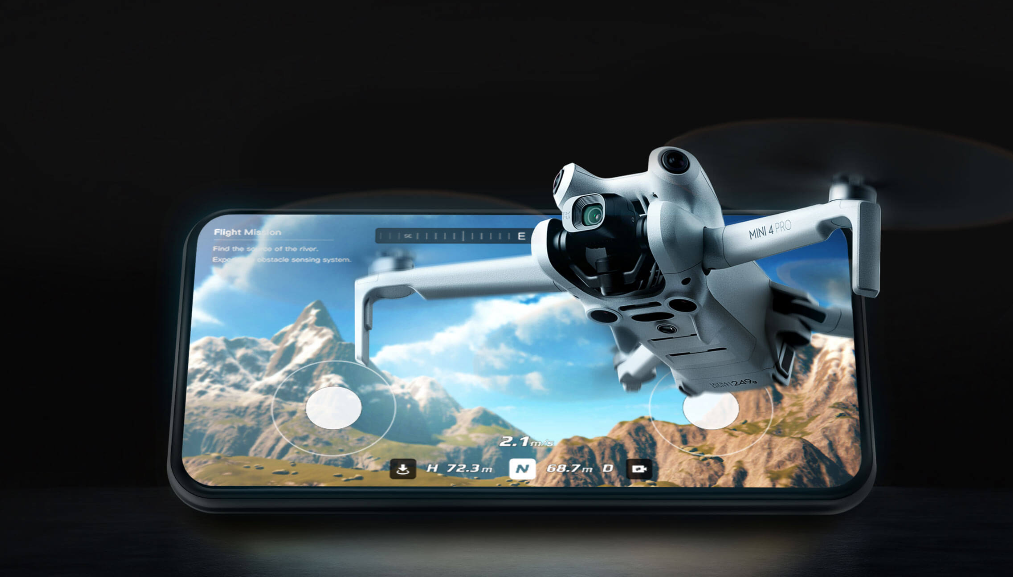
The DJI Mini 4 Pro is a sub-249 g camera drone with omnidirectional obstacle sensing, O4 transmission and 4K at up to 100fps. DJI launched it on 25 September 2023 at $759 with the RC-N2 and $1,099 for the Fly More Combo with the DJI RC 2; prices have moved since. In 2026 the Mini 5 Pro is DJI’s top Mini, but the Mini 4 Pro is still sold in DJI’s US store, unlike the Mini 5 Pro and the Lito X1.
That makes the buying advice simple. In the US, the Mini 4 Pro is the one to get if you want DJI’s best small drone through official channels. Outside the US, the Mini 5 Pro (1-inch sensor, LiDAR, longer flight time) or the cheaper Lito X1 are usually the better buys. This analysis is based on DJI’s spec sheet and owner reports, not flight tests.
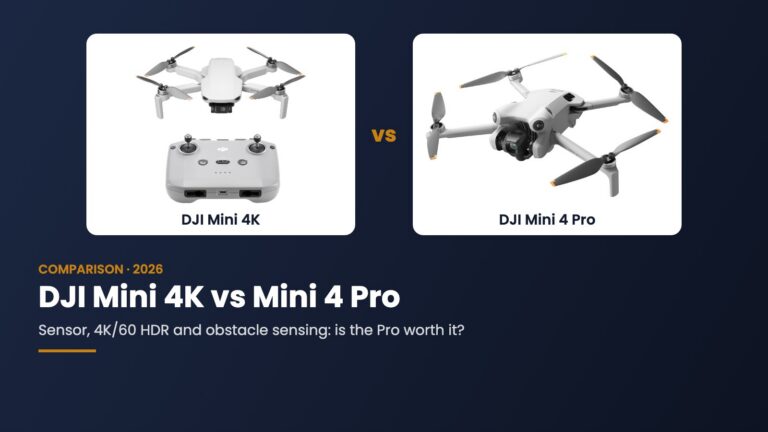
Comparing models? See Mini 4K vs Mini 4 Pro (and the side-by-side spec table), Lito X1 vs Mini 4 Pro, Flip vs Mini 4 Pro and our best mini drones list.
Table of Contents
Size, weight and registration
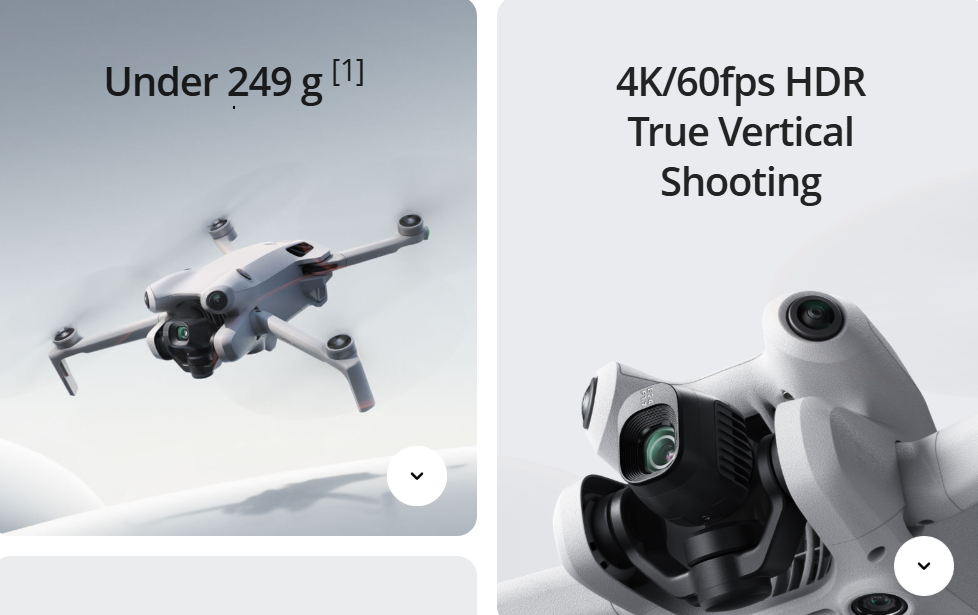
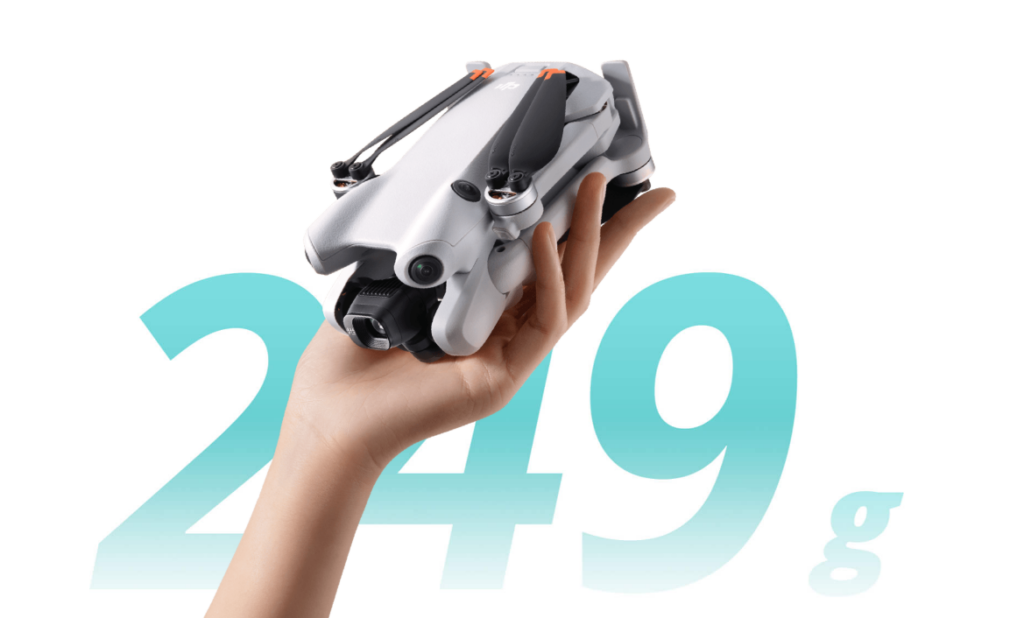
Folded, the Mini 4 Pro measures 148×94×64 mm, about the footprint of a large phone but much thicker. Unfolded it is 298×373×101 mm. With the standard Intelligent Flight Battery it weighs under 249 g including propellers and microSD card, which puts it in the EU C0 class.
The Intelligent Flight Battery Plus pushes it over 249 g, and that battery is not sold in Europe. In the US you don’t need to register it for recreational flying under 250 g, but Part 107 commercial flights need registration whatever the weight. In the EU and UK, the operator must register because the drone has a camera; see our EU and UK drone rules.
Speed and wind
| Mode | Horizontal speed | Ascent/descent |
|---|---|---|
| Sport | 16 m/s (about 35 mph) | 5 m/s |
| Normal | 12 m/s | 5 m/s |
| Cine | 12 m/s | 3 m/s |
DJI rates it for winds up to 10.7 m/s (Level 5). Owners report it holds position well in those conditions, but battery life drops quickly as the motors fight gusts.
Camera: 4K/100fps and 10-bit color
The sensor is a 48 MP 1/1.3-inch CMOS, the same size as the Mini 3 Pro’s, with upgraded processing. The big change is 4K at up to 100fps, which brings high-resolution slow motion to the Mini line. The 10-bit D-Log M and HLG profiles give more room to recover shadows and highlights when grading. The f/1.7 aperture is fixed, so for cinematic shutter speeds in daylight you will need ND filters.
| Feature | Specification |
|---|---|
| Sensor | 1/1.3-inch CMOS, 48 MP effective |
| Lens FOV | 82.1° (24 mm equivalent) |
| Aperture | f/1.7 |
| Video | 4K up to 100fps, FHD up to 200fps |
| Color modes | Normal (8-bit), D-Log M (10-bit), HLG (10-bit) |
| Max bitrate | 150 Mbps |
The three-axis gimbal supports True Vertical Shooting: the camera physically rotates 90 degrees, so vertical clips for TikTok or Instagram use the full sensor instead of a crop. For social content, that is one of the most useful features on the drone.
Obstacle sensing
This is the biggest step up from the Mini 3 Pro. Omnidirectional binocular vision, backed by a 3D infrared sensor underneath, covers front, back, sides, top and bottom; DJI lists a forward measurement range of up to 18 m. Seeing in every direction is also what makes ActiveTrack 360° practical, since the drone can circle a subject without backing into a tree.
The sensors still need decent light (DJI specifies more than 15 lux), and thin wires or very dark scenes remain a risk.
O4 transmission and controllers
DJI O4 gives a rated range of up to 20 km under FCC rules (10 km CE) and a 1080p/60fps live feed, using four antennas (2T4R) on the drone. With medium interference, such as in a suburb, DJI suggests 4 to 10 km.
You can buy it with the RC-N2, which uses your phone as the screen, or the DJI RC 2, which has a built-in 5.5-inch 1080p high-brightness screen and its own four antennas (two internal, two external). Owners overwhelmingly prefer the RC 2: no phone to mount, no phone battery drain. I’d pay for it too. Current prices and bundles are on the product page, and the Fly More Combo makes sense if you plan long flights, because the spare batteries matter.
Check the Latest DJI Mini 4 Pro Price
Compare today's price, available bundles, and verified customer reviews before making your purchase.
View on Amazon →Disclosure: As an Amazon Associate, we earn from qualifying purchases at no additional cost to you.
Battery life
DJI rates the standard battery at 34 minutes and the Battery Plus at 45 minutes, both in windless test conditions. Owners report around 25 to 28 minutes in real use with some wind before low-battery return to home kicks in. A full charge takes about 70 minutes in the aircraft with a 30W USB-C charger, or 58 minutes on the Two-Way Charging Hub.
Smart features and support
Waypoint Flight, previously found on pricier drones, lets you plan a route with set camera angles and repeat it, which is ideal for time-lapses or the same shot at different times of day. Also included:
- MasterShots: automatic cinematic maneuvers edited into a short clip.
- QuickShots: Dronie, Rocket, Circle and Helix.
- Hyperlapse: Free, Waypoint, Circle and Course Lock, in 4K.
- Night mode: improved noise reduction for low-light video.
DJI commits to software updates until at least December 31, 2026.
Storage and accessories
There is 2 GB of internal storage, enough for a few minutes of 4K if you forget a card. DJI recommends V30/U3 microSD cards to handle the 150 Mbps bitrate, with the SanDisk Extreme PRO and Lexar 1066x among those it lists. For 4K/100fps, 128 GB or 256 GB is a sensible size.
The 360° Propeller Guard is worth considering for indoor flying or beginners in tight spaces, but it adds weight, cuts flight time, slightly reduces thrust and may affect obstacle sensing.
Mini 4 Pro vs Mini 3 Pro
- Sensing: the Mini 3 Pro had forward, backward and downward sensors only; the Mini 4 Pro adds sides and top.
- Transmission: O4 replaces O3, with a steadier link and a higher-frame-rate live feed.
- Video: 4K/100fps instead of 4K/60fps, plus D-Log M.
For casual vacation photos, a Mini 3 Pro can still be good value. For the most technology in the smallest package that DJI sells in the US, it is the Mini 4 Pro.
Who it suits, and its limits
It fits travelers who want a good camera without heavy-drone paperwork, creators who need vertical video and 10-bit color, and beginners who want omnidirectional sensing as a safety net. The main thing it lacks compared with the dual-camera Air 3 is a telephoto lens, and you have to decide whether that matters more than carrying a much smaller drone in a lighter regulatory class.
DJI lists an operating range of -10° to 40°C. Maximum takeoff altitude is 4,000 m with the standard battery and 3,000 m with the Battery Plus, which matters if you plan to hike in high mountains.
The Friday Brief
One email a week on what changed in drones
FCC and FAA rule changes, DJI leaks checked against filings, and the week’s new comparisons. Every Friday, nothing else.
Free. Unsubscribe in one click. Sent with Kit; see our privacy policy.
Follow us on Google too: add Drone Ranker as a preferred source →
Continue Reading
All News