Drone Rules in Europe and the UK (2026): Do You Need to Register a DJI Mini?

Yes, in most cases. If you fly a DJI Mini, Neo or Flip in the European Union, you must register as a drone operator because the drone has a camera, even though it weighs under 250 g. In the United Kingdom you need both an Operator ID and a Flyer ID for any camera drone of 100 g or more. What you do not need for a sub-250 g drone in either place is a formal pilot exam.
This guide covers the rules as of October 2026 for recreational pilots of small DJI camera drones, with the class marks, registration costs in the main EU countries, insurance and the changes coming next. It is a summary, not legal advice: check your national aviation authority before you fly.
Quick answer: what you need for a sub-250 g camera drone
| European Union (EASA) | United Kingdom (CAA) | |
|---|---|---|
| Register as operator? | Yes, if the drone has a camera (one registration covers all your drones) | Yes, Operator ID for camera drones of 100 g or more (£12.34 a year, 18+) |
| Pilot test? | No formal test for C0 or sub-250 g in A1; read the manual | Yes, the free online Flyer ID test (valid 5 years) |
| Label on the drone? | Operator number on every drone | Operator ID on every drone |
| Max height | 120 m | 120 m (400 ft) |
| Over people? | Allowed over uninvolved people, never over crowds (A1) | Allowed over uninvolved people under 250 g, never over crowds |
| Remote ID? | Not required for C0 | Required from 1 January 2028 for UK0 and legacy drones of 100 g+ with a camera |
| Insurance? | Depends on the country (mandatory in Germany and Italy) | Required for commercial flying; recommended for hobby |
EU: class marks decide where you can fly
Drones sold in the EU carry a class mark from C0 to C4. The open category, which covers almost all hobby flying, has three subcategories: A1 (close to people), A2 (near people, with a certificate) and A3 (far from people).
| Class | Weight | Where it flies | Typical DJI models |
|---|---|---|---|
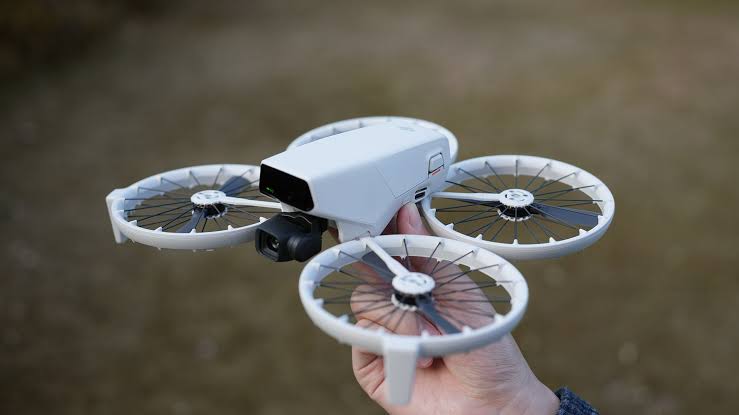
| C0 | Under 250 g | A1 and A3 | Mini 5 Pro, Mini 4 Pro, Mini 3, Mini 2 SE, Neo, Neo 2, Flip |
| C1 | Under 900 g | A1 and A3; Remote ID and geo-awareness required | Air 3S, Air 3, Avata 2, Mavic 3 Classic |
| C2 | Under 4 kg | A2 with certificate, or A3 | Mavic 4 Pro, Mavic 3 Pro |
| No class mark | Under 250 g | A1 | Older Minis |
| No class mark | 250 g to 25 kg | A3 only: 150 m from people and towns | Older Air and Mavic models |
In A1 you may fly over uninvolved people but never over assemblies of people. In A2, with a C2 drone, you keep 30 m from uninvolved people, or 5 m with low-speed mode on. In A3 you stay 150 m from people and from residential, commercial and industrial areas.
Two traps catch Mini owners. First, the C0 mark only applies with the standard battery: DJI’s Battery Plus takes a Mini 4 Pro or Mini 5 Pro over 250 g, and DJI does not sell the Plus battery in Europe for that reason. Second, a heavier unmarked drone such as an older Air or Mavic is limited to A3, which rules out most flying near towns. Our registration-by-weight checker shows where each DJI model lands.
EU: who must register, and what it costs
In the EU you register yourself as the operator, not the drone, with the aviation authority of the country you live in. One registration covers all your drones, and the operator number goes on a sticker on each of them. You are exempt only if the drone is under 250 g and has no camera or other sensor that can capture personal data, or is a certified toy. EASA has said a 249 g DJI Mini is not a toy, so Mini owners must register.
| Country | Authority | Cost | Validity |
|---|---|---|---|
| Germany | LBA | €20 (private) | No expiry stated; insurance details required |
| Netherlands | RDW | €23 | 1 year; renewal €13 |
| Spain | AESA | Free | 3 years |
| Italy | ENAC / D-Flight | €7 a year (basic plan, with QR code for the drone) | Yearly |
| France | AlphaTango (DGAC) | Free | Check AlphaTango |
The registration is recognised across the EU, so a German registration covers a holiday flight in Italy. Local no-fly zones still apply in every country.
EU: pilot training and age
- C0 or sub-250 g in A1: no formal test. EASA’s requirement is to read the manufacturer’s user manual.
- C1 and unmarked 250 g+ drones: the A1/A3 online training and exam. Some countries charge a fee: Germany charges €25 to issue the certificate.
- A2 Certificate of Competency: A1/A3 plus self-declared practical training and an extra theory exam; needed for C2 drones like the Mavic 4 Pro near people. Valid five years, recognised in all EASA states.
- Minimum age: 16, unless the drone is a C0 toy or you fly under supervision. Countries may lower it by up to four years, valid only in that country.
EU: insurance is a national rule
EASA only requires insurance above 20 kg, but most member states require third-party liability cover for lighter drones too. The rules differ:
- Germany: liability insurance is mandatory for every drone, private or commercial.
- Italy: third-party liability insurance is required for open-category operators.
- Poland: mandatory for drones from 250 g to 20 kg since 13 November 2025, including recreational use.
- Netherlands: mandatory for private users only from 20 kg; recommended below that.
- Elsewhere: check your national authority; home liability policies sometimes exclude drones.
UK: Flyer ID, Operator ID and the new UK class marks
The UK left EASA but uses a similar open category. Since 1 January 2026 new drones sold in the UK carry UK class marks: UK0 (under 250 g), UK1 (under 900 g), UK2 (under 4 kg) and up. EU C marks count as the matching UK class until 31 December 2027.
| Drone | Flyer ID | Operator ID |
|---|---|---|
| Under 100 g | Recommended | Optional |
| 100 g to 250 g without camera | Required | Optional |
| 100 g to 250 g with camera (DJI Mini, Neo, Flip) | Required | Required |
| 250 g to 25 kg | Required | Required |
- Flyer ID: free online theory test, valid five years; 13+ on your own, under 13 with a parent.
- Operator ID: £12.34 a year; the account holder must be 18 or over. The ID goes on every drone.
- Where you can fly: under 250 g (or UK0, UK1 and C0), you may fly over uninvolved people and in residential areas, but never over crowds. Heavier drones keep 50 m from people and 150 m from built-up areas unless you hold an A2 CofC.
- Remote ID: required from 1 January 2026 for UK1, UK2 and UK3 drones, and from 1 January 2028 for UK0 and unmarked drones of 100 g or more with a camera.
For a DJI Mini 4 Pro or Mini 5 Pro, that means: Flyer ID and Operator ID now, the C0 mark counts as UK0 until the end of 2027, and Remote ID from 2028.
What changes next: EASA wants a 100 g threshold
On 21 to 22 September 2026, EASA published Opinion 06/2026, a set of proposed security changes. According to Dronewatch and Unmanned Airspace, it would cut the registration threshold from 250 g to 100 g (dropping the camera test), add identity checks at registration, require direct Remote ID on drones of 100 g or more, and stop new drones from taking off without a valid operator number. Existing drones would not need retrofitting.
It is a proposal. The European Commission still has to adopt it and no date is set. For most Mini owners the practical change would be Remote ID on future drones, since they already have to register.
Checklist before your first flight in Europe
- Register as an operator in your country of residence (EU) or get an Operator ID (UK).
- Put the operator number on every drone.
- Get a Flyer ID (UK), or complete A1/A3 training if your drone is C1 or unmarked and over 250 g (EU).
- Check insurance rules in your country.
- Check local no-fly zones and geo-zones before each flight; airports, military areas and some cities are restricted.
- Keep below 120 m and within visual line of sight.
Frequently asked questions
Do I need to register a DJI Mini in the EU?
Yes. Any drone with a camera needs operator registration in the EU, even under 250 g. You register yourself once with your national authority and put the number on each drone.
Do I need a licence to fly a DJI Mini in Europe?
No formal exam for a C0 or sub-250 g drone in the A1 subcategory; you must read the manual. Heavier C1 or unmarked drones need the A1/A3 online test.
Do I need a Flyer ID for a DJI Mini in the UK?
Yes. In the UK any drone of 100 g or more needs a Flyer ID, and a camera drone of 100 g or more also needs an Operator ID.
How much does drone registration cost in Europe?
It depends on the country: €20 in Germany, €23 in the Netherlands, free in Spain and France, and €7 a year in Italy. In the UK the Operator ID costs £12.34 a year.
Is drone insurance mandatory in Europe?
In some countries. Germany and Italy require it for all drones, Poland from 250 g; the Netherlands only from 20 kg. Check your own country.
Which DJI drones are C0?
The Mini 5 Pro, Mini 4 Pro, Mini 3, Mini 2 SE, Neo, Neo 2 and Flip carry the C0 mark when flown with their standard batteries.
Is the EU lowering the registration limit to 100 g?
EASA proposed it in Opinion 06/2026 in September 2026. It is not law yet and has no date.
Sources
- EASA: do I need to register my drone?
- EASA: is a 249 g drone a toy?
- EASA: Easy Access Rules for Unmanned Aircraft Systems
- LBA (Germany): operator registration
- RDW (Netherlands): operator number
- AESA (Spain): operator registration
- D-Flight (Italy): fees
- UK CAA: registering to fly
- UK CAA: class marks
- UK CAA: Remote ID
- DJI: new UK drone regulations and class marks
- Dronewatch: EASA Opinion 06/2026
The Friday Brief
One email a week on what changed in drones
FCC and FAA rule changes, DJI leaks checked against filings, and the week’s new comparisons. Every Friday, nothing else.
Free. Unsubscribe in one click. Sent with Kit; see our privacy policy.
Follow us on Google too: add Drone Ranker as a preferred source →
Continue Reading
All News