DJI Mini 5 Pro vs DJI Mini 6 Pro: Should You Buy Now or Wait?

DJI Mini 5 Pro vs DJI Mini 6 Pro comes down to timing. Buy the DJI Mini 5 Pro if you need a capable travel drone now. Wait for the Mini 6 Pro only if your current drone already does the job and you are happy to wait with no confirmed release date, because as of July 31, 2026 the Mini 6 Pro does not officially exist.
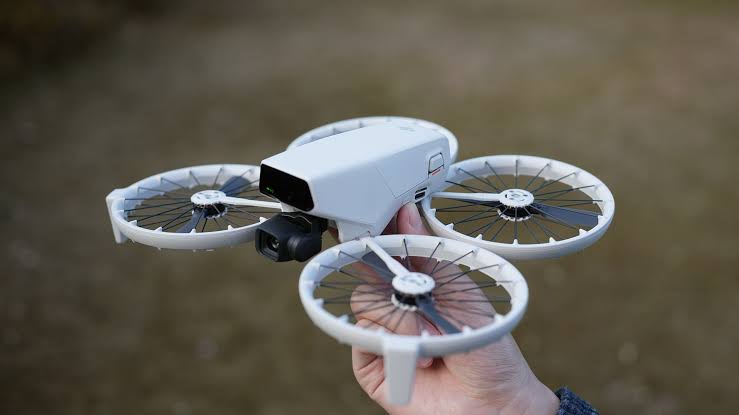
That is the whole comparison in short: a real, available drone against an unannounced successor surrounded by mostly unsupported rumors. The Mini 5 Pro already has a 50-megapixel 1-inch camera, 4K/120fps video, omnidirectional obstacle sensing, forward-facing LiDAR, O4+ transmission, true vertical shooting and 42 GB of internal storage in a nominal 249.9-gram body. For the DJI Mini 6 Pro, DJI’s newsroom has no launch announcement, and I found no verifiable product page, manual, certification document, packaging image or final spec sheet.
| Feature | DJI Mini 5 Pro | DJI Mini 6 Pro |
|---|---|---|
| Status | Official and available in supported regions | Not officially announced |
| Takeoff weight | Nominally 249.9 g | Unknown |
| Camera sensor | 50 MP, 1-inch CMOS | Unknown |
| Lens | 24 mm equivalent, f/1.8 | Unknown |
| Maximum video | 4K/120fps | Unknown |
| Advanced color | 10-bit D-Log M and HLG | Unknown |
| Gimbal | Three-axis with true vertical shooting and extended rotation | Unknown |
| Maximum flight time | 36 minutes standard; 52 minutes with Plus battery | Unknown |
| Typical flight time | 21 minutes standard; 33 minutes with Plus battery | Unknown |
| Wind resistance | 12 m/s | Unknown |
| Internal storage | 42 GB | Unknown |
| Obstacle sensing | Omnidirectional binocular vision | Unknown |
| LiDAR | Forward-facing LiDAR | Unconfirmed |
| Transmission | O4+ | Unknown |
| Maximum stated range | 20 km FCC; 10 km CE | Unknown |
| EU class | C0 or C1 depending on package | Unknown |
| Release date | Available now | Unconfirmed |
| US availability | Depends on region and existing stock | Uncertain |
The column of unknowns is deliberate. No official source gives the Mini 6 Pro’s hardware.
Table of Contents
What is actually known about the DJI Mini 6 Pro
Almost nothing. DJI has not announced the name, a release date, a launch event, or any spec: sensor, video resolution, flight time, battery, transmission, weight, EU class, price, controller compatibility or regional availability.
The rumor cycle seems to come mainly from social posts, YouTube videos, tech blogs, product-cycle guesswork and forum threads. Several reports have warned that many of the detailed specs online rest on recycled footage, AI-generated images and assumptions about what DJI could do next.
A real drone leak usually comes with something checkable: an FCC record, a Chinese certification entry, a European class document, a battery filing, a manual, retail packaging, genuine production photos, a DJI app database entry, or a source with a track record. I found none of these for the Mini 6 Pro. That does not mean DJI isn’t working on a successor; companies develop future models long before any paperwork appears. It does mean a spec list is not a leak just because several sites repeat it. Our Mini 6 Pro rumor tracker follows the claims as they appear.
What the Mini 5 Pro already does
The Mini 5 Pro is not a minor refresh waiting to be replaced. It already covers most of the upgrades people used to ask of DJI’s lightweight range.
Camera
A 50-megapixel 1-inch CMOS sensor behind a 24 mm equivalent f/1.8 lens. It shoots 12 MP and 50 MP stills in JPEG and DNG RAW, 4K at up to 120fps and Full HD at up to 240fps, with 10-bit Normal (in supported modes), HLG and D-Log M, at up to 130 Mbps. The large sensor and bright aperture give it strong low-light potential on paper for a drone this size. A successor would need more than extra megapixels to be a real camera upgrade.
Gimbal and vertical shooting
The three-axis gimbal has an unusually wide roll range, so the camera physically rotates for true vertical video with no cropping. DJI markets 225 degrees of gimbal rotation for low-angle, upward and rotating moves, already far more framing freedom than earlier Minis.
Obstacle sensing
Omnidirectional binocular vision, forward-facing LiDAR and a downward infrared sensor. DJI quotes forward sensing up to 200 meters in suitable conditions and night LiDAR measurement up to 25 meters under its test conditions. A Mini 6 Pro would have to improve real detection reliability, low-light coverage, thin-obstacle recognition, tracking or return-to-home planning, not just add a sensor the Mini 5 Pro already has.
Transmission
O4+ with 1080p/60fps live view, four antennas, two transmitters and four receivers, and a stated maximum of 20 km under FCC conditions or 10 km under CE. Those are unobstructed test figures, not flying distances. Line-of-sight rules, interference and battery reserves keep real flights much shorter, so a bigger range number alone would mean little to most pilots.
Battery
DJI gives two kinds of figure. Maximum flight time is 36 minutes with the standard battery and 52 with the Plus. Typical flight time, measured with 4K/60fps recording, a climb to 120 meters, forward flight, camera movement, hovering, return-to-home and landing, is 21 and 33 minutes. The typical number is the one to plan around.
The Plus battery also changes the weight class. DJI says the standard Fly More Combo is C0-certified and the Fly More Combo Plus is C1; fitting the Plus battery to a C0 aircraft takes it over the C0 mass limit.
What a Mini 6 Pro could improve
Everything in this section is possibility, not specification.
A faster sensor. A stacked or faster-reading sensor is one of the more meaningful options: less rolling shutter, higher frame rates, better HDR and quicker full-resolution stills. But the lens, processor, bitrate, heat and processing would still shape the result.
6K video. This is the most repeated rumor, with no evidence behind it. 6K would give room to crop and reframe for horizontal and vertical output. The problem is heat, processing and storage speed in a tiny body. A limited 6K/30fps mode is more plausible than 6K/60fps, but both are speculation, and fact-checking coverage treats it the same way.
Variable aperture. This would help serious video shooters most. The Mini 5 Pro’s fixed f/1.8 is good in low light but means ND filters to hold cinematic shutter speeds in bright light. A variable aperture would let you control exposure without landing to swap filters, at the cost of weight, complexity and moving parts. Claims of a specific range such as f/1.7 to f/11 are unsupported.
New battery chemistry and longer flights. Some lists mention silicon-anode cells, which could add flight time without a matching weight gain. There is no evidence for it, and any new chemistry has to deal with lifespan, heat, charging, swelling and certification. A modest gain over the Mini 5 Pro is realistic. Claims of about 60 minutes in a C0 or sub-250 g setup are much harder to believe when the Mini 5 Pro’s 52-minute maximum already needs the heavier Plus battery and its typical figure with that battery is 33 minutes.
Tracking, low-light sensing and noise. Better subject reacquisition, more predictable paths, better side and rear coverage at night, wire and branch detection, and quieter propellers would arguably be worth more in practice than another resolution bump. None has been confirmed, and there is no sign of a larger LiDAR system or a new propeller design.
A second camera. Sometimes floated, and the least likely. It would add sensor and lens weight, gimbal complexity, heat and cost, and blur the line between the Mini and Air ranges. There is no credible evidence for it.
Will it stay under 250 grams?
It would be commercially important, since the weight class is a big part of the Mini’s appeal for travelers and for pilots in places where lighter drones get easier rules. But no Mini 6 Pro weight or EU class has been confirmed. DJI lists the Mini 5 Pro at a nominal 249.9 grams and notes actual weight can vary by about four grams. A second camera, bigger LiDAR, variable aperture, more cooling or a bigger battery would all push against the limit. A C0 version is a likely design goal, not a confirmed spec.
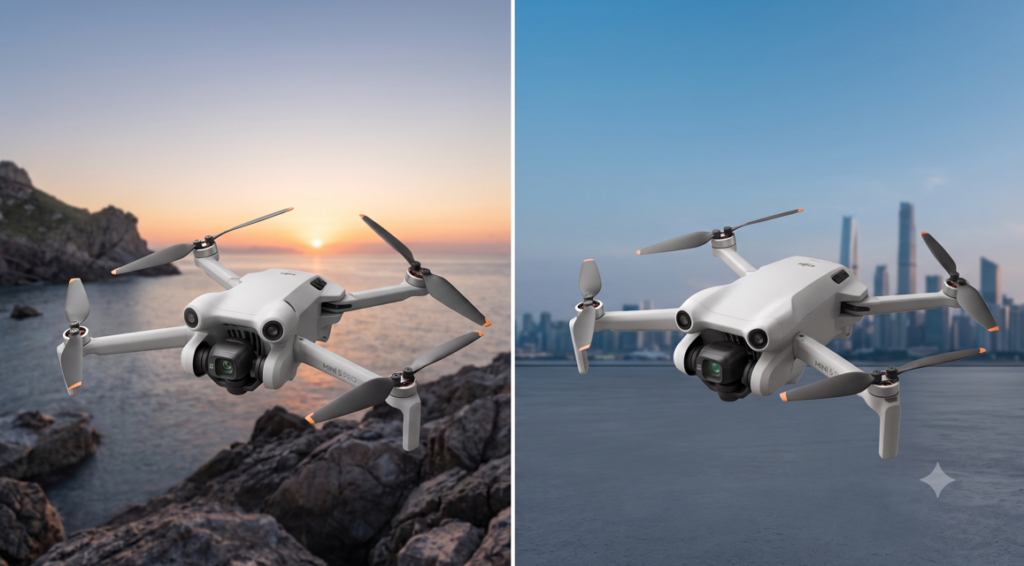
When could it launch?
There is no confirmed release date. Some rumor coverage says a launch before late 2026 is unlikely and treats 2027 as the more conservative bet. Those estimates come from assumed development cycles and the lack of pre-launch evidence, not from DJI.
- Late 2026: possible if the Mini 6 Pro is a focused update, though it would leave a short gap after the Mini 5 Pro and there is no regulatory or supply-chain evidence for it yet.
- First half of 2027: more time for sensor, battery, tracking and airframe changes that would set it apart. A reasonable planning assumption, still unconfirmed.
- Something else first: DJI also makes FPV, enterprise, agriculture, handheld and audio products. A Mini successor doesn’t have to follow the timetable rumor channels assume.
US buyers have an extra reason not to wait
The FCC added foreign-produced drones and critical components to its Covered List in December 2025. New models generally cannot get the equipment authorization needed for normal import and sale, while already authorized products can still be used. Some temporary and conditional exemptions exist, but none guarantees a path for a future Mini 6 Pro. Owning or flying an existing DJI drone did not become illegal. But a global Mini 6 Pro launch would not automatically mean official US sales. For a US buyer who needs a drone now, available Mini 5 Pro stock is the more predictable choice. See which drones are banned in the US for how the rule works.
Who should buy now
Anyone with a trip, event or season coming up. Waiting for an unannounced drone can mean missing a once-in-a-lifetime destination, a wedding, a hiking season or a weather window. Footage you can shoot now is worth more than a spec that may arrive after the moment has passed.
People who would use it for paid work. Travel and tourism content, property footage, social media, stock clips, small-business promotion and location scouting. If the drone earns money, months of waiting can cost more than the eventual hit on resale value.
Anyone who finds a real discount. Successor rumors can push down the current model’s price. A discounted Mini 5 Pro Fly More Combo may beat a Mini 6 Pro aircraft-only kit at launch once you count the controller, extra batteries, charging hub, bag, ND filters, spare propellers, memory card, DJI Care Refresh and regional warranty.
An established model also has the ecosystem: batteries, controllers and accessories in stock, tutorials, known firmware behavior and repair information. New products often launch with shortages and firmware issues.
Check current Mini 5 Pro availability.
Who should wait
| You are | What I’d do |
|---|---|
| A Mini 5 Pro owner | Keep it until DJI announces a successor with full specs |
| A satisfied Mini 4 Pro owner | Wait, unless the Mini 5 Pro fixes a specific limitation |
| A Mini 3 Pro owner who needs better low light | Consider the Mini 5 Pro |
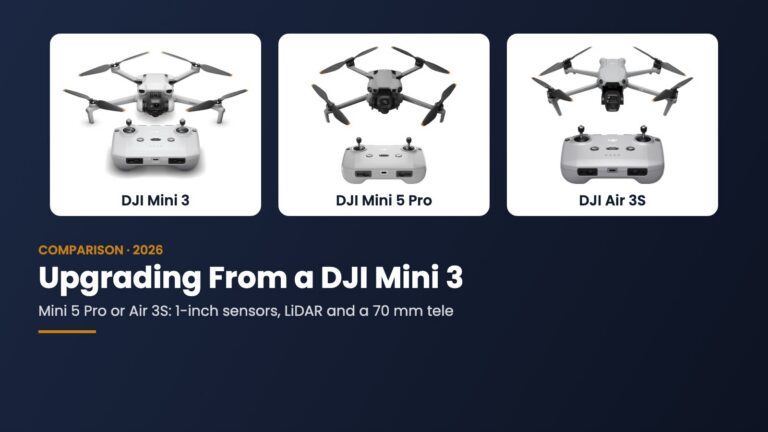
| A Mini 3, Mini 2 or older owner | The Mini 5 Pro is already a major upgrade |
| Waiting for 6K or 60-minute C0 flights | Don’t count on either |
| Someone who always wants the newest model | Wait |
Mini 5 Pro owners have no reason to sell on the strength of concept renders, unverified spec lists, YouTube thumbnails or anonymous posts. The Mini 4 Pro, with its 48 MP 1/1.3-inch camera, 4K/100fps, D-Log M and HLG, true vertical shooting and omnidirectional sensing, is still very capable. The Mini 5 Pro adds a bigger sensor, better low-light potential, LiDAR, storage, more gimbal movement and better flight performance; buy it if one of those solves a real problem for you. Owners of a Mini 3 Pro, Mini 3, Mini 2 or older gain the most from moving up, and should wait only if their drone still works reliably and no project needs more.
And if you would regret buying anything just before a successor lands, waiting may be right for you. That is a preference, not evidence the Mini 5 Pro is obsolete.
My view: the Mini 5 Pro is the safer buy for almost everyone. The rumored 6K video, variable aperture, stacked sensor, O5 transmission, silicon-anode battery, 60-minute flight time and improved LiDAR have no official document or verifiable filing behind them. Don’t miss a trip or a paid job waiting for a spec list that may be AI-generated.
Mini 5 Pro specifications were checked against DJI’s official product and specification pages. Mini 6 Pro information comes from public rumor coverage and an assessment of the evidence for each claim. Last verified: July 31, 2026.
The Friday Brief
One email a week on what changed in drones
FCC and FAA rule changes, DJI leaks checked against filings, and the week’s new comparisons. Every Friday, nothing else.
Free. Unsubscribe in one click. Sent with Kit; see our privacy policy.
Follow us on Google too: add Drone Ranker as a preferred source →
Continue Reading
All News