DJI Mini 3 Pro: Is It Still the Most Cost-Effective Mini Drone?

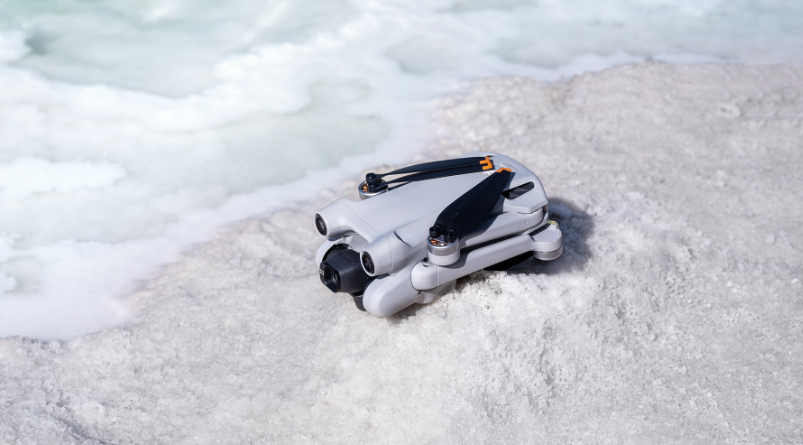
The DJI Mini 3 Pro is still a very capable small drone on paper: a 48 MP 1/1.3-inch sensor behind an f/1.7 lens, 4K at 60fps, a gimbal that rotates for true vertical shooting, obstacle sensing in three directions and O3 transmission, all in a body of about 249 grams. It was the Mini that stopped feeling like a compromise. Before it, “Mini” meant lower bitrates, fewer sensors and limited flight modes.
The weight is the headline for many buyers. Under 250 g, many countries drop registration requirements and some flight restrictions that apply to heavier drones. DJI’s figure comes with a footnote that actual weight may vary slightly between batches.
| Feature | DJI Mini 3 Pro |
|---|---|
| Takeoff weight | <249 g (standard battery); about 290 g with Battery Plus |
| Max flight time | 34 min (standard) / 47 min (Plus) |
| Sensor | 1/1.3-inch CMOS, 48 MP, f/1.7 |
| Max video | 4K at 60fps, 150 Mbps |
| Obstacle sensing | Forward, backward, downward |
| Transmission | O3, 12 km (FCC) / 8 km (CE) |
| Wind resistance | Level 5 (10.7 m/s) |
| Operating temperature | -10° to 40° C |
Check the Latest DJI Mini 3 Pro Price
Compare today’s price, available bundles, and verified customer reviews on Amazon before making your purchase.
View on Amazon →Disclosure: As an Amazon Associate, we may earn a commission from qualifying purchases at no additional cost to you.
Update, 22 October 2026: DJI released aircraft firmware v01.00.1000 for the DJI Mini 3 Pro on 20 October, its first update since July 2024. The note says only “Fixed some known issues”. The DJI RC Pro and DJI RC got new firmware too, but the RC-N1 did not. Here is what the October DJI firmware update covers.
Table of Contents
Size and weight
Folded, it measures 145×90×62 mm, small enough for a jacket pocket or the side pouch of a camera bag. Unfolded with propellers it is 251×362×70 mm.
The Intelligent Flight Battery Plus, sold separately and only in some countries, pushes the weight to roughly 290 g. That moves the drone out of the sub-250 g category in many places, so check your local rules before buying one. Current bundles and prices are on the product page.
Camera
The 1/1.3-inch sensor is a big step from the 1/2.3-inch sensors in older Minis. Owners on photography forums often say the f/1.7 aperture gives cleaner blue-hour and sunrise shots than the Mini 2.
True vertical shooting is the feature people talk about most. Instead of cropping a horizontal frame, the gimbal physically rotates 90 degrees, so vertical video and photos keep full resolution. For TikTok and Reels, that saves real editing time. DJI lists a tilt range of -135° to 80°.
Video tops out at 4K/60fps with a 150 Mbps bitrate, and 1080p goes to 120fps for slow motion. D-Cinelike gives more room for color grading, and HDR video is available at 24/25/30fps. DJI’s spec sheet credits dual native ISO for keeping noise down, and owners report fairly clean footage even near the 6400 manual ISO limit.
Flight time and handling
DJI rates the standard battery at 34 minutes, measured at a steady 21.6 kph with no wind. Owners report closer to 25-28 minutes once you keep a return-to-home margin and deal with wind. The Plus battery raises the rated figure to 47 minutes, but DJI warns the extra weight affects propulsion and wind resistance.
- Sport mode: 16 m/s horizontal, 5 m/s climb and descent.
- Normal mode: 10 m/s horizontal, 3 m/s climb and descent.
- Cine mode: limited to 6 m/s for smooth shots.
Positioning uses GPS, Galileo and BeiDou plus the downward vision system, with hovering accuracy of ±0.1 m vertically and ±0.3 m horizontally when vision positioning is active.
Obstacle sensing
Dual-vision sensors face forward, backward and down. DJI gives the forward sensors a precise measurement range of 0.39 to 25 meters and the rear ones 0.36 to 23.4 meters. That enables APAS 4.0, which can route the drone around obstacles, and forum users generally describe it as reliable.
The limits are in DJI’s own manual. Sensing needs more than 15 lux of light and can miss thin things like power lines and small branches. There are no side sensors, so sideways moves are unprotected, a point Reddit owners raise often. Treat it as a safety net, not a shield.
Transmission and controllers
O3 sends a 1080p/30fps feed through a four-antenna system, with a maximum range of 12 km under FCC rules and 8 km in CE regions such as Europe and the UK. Those are best-case, unobstructed figures. Forum users say the link is far steadier than the older Wi-Fi-based Minis, with much less choppy live view.
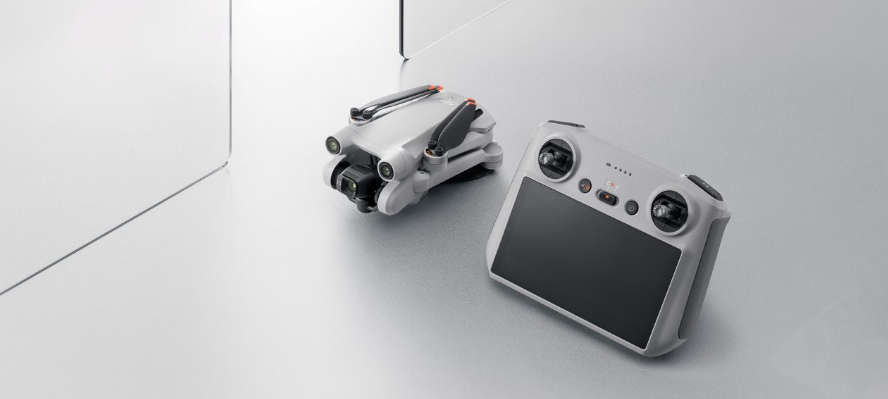
You buy it with either the RC-N1, which uses your phone, or the DJI RC with a built-in 5.5-inch 1080p, 700-nit screen. The DJI RC is quicker to set up and keeps your phone’s battery and notifications out of the way; it lasts about 4 hours against up to 6 for the RC-N1 when it isn’t charging a phone. The RC-N1 also works with the Mini 2 and Air 2S, so owners of those can buy the drone alone and save money. Both use the DJI Fly app (iOS 11.0 or later, Android 6.0 or later).
Flight modes
QuickShots include Dronie, Helix, Rocket, Circle, Boomerang and Asteroid, and MasterShots flies a sequence of moves and edits it into a short clip. FocusTrack bundles ActiveTrack 4.0, Point of Interest 3.0 and Spotlight 2.0. Owners report ActiveTrack is more dependable than on earlier Minis because it uses the obstacle sensors while following, which is why solo creators use it for walking, cycling and driving shots.
Storage, transfer and charging
There is no meaningful internal storage for video, so you need a microSD card rated UHS-I Speed Class 3 or above; SanDisk Extreme and Lexar 1066x cards are commonly cited. The DJI RC takes its own card for cached footage and screen recordings. QuickTransfer moves files to your phone over Wi-Fi 5 at up to 25 MB/s without switching on the controller. Cards up to 32 GB use FAT32, larger ones exFAT.
With DJI’s 30W USB-C charger, a standard battery takes about 64 minutes in the drone or 56 in the Two-Way Charging Hub. The Plus battery takes 101 and 78 minutes. The hub charges three batteries in sequence, doubles as a power bank for the controller or phone, and supports USB PD up to 30W, so a good PD charger is worth having.
Care and weak points
Long-term owners say it holds up well, but the light gimbal is exposed because it rotates for vertical shooting. Use the gimbal protector in transport to avoid calibration errors. The propellers are screwed on rather than quick-release, to save weight, and DJI says to check them before every flight; on a drone this light, a chipped blade shows up as vibration and jello in the video. Tighten the screws properly but don’t over-torque them.
It has no IP rating. DJI warns against flying in rain, snow or fog because moisture can get in through the cooling vents. In freezing weather owners see battery life drop sharply and keep batteries warm in a pocket until takeoff.
Rules: what 249 g gets you
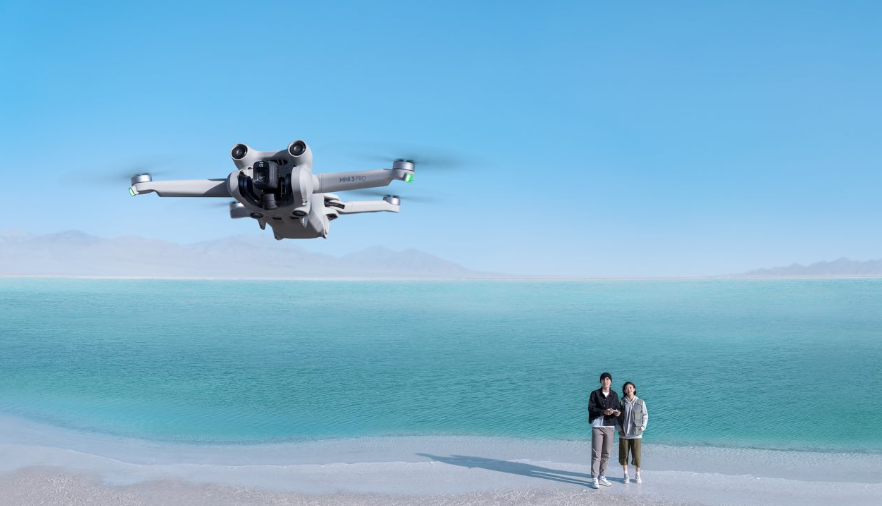
In the EU it is a C0 drone, so under EASA rules it can fly in the Open category, subcategory A1, which allows flight over uninvolved people (not crowds) with lighter training than heavier drones. In the US, drones under 250 g don’t need FAA registration for purely recreational flying. None of that overrides no-fly zones, privacy law or altitude limits. DJI’s GEO system shows restricted airspace, but staying legal is still the pilot’s job.
How it compares, and who should buy it
It sits between the standard Mini 3, which lacks obstacle sensing and 4K/60fps, and the Air series. The Air 2S has a larger 1-inch sensor but is much heavier and has no true vertical shooting. For most digital use, owners consider the 1/1.3-inch sensor good enough. Our Mini 3 vs Mini 3 Pro comparison goes through the differences line by line.
- Travelers: sub-249 g and pocket-sized when folded.
- Social media creators: true vertical shooting at full resolution.
- Beginners: three-way obstacle sensing is a safety net cheaper drones lack.
- Professionals: D-Cinelike and 150 Mbps make it a usable B-camera.
The Mini 3 Pro is still a sensible buy if you find it well below the price of newer Minis, mainly for travel and vertical content. If you want sensing on the sides or plan to lean on tracking near trees, the missing lateral sensors are the reason to look at a newer model instead. Check availability and current firmware notes on the product page.
The Friday Brief
One email a week on what changed in drones
FCC and FAA rule changes, DJI leaks checked against filings, and the week’s new comparisons. Every Friday, nothing else.
Free. Unsubscribe in one click. Sent with Kit; see our privacy policy.
Follow us on Google too: add Drone Ranker as a preferred source →
Continue Reading
All News