Potensic Atom 3 vs DJI Lito X1: Which Camera Drone Is Better?

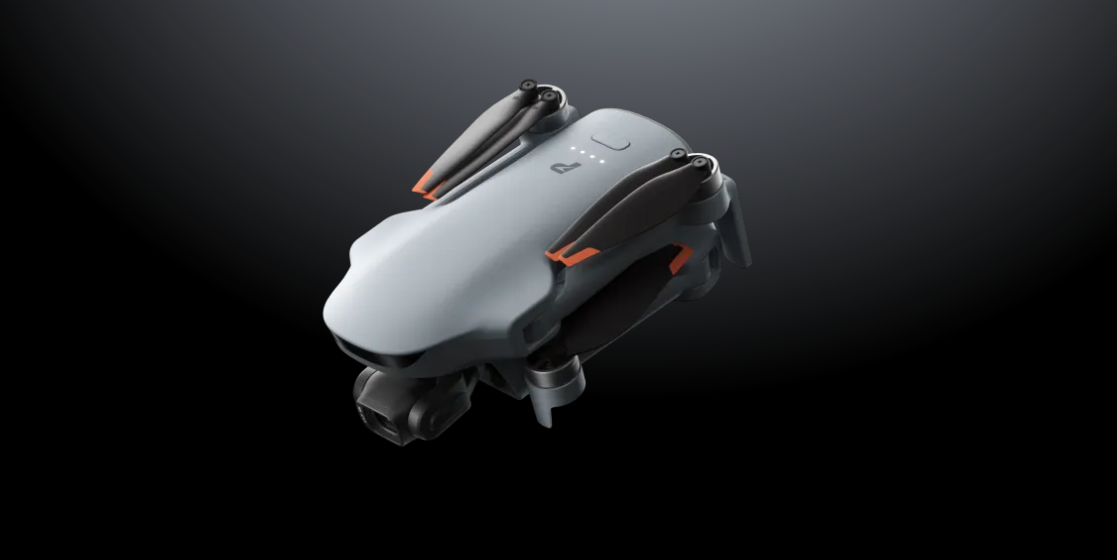
The DJI Lito X1 is the better all-round drone; the Potensic Atom 3 is the value pick if it is clearly cheaper where you live and you fly in open spaces. On paper they are close: both use a 1/1.3-inch sensor, record 4K, track subjects, shoot vertical video and weigh about 249 g in standard form. The Lito X1 pulls ahead with a brighter f/1.7 lens, 4K/100fps slow motion, 10-bit D-Log M, 42 GB of internal storage, and omnidirectional obstacle sensing with a forward LiDAR. The Atom 3 answers with longer standard-battery flight time, a 16 km transmission rating, 50 MP photos, P-Log and an optional controller with a built-in screen.
Comparing DJI’s budget models instead? See Lito X1 vs Lito 1 vs Mini 3.
In the United States this is also a paperwork question. Both drones are foreign-made, the rules changed in December 2025, and neither the Atom 3 nor the Lito X1 has US authorization; Potensic’s own store lists the Atom 3 as unavailable for purchase in the US. Which drones are banned in the US explains how to check a specific model.
Table of Contents
Specs side by side
| Feature | Potensic Atom 3 | DJI Lito X1 |
|---|---|---|
| Standard takeoff weight | Under 249 g | Approximately 249 g |
| Folded dimensions | 148×91×62 mm | 144×94×62 mm |
| Camera sensor | 1/1.3-inch CMOS | 1/1.3-inch CMOS |
| Effective resolution | 50 MP | 48 MP |
| Lens | 24 mm equivalent, f/2.8 | 24 mm equivalent, f/1.7 |
| Maximum standard video | 4K/60fps | 4K/60fps HDR |
| Maximum slow motion | FHD up to 7× | 4K/100fps and FHD/200fps |
| Maximum video bitrate | 120 Mbps | 130 Mbps |
| Log profile | P-Log | 10-bit D-Log M |
| RAW photos | Yes | Yes |
| Vertical video | 2.7K/30fps; FHD/30fps | 2.7K/60fps |
| Gimbal | Three-axis mechanical | Three-axis mechanical |
| Standard battery | 40 minutes maximum | 36 minutes maximum |
| Extended battery | 50 minutes maximum | 52 minutes maximum |
| Wind resistance | 10.7 m/s | 10.7 m/s |
| Maximum horizontal speed | 16 m/s | 18 m/s |
| Transmission | PixSync 5.0 | DJI O4 |
| Maximum stated range | Up to 16 km | Up to 15 km IC; 8 km CE |
| Live view | 1080p/60fps | 1080p/60fps |
| Subject tracking | AI Track 2.0 | ActiveTrack |
| Obstacle avoidance | No | Omnidirectional sensing and forward LiDAR |
| Internal storage | None | 42 GB |
| Screen controller | PTD 2 option | DJI RC 2 option |
| European class | C0 standard configuration | C0 or C1 depending on package |
Flight times, ranges and speeds are manufacturer figures measured under each brand’s own test conditions, so treat them as rough guides rather than like-for-like results.
Size and weight
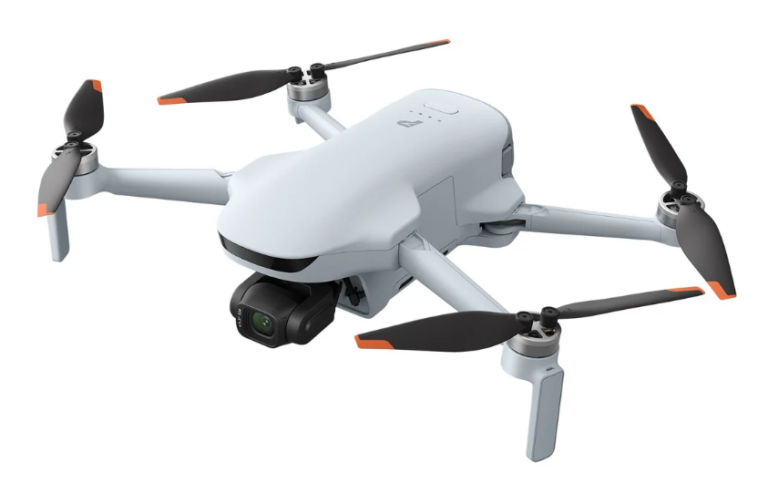
There is almost nothing in it. The Potensic Atom 3 weighs under 249 g with its standard battery, propellers and a microSD card, and folds to 148×91×62 mm. The DJI Lito X1 is about 249 g and folds to 144×94×62 mm without propellers, slightly shorter but marginally wider. Both fit a small camera or sling bag.
Neither stays under 250 g with everything attached. DJI says the Lito X1 can reach about 340 g with accessories and its larger permitted setup, and its Plus battery alone pushes it over 249 g. Batteries, guards and filters decide the final weight, not the airframe.
Price
Potensic’s official store listed the Atom 3 Standard Kit at $429.99 at the time of checking, with options for a phone-based controller, the PTD 2 screen controller, extra batteries and, where supported, an extended-range battery. DJI’s European stores list the Lito X1 from around £369, or roughly €379 to €429 depending on country and package, with Fly More combos using the RC-N3 or RC 2 and a Fly More Combo Plus with extended batteries.
The Atom 3 is pitched as the cheaper option but is not automatically cheaper in every market. Compare complete packages: controller, battery count, charging hub, bag, memory card, spare props, warranty, accident cover, local stock and import fees.
Camera and image quality
With the same sensor size, the lens is the real difference. The Lito X1’s f/1.7 aperture lets in far more light than the Atom 3’s f/2.8 at the same shutter speed and ISO. On paper that helps at golden hour, blue hour and with city lights: lower ISO, faster shutter, less motion blur and less noise. The Atom 3 tries to make up for it with AI Night processing (up to ISO 25,600, versus ISO 6400 in normal video), but software can’t fully replace a brighter lens. The Lito X1 goes up to ISO 12,800 in normal video.
The Atom 3 shoots 50 MP JPEGs, plus 12 MP JPEG and DNG RAW, with an 84-degree field of view and a 48 mm-equivalent Med-Tele crop mode. The Lito X1 shoots 48 MP and 12 MP in JPEG and DNG RAW, with an 82.1-degree field of view, simulated long exposures and portrait optimization. The 2 MP gap matters far less than lens, processing and RAW flexibility.
Video and slow motion
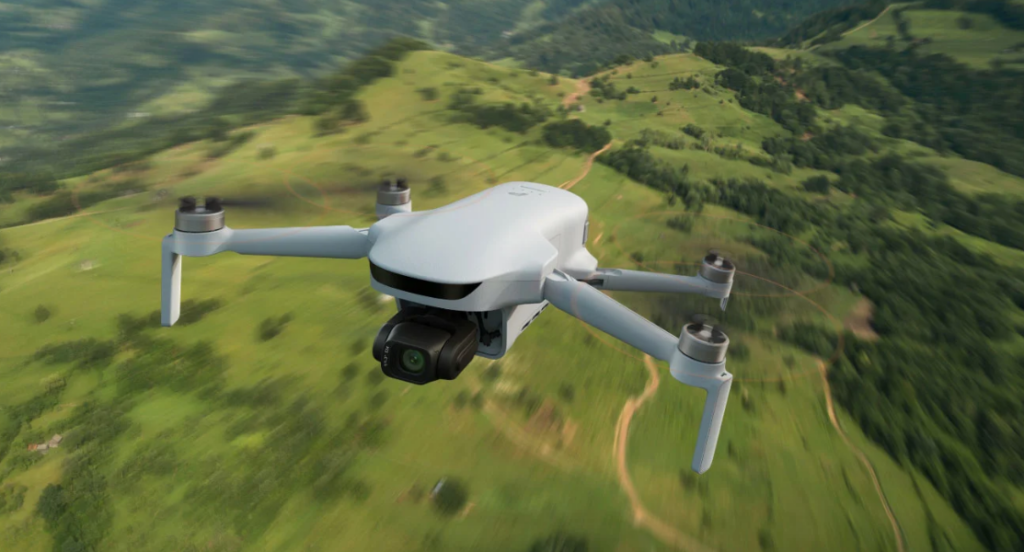
The Atom 3 records 4K at 24 to 60fps with HDR and P-Log at up to 120 Mbps, and offers 7× slow motion in Full HD. Its 2× Med-Tele mode records 4K at up to 30fps by cropping the main sensor, not through a separate telephoto camera. Potensic also provides a downloadable P-Log LUT.
The Lito X1 records 4K at up to 60fps, 4K/100fps and FHD/200fps slow motion, at up to 130 Mbps, with 10-bit D-Log M and 10-bit Normal in supported H.265 modes. For sports, vehicles, water, wildlife or anything you plan to slow down in editing, 4K/100fps keeps far more detail than Full HD slow motion, and documented 10-bit color gives more room for grading. For ordinary travel and scenery footage, the Atom 3’s 4K/60 is enough.
Vertical video tips the same way. The Atom 3 records 1520×2704 and 1080×1920 vertical video at up to 30fps and vertical photos up to 1728×3072. The Lito X1 records 1512×2688 vertical video at up to 60fps, which gives smoother motion for Reels, TikTok and Shorts.
Flight time, speed and range
With standard batteries, the Atom 3 is rated for 40 minutes against the Lito X1’s 36. Potensic’s figure comes from forward flight at 6.3 m/s with no wind until the battery hits zero. With extended batteries the order flips: 52 minutes for the Lito X1 Plus battery, 50 for the Atom 3’s extended-range pack, which is not currently sold in Europe. DJI also publishes a tougher “typical” test with 4K/60 recording, climbs, gimbal moves, hovering and Return to Home: 23 minutes on the standard battery and 37 on the Plus. For anyone staying in the lighter standard configuration, the Atom 3’s four extra minutes are a real advantage.
Both are rated for 10.7 m/s wind (roughly Level 5). The Lito X1 is a bit quicker: 18 m/s top speed with the standard battery in Sport mode and up to 7 m/s ascent and descent, against 16 m/s, 5 m/s up and 4 m/s down for the Atom 3. These are limits, not recommended conditions.
The Atom 3’s PixSync 5.0 is rated up to 16 km, with triple-band 2.4, 5.2 and 5.8 GHz operation, automatic frequency switching and a 10 Mbps live feed. DJI’s O4 is rated up to 15 km under IC rules and 8 km under CE, SRRC and MIC, with about 120 ms minimum latency. Both give 1080p/60fps live view. Visual-line-of-sight rules and battery reserve keep real flights far shorter than either number.
Obstacle avoidance: the biggest difference
The Atom 3 has no directional obstacle avoidance. It relies on GNSS, a downward vision system for positioning and landing, automatic Return to Home with an AR view, landing-pad recognition and a Beginner Mode. Potensic itself tells beginners to practice in open areas and to set a sensible Return-to-Home altitude, because the drone cannot steer around trees, walls, wires or poles on its own.
The Lito X1 combines omnidirectional monocular vision sensing, a forward LiDAR rated to 36 meters for larger obstacles, a downward infrared sensor and obstacle-aware Return to Home. It still has limits: vision sensing needs light and texture, and thin branches, wires, glass, reflective surfaces, darkness and bad weather can defeat it. But it is a safety layer the Atom 3 simply doesn’t have, and it counts most for first-time pilots, tracking shots, tree-lined or urban spots and low-light flights.
Tracking and automated modes
The Atom 3’s AI Track 2.0 has a long list of modes: AI Spotlight, Follow and Parallel, plus Pull-Away, Spiral, Rocket, Circle, Boomerang, Dolly Zoom, Drift, waypoint-style moves and Cruise Control. Normal tracking needs an altitude above four meters; with propeller guards and Low Altitude Follow it can track much lower. The catch is that none of it adds obstacle avoidance, so you have to pick a clear route and watch the drone the whole time.
The Lito X1 offers ActiveTrack, MasterShots, QuickShots, Hyperlapse, Cruise Control, Waypoint Flight and panoramas. Because its tracking runs alongside omnidirectional sensing and LiDAR, it is the safer automated package, though sensing still doesn’t excuse taking your eyes off the aircraft.
Controllers, apps and storage
The Atom 3 comes with a phone-based controller or the PTD 2, which has a 5.5-inch, 900-nit screen and runs the Potensic Eve app directly. No phone calls interrupting a flight, no phone battery drain, no cables. The app covers camera and manual exposure controls, AI modes, flight logs, firmware and media.
The Lito X1 works with the DJI RC-N3, the RC-N2 in supported markets, and the screen-equipped DJI RC 2, which runs DJI Fly with its tutorials, safety and FlySafe settings, intelligent modes, waypoints and media transfer. DJI also offers Care Refresh in supported regions and a much wider range of official and third-party accessories. On controllers it’s a tie; DJI’s ecosystem is broader.
Storage is a clear DJI win. The Atom 3 has no internal storage and needs a U3 or V30 microSD card; forget it and you can’t record. The Lito X1 has 42 GB built in, plus microSD, Off-State QuickTransfer, remote wake-up through DJI Fly and Wi-Fi 6 downloads up to 50 MB/s in lab conditions.
European class
Potensic markets the Atom 3 as a C0, under-249 g drone. For the Lito X1, the class depends on the package: standard and standard Fly More configurations are C0, while the Fly More Combo Plus with DJI RC 2 is C1. The Plus battery takes it over 249 g, and some guard and battery combinations are restricted by class. Check the class label on the exact package you buy. A C0 or sub-250 g drone still has to follow registration, airspace, privacy and line-of-sight rules where they apply.
Which should you buy?
Buy the Atom 3 if you want a capable DJI alternative, value standard-battery flight time, want 50 MP stills and 4K/60 HDR, are happy with P-Log, fly mostly in open country, are comfortable without obstacle avoidance, and can get it for noticeably less. It is one of the closest non-DJI matches for a sub-250 g drone with this sensor size, and its main compromise is safety.
Check the Latest Potensic ATOM 3 Fly More Combo Price
Compare today's price, available bundles, and verified customer reviews before making your purchase.
Check ATOM 3 Price →Disclosure: As an Amazon Associate, we earn from qualifying purchases at no additional cost to you.
Buy the Lito X1 if you are a beginner, fly around trees, buildings or cities, use subject tracking a lot, want 4K/100fps or 10-bit D-Log M, value built-in storage, or want DJI Fly and the DJI RC ecosystem. It is also the better travel drone across varied destinations, mainly because of sensing and storage.
At similar package prices, I’d take the Lito X1 without much hesitation. A brighter lens and obstacle sensing are hardware advantages no firmware update will give the Atom 3. The Atom 3 only makes sense when the price gap is real and your flying is mostly over open ground.
This comparison is based on official Potensic and DJI product pages, specifications, FAQs, support documents and official store listings, last checked on 3 August 2026. Neither drone was flown for it. Prices, packages and regional certification change, so check the seller listing and class label before buying.
The Friday Brief
One email a week on what changed in drones
FCC and FAA rule changes, DJI leaks checked against filings, and the week’s new comparisons. Every Friday, nothing else.
Free. Unsubscribe in one click. Sent with Kit; see our privacy policy.
Follow us on Google too: add Drone Ranker as a preferred source →
Continue Reading
All News