ATOM 3 vs DJI Mini 5 Pro: Can the Cheaper Drone Compete?

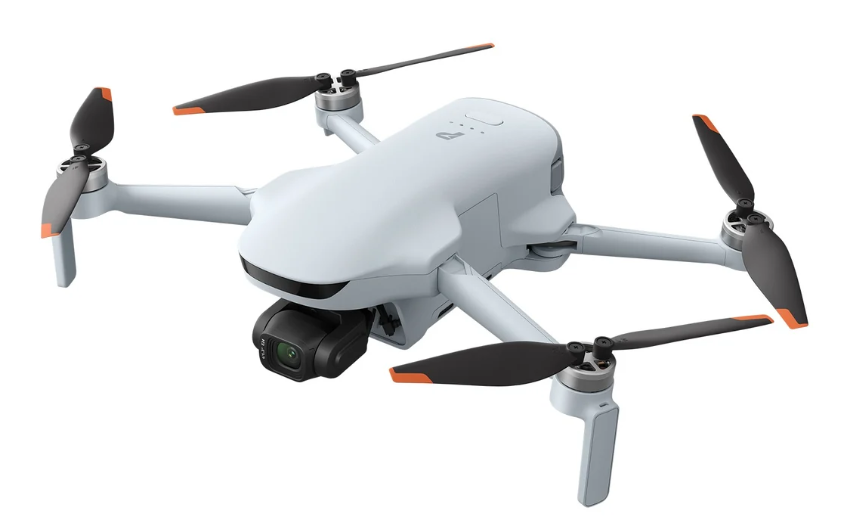
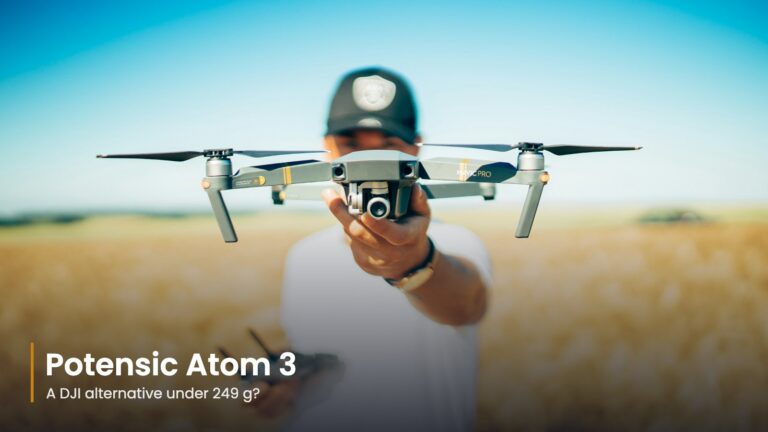
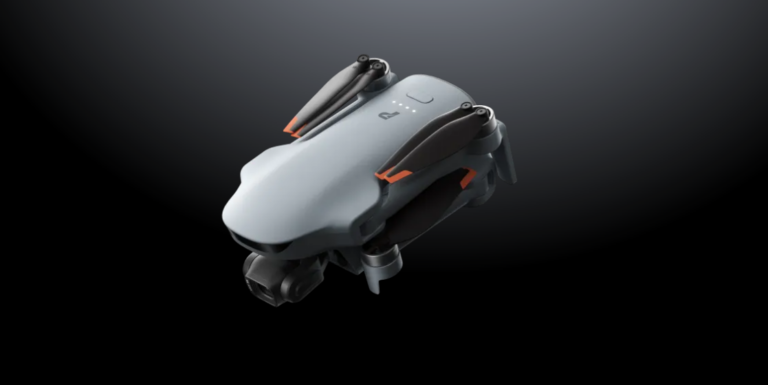
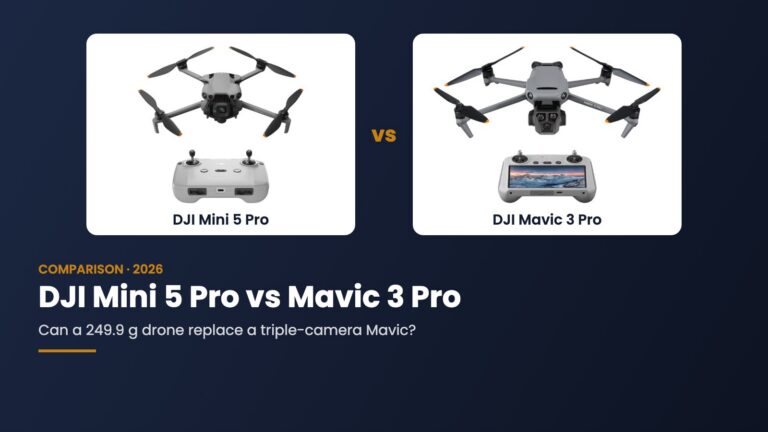
The Potensic ATOM 3 and the DJI Mini 5 Pro sit in different price tiers, but on paper they are closer than the price gap suggests. Both are folding sub-250 g class camera drones with 50 MP cameras, 4K video and subject tracking, built for travelers who don’t want to carry anything bigger.
The ATOM 3 has a 1/1.3-inch sensor, 4K/60fps HDR, P-Log, AI tracking, up to 40 minutes of standard-battery flight time and a 16 km maximum transmission claim. Potensic lists the standard model at $429.99 on its official store, though the US storefront marked it unavailable when this was written.
The DJI Mini 5 Pro steps up to a 1-inch sensor, 4K/120fps slow motion, a brighter f/1.8 lens, omnidirectional obstacle sensing with forward LiDAR, ActiveTrack 360°, a gimbal that rolls up to 225 degrees, 42 GB of internal storage and DJI’s O4+ transmission. So the real question is how much of the Mini 5 Pro you can get without paying Mini 5 Pro money. For many casual pilots, more than you’d expect.
Check the Latest Potensic ATOM 3 Fly More Combo Price
Compare today's price, available bundles, and verified customer reviews before making your purchase.
Check ATOM 3 Price →Disclosure: As an Amazon Associate, we earn from qualifying purchases at no additional cost to you.
Check the Latest DJI Mini 5 Pro Fly More Combo Price
Compare today's price, available bundles, and verified customer reviews before making your purchase.
Check Mini 5 Pro Price →Disclosure: As an Amazon Associate, we earn from qualifying purchases at no additional cost to you.
Specs side by side
| Feature | Potensic ATOM 3 | DJI Mini 5 Pro |
|---|---|---|
| Weight | Under 249 g | 249.9 g design weight |
| Folded size | ~148 × 91 × 62 mm | ~157 × 95 × 68 mm |
| Camera sensor | 1/1.3-inch CMOS | 1-inch CMOS |
| Photo resolution | 50 MP | 50 MP |
| Aperture | f/2.8 | f/1.8 |
| Video | 4K/60fps HDR | 4K/60fps HDR, 4K/120fps slow motion |
| Flat color profile | P-Log | D-Log M |
| Gimbal | 3-axis | 3-axis, 225° roll |
| Vertical shooting | 2.7K vertical | True Vertical Shooting |
| Subject tracking | AI Tracking 2.0 | ActiveTrack 360° |
| Obstacle avoidance | No | Omnidirectional + forward LiDAR |
| Standard flight time | Up to 40 min | Up to 36 min |
| Extended battery | Up to 50 min | Up to 52 min |
| Transmission | PixSync 5.0, 16 km FCC | DJI O4+, 20 km FCC |
| Storage | MicroSD required | 42 GB + MicroSD |
Maximum flight time and range figures are measured by the manufacturers under controlled conditions, not typical real-world results.
Camera and low light
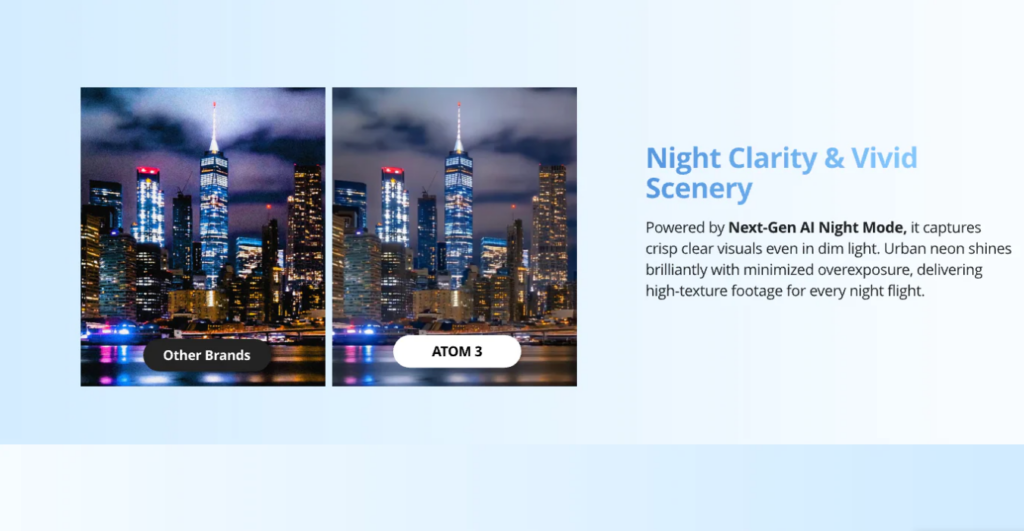
This is where the Mini 5 Pro pulls away. The ATOM 3’s 1/1.3-inch, 50 MP sensor with an f/2.8 lens is respectable for a cheaper drone, and it supports HDR, RAW photos and P-Log for people who grade their footage. Potensic adds AI Night processing for dark scenes.
The Mini 5 Pro’s 1-inch sensor has a much larger light-gathering area, and its f/1.8 lens lets more light reach it. DJI specifically promotes the camera for low light. On paper the gap should show most at sunset, blue hour, in high-contrast scenes and at night, though processing, exposure and conditions still decide how any single shot looks. If photography or serious video is the main reason you want a drone, the Mini 5 Pro’s advantage is real hardware, not just a better-known name. For daylight travel footage, the ATOM 3’s camera is already far beyond what entry-level drones offered a few years ago.
Video and slow motion
Both record 4K/60fps, so the ATOM 3 does not push budget buyers down to 4K/30. Potensic quotes a maximum bitrate of 120 Mbps.
DJI adds 4K/120fps slow motion and D-Log M, and publishes an official D-Log M conversion LUT for the Mini 5 Pro. If you mostly shoot normal travel clips at 4K/30 or 4K/60, that probably doesn’t justify the price premium. If you shoot action, sports or cinematic slow motion, the Mini 5 Pro is considerably more capable.
Obstacle avoidance is the biggest gap
The most important difference has nothing to do with the camera. The ATOM 3 has no obstacle-avoidance system. Potensic says so in its official FAQ and recommends beginners practice in open areas; its downward vision system is for positioning, not avoiding obstacles.
The Mini 5 Pro has DJI’s Nightscape Omnidirectional Obstacle Sensing, with a forward-facing LiDAR sensor and multiple vision sensors, designed to keep working in lower light. Sensing never replaces pilot awareness, but for beginners and anyone who uses tracking a lot, it is the strongest reason to spend more.
Tracking
Potensic has made the ATOM 3 much more competitive here. AI Tracking 2.0 includes Follow, Parallel and Spotlight modes, and supports lower-altitude tracking with the right propeller guards fitted. It is a genuine follow-me drone, not just GPS flight modes.
DJI’s ActiveTrack 360° is more advanced: DJI says it detects sports scenarios such as cycling and adapts its behavior, balancing framing, speed and obstacle avoidance. The bigger advantage, though, is that DJI’s tracking works alongside omnidirectional sensing. Tracking yourself across an open beach or field, both drones make sense. Cycling past trees, the Mini 5 Pro is the much safer choice.
Battery life
The ATOM 3 wins on the standard battery: Potensic rates it for up to 40 minutes, against 36 minutes for the Mini 5 Pro’s normal Intelligent Flight Battery. With larger packs the ATOM 3 claims 50 minutes and the Mini 5 Pro up to 52 with DJI’s Battery Plus.
With its standard battery, Potensic lists the ATOM 3 under 249 g with a C0 classification in Europe; DJI gives the Mini 5 Pro a design weight of about 249.9 g, and manufacturing tolerances can move that slightly. There is a regulatory catch with bigger packs. DJI states the Mini 5 Pro weighs more than 249 g with Battery Plus fitted. Potensic’s extended battery is also considerably heavier than its standard one, so check the resulting weight and local rules before assuming sub-250 g treatment. Our registration-by-weight guide covers where that line falls.
Range, vertical video and storage
The ATOM 3’s PixSync 5.0 gives a 1080p/60fps live view and a claimed 16 km FCC range; the Mini 5 Pro’s O4+ claims 20 km with a 10-bit feed. DJI wins on paper, but 16 versus 20 km should not decide anything: both are ideal-condition numbers, and you have to stay within visual line of sight anyway. Stability in crowded radio environments matters more, and maximum-distance figures can’t tell you that.
For social video, the ATOM 3 records vertically at up to 2.7K, which is enough for occasional Reels or Shorts. The Mini 5 Pro’s gimbal physically rotates for True Vertical Shooting and rolls up to 225 degrees, which gives more framing options if you post vertical content often.
Storage is an easy DJI win. The ATOM 3 records only to MicroSD; the Mini 5 Pro adds 42 GB internal plus high-speed wireless transfer. That sounds minor until you arrive somewhere and your card is still in your laptop. It isn’t worth hundreds of dollars on its own, but it’s one of several small comforts that make the DJI feel more premium.
For beginners and for travel
The ATOM 3 looks like the obvious beginner pick: cheaper, with GPS positioning, automatic Return-to-Home, AI flight modes and a good three-axis camera. But beginners are exactly the pilots who benefit most from obstacle sensing, and Potensic’s own RTH guidance tells users to set a suitable return altitude and watch for obstacles. The Mini 5 Pro adds sensing, LiDAR and a more advanced Smart RTH; DJI says it can memorize flight routes in suitable conditions to support a return when satellite positioning is lost.
For travel, both are in the same ultra-compact class and fit a small camera bag. The ATOM 3’s case is a serious 4K/60 drone without Mini 5 Pro pricing. The Mini 5 Pro’s case is that if you carry only one drone, you get a bigger sensor, sensing, better low-light ability and more automation.
Price and availability
Potensic lists the standard ATOM 3 at $429.99, while marking it unavailable in the US, so check your region. DJI lists the standard Mini 5 Pro from around €799–€809 in several European markets and £689 in the UK. Taxes and distribution differ, so those numbers don’t convert into a clean global comparison, but the Mini 5 Pro clearly sits in a higher tier.
US buyers have extra homework. Beyond the ATOM 3’s unavailable status, regulatory changes can affect the availability of newer foreign-made drones (see which drones are banned in the US), so factor in authorized retail availability, warranty and long-term support, not just specs. In Europe and other markets where both are normally sold, the choice is simpler.
Which one to buy
The ATOM 3 already covers what most people use on a compact travel drone: a stabilized camera, 4K/60, 50 MP stills, subject tracking, GPS flight, automatic RTH and long battery life. The Mini 5 Pro adds the expensive layer: the 1-inch sensor and f/1.8 lens, 4K/120 and D-Log M, the 225-degree gimbal, and sensing that makes automated flight much safer around obstacles.
My call: if you mostly fly over beaches, fields and mountains and want good 4K footage, the ATOM 3 is the better value. If drone photography is a serious hobby, you track yourself around obstacles, or you fly in difficult light, the Mini 5 Pro is the better aircraft and worth the premium. The Mini 5 Pro wins the comparison; the ATOM 3 wins the question of how much drone you actually need. For other matchups, see ATOM 3 vs DJI Lito X1.
Last updated: August 21, 2026. Specifications and manufacturer maximum figures were checked against current Potensic and DJI documentation. Regional pricing and availability can change.
The Friday Brief
One email a week on what changed in drones
FCC and FAA rule changes, DJI leaks checked against filings, and the week’s new comparisons. Every Friday, nothing else.
Free. Unsubscribe in one click. Sent with Kit; see our privacy policy.
Follow us on Google too: add Drone Ranker as a preferred source →
Continue Reading
All News