Best Price Performance DJI Drone 2026: Top 5 Value Picks

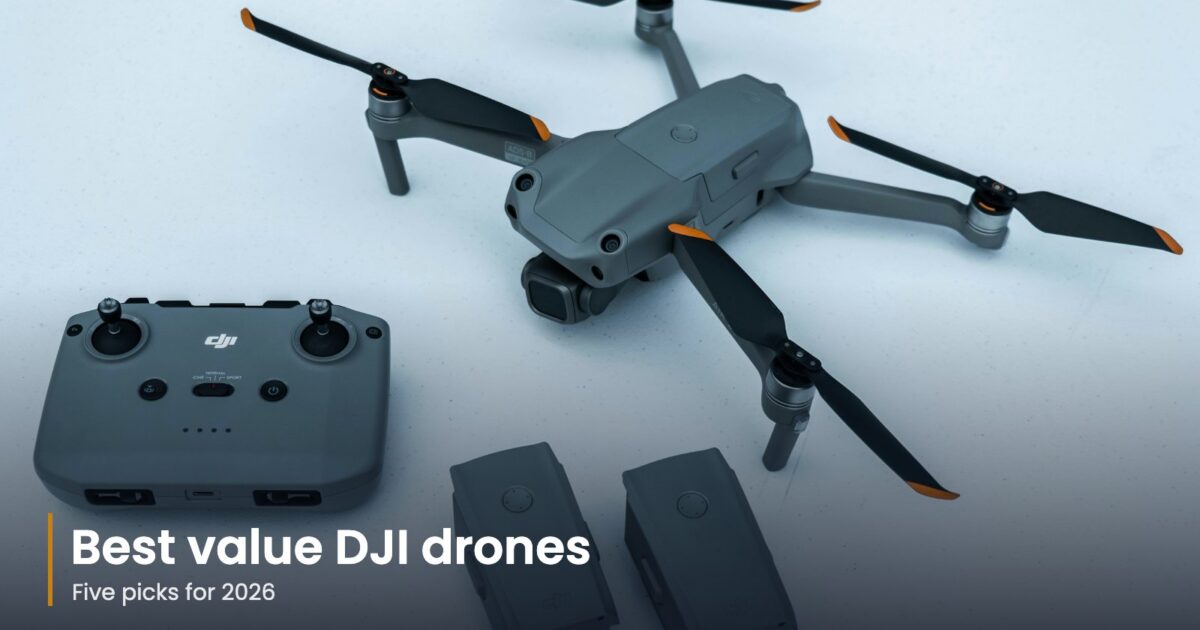
If you want the best price performance DJI drone in 2026, for most people it is the Mini 4K: it is the cheapest way into a 3-axis mechanical gimbal and 4K video. The DJI Neo is cheaper still and easier to fly, the Mini 3 and Mini 4 Pro add flight time and safety features, and the Air 3 series is where you go for a second camera. Value here means capability per dollar, not the lowest price, so camera, flight time, portability and weight all count.
The sub-250-gram class is the most competitive part of the market, and DJI has split its lineup to cover everyone from first-time flyers to serious aerial photographers. For most buyers the sweet spot is the Mini and Air series, which avoid the regulatory hurdles of heavier aircraft but keep the features pilots want. If you would rather answer five questions than read the list, try our 1-minute drone finder quiz. For the October and November sale windows, our DJI drone deals watchlist shows which of these models usually drop the most.
When comparing, look at sensor size, transmission range and obstacle avoidance; a lower price usually means giving up one of them. Also price the Fly More Combo bundles, which often work out better long term because they include extra batteries and propellers.
Disclosure: As an Amazon Associate, DroneRanker earns from qualifying purchases at no additional cost to you.
Table of Contents
DJI Neo: cheapest and smallest
If you want to spend as little as possible and carry it everywhere, the DJI Neo is the one. DJI calls it its lightest and most compact drone to date. In basic modes it needs no remote controller: you launch it from your palm and it records on its own.
It is built for aerial selfies and quick clips without a learning curve. There is no mechanical gimbal, so stabilization is electronic. It suits beginners and people who mostly want shots of themselves.
| Specification | Detail |
|---|---|
| Weight | 135 g |
| Camera | 1/2-inch CMOS, 4K/30fps |
| Max flight time | 18 minutes |
| Max transmission range | 50 m (with smartphone), 10 km (with Goggles) |
| Obstacle sensing | Downward vision positioning only |
DJI Mini 4K: the best starting point
The DJI Mini 4K costs a little more than the Neo and does a lot more. It brings 4K recording at a very low price and, according to DJI, stays under the Mini series’ 249 g mark, so in many regions you can fly it without registering.
The feature that sets it apart is the 3-axis mechanical gimbal, which keeps footage level and smooth in a way electronically stabilized drones can’t match. DJI rates it for Level 5 wind resistance, up to 10.5 m/s (24 mph), and it records 4K/30fps. If you want footage that looks professional without paying premium prices, I think the Mini 4K is the most sensible first drone in DJI’s range.
DJI Mini 3: longer flights and vertical video
If airtime matters more than obstacle avoidance, the DJI Mini 3 is still a strong pick. Its 38-minute maximum flight time is long for this price, which leaves room for mistakes and multi-shot sequences on one battery.
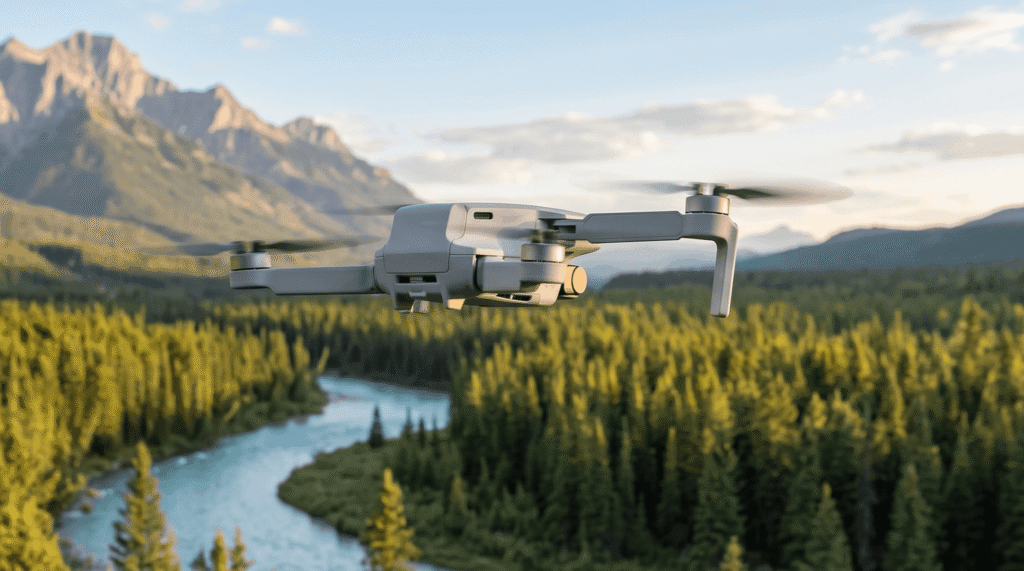
It also has True Vertical Shooting: the camera physically rotates 90 degrees, so you get native vertical video for social media without cropping.
| Specification | Detail |
|---|---|
| Weight | 246 g (standard battery) |
| Camera | 1/1.3-inch CMOS, 48MP, 4K/30fps |
| Max flight time | 38 minutes (with Intelligent Flight Battery) |
| Transmission | DJI O2 (up to 10 km video transmission) |
| Special feature | True Vertical Shooting |
DJI Mini 4 Pro: the most capable under 249 g
If you want pro-level features without crossing the 250-gram threshold, the DJI Mini 4 Pro is the answer. It has omnidirectional obstacle sensing (front, back, top, bottom and sides), something previously limited to the heavier Mavic and Air drones, plus Advanced Return to Home, which plans an obstacle-free route back.
It shoots 4K/100fps slow motion and supports tracking modes such as ActiveTrack 360. For a mid-range budget, the Mini 4 Pro is the one that will stay useful longest.
DJI Air 3 and Air 3S: two cameras
If you are willing to register your drone and carry something heavier, the Air 3 series adds a dual-camera system with a 24 mm wide and a 70 mm medium telephoto lens. You can change framing without landing to swap anything.
The Air 3S improves low-light performance and adds forward-facing LiDAR for safer night flying. At 720 g it is much less portable than the Minis, but for photographers who want the second focal length, the extra weight is worth it.
| Specification | Detail |
|---|---|
| Weight | 720 g |
| Cameras | 24 mm wide and 70 mm medium tele |
| Max flight time | 45 minutes |
| Max video transmission | 20 km (DJI O4 HD) |
| Obstacle sensing | Omnidirectional (Air 3S adds LiDAR) |
Picking the best price performance DJI drone for you
- Beginners and selfie shooters: the DJI Neo, the cheapest and easiest way in.
- Budget filmmakers who need 4K: the Mini 4K, for gimbal stability at a low cost.
- Social media creators: the Mini 3, for long flights and native vertical video.
- Buyers who want the best safety features: the Mini 4 Pro, with omnidirectional sensing under 249 g.
- Photographers who want a telephoto: the Air 3 or Air 3S.
Prices and availability change; check the latest specs and offers on the official retailer pages.
The Friday Brief
One email a week on what changed in drones
FCC and FAA rule changes, DJI leaks checked against filings, and the week’s new comparisons. Every Friday, nothing else.
Free. Unsubscribe in one click. Sent with Kit; see our privacy policy.
Follow us on Google too: add Drone Ranker as a preferred source →
Continue Reading
All News