DJI Lito 1 vs DJI Mini 4K
DJI Lito 1 is the stronger overall choice because its omnidirectional vision sensing, 4K/60fps recording, 4K/100fps slow motion, O4 transmission, higher maximum speed and longer battery options provide meaningful advantages for frequent pilots and more demanding video work. It is particularly suitable for buyers who…
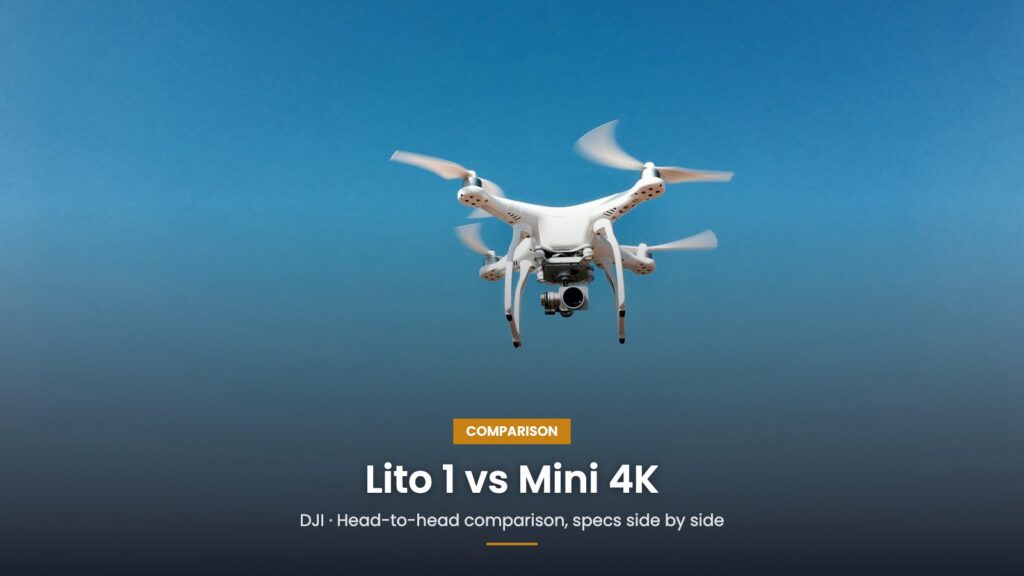
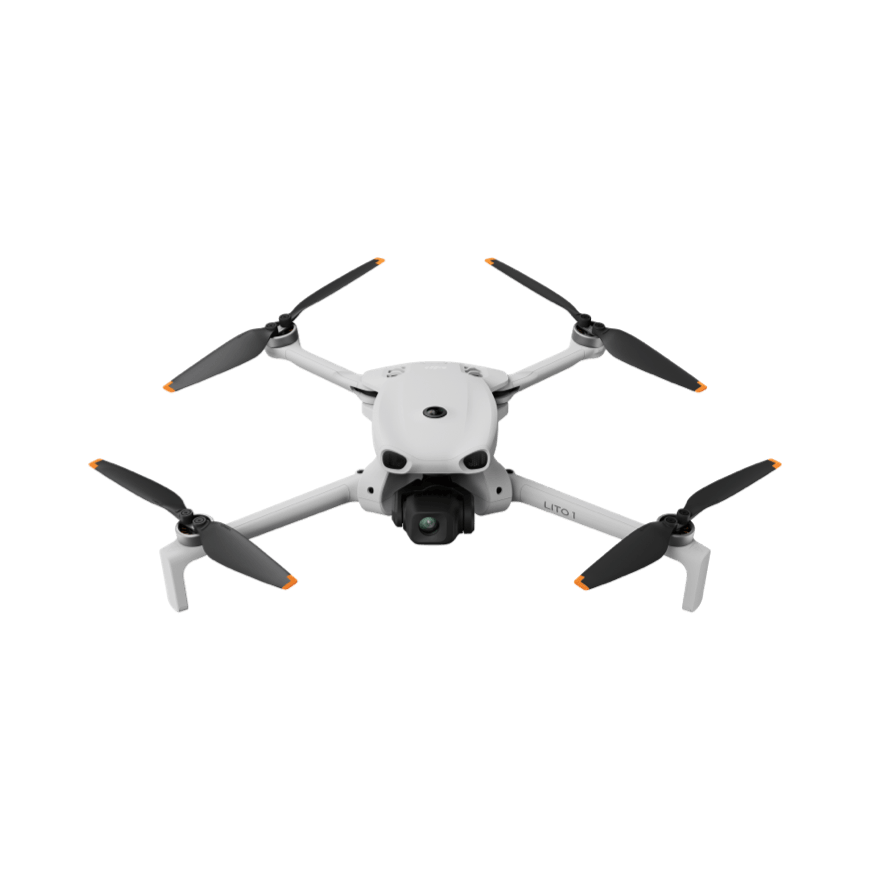
DJI Lito 1
$499
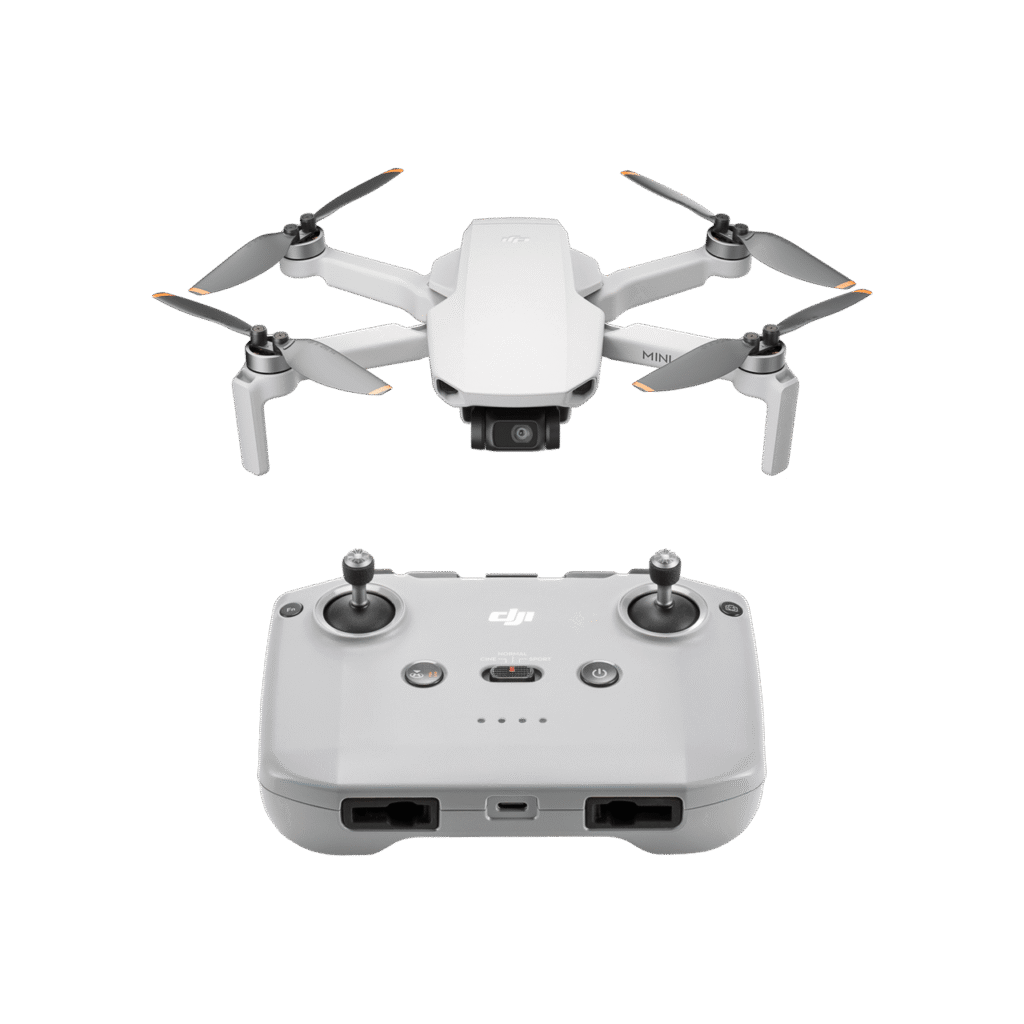
DJI Mini 4K
$299
Technical Specifications
Last updated: Oct 2026| Feature | DJI Lito 1 | DJI Mini 4K |
|---|---|---|
| Weight | Approx. 249 g with standard battery; over 249 g with Plus battery | 246 g with standard battery |
| Dimensions | 149×94×62 mm folded | 138×81×58 mm folded |
| Volume | 868 cm³ folded bounding-box volume | 647 cm³ folded bounding-box volume |
| Max Speed | 18 m/s in Sport mode (manufacturer-stated) | 16 m/s in Sport mode (manufacturer-stated) |
| Max Flight Distance | 20 km standard; 32 km Plus (manufacturer-stated) | 15.7 km (manufacturer-stated) |
| Sensor Size | 1/2-inch CMOS | 1/2.3-inch CMOS |
| Megapixels | 48 MP effective | 12 MP |
| Max ISO | ISO 12,800 for normal video and 12 MP photos; ISO 3,200 at 48 MP | ISO 3,200 |
| Flight Time | 36 minutes standard; 52 minutes Plus (manufacturer-stated) | 31 minutes (manufacturer-stated) |
| Max Resolution | 4K up to 60fps; 4K/100fps slow motion; 2.7K vertical up to 60fps | 4K up to 30fps; 2.7K up to 60fps |
| Movie Bitrate | 130 Mbps | 100 Mbps |
| Field of View | 79° | 83° |
| Transmission Range | 15 km IC; 8 km CE/SRRC/MIC in unobstructed conditions | 10 km FCC; 6 km CE/SRRC/MIC in unobstructed conditions |
| Wind Resistance | 10.7 m/s (Level 5) | 10.7 m/s (Level 5) |
| Obstacle Avoidance | Omnidirectional monocular vision sensing with downward infrared support | Downward vision positioning only; no directional obstacle avoidance |
| Battery Power | 2590 mAh standard; 4680 mAh Plus | 2250 mAh, 17.32 Wh |
| Charge Time | Standard battery: approximately 73 minutes in aircraft or 45 minutes in charging hub | Approx. 56 minutes |
| Internal Storage | None; microSD card required | None; microSD card required |
| GPS | Yes, GPS + Galileo + BeiDou | Yes |
| Obstacle Detection | Yes, omnidirectional vision sensing under suitable conditions | No dedicated obstacle detection; downward positioning sensors only |
| Return to Home | Yes | Yes |
| Removable Battery | Yes | Yes |
| Shoots RAW | Yes, DNG | Yes, DNG |
| HDR Mode | No dedicated HDR mode listed | No dedicated HDR mode |
| Weather Sealed | No official IP rating | No official IP rating |
| Best For | Enthusiasts prioritizing obstacle sensing, endurance and advanced video modes | Beginners and casual pilots prioritizing affordability and portability |
| Standard Battery Flight Time | 36 minutes | 31 minutes |
| Plus Battery Flight Time | 52 minutes | Not available |
| Standard Battery Flight Distance | 20 km | 15.7 km |
| Plus Battery Flight Distance | 32 km | Not available |
| Standard Battery Capacity | 2590 mAh, 18.96 Wh | 2250 mAh, 17.32 Wh |
| Plus Battery Capacity | 4680 mAh, 33.51 Wh | Not available |
| Maximum 4K Frame Rate | 4K/100fps slow motion | 4K/30fps |
| Standard 4K Recording | 4K up to 60fps | 4K up to 30fps |
| Vertical Video | 2.7K vertical up to 60fps | No dedicated vertical mode |
| Camera Aperture | f/1.8 | f/2.8 |
| Transmission System | DJI O4 | DJI O2 |
| Maximum Transmission Range | 15 km IC; 8 km CE/SRRC/MIC | 10 km FCC; 6 km CE/SRRC/MIC |
| Maximum Ascent Speed | 7 m/s | 5 m/s |
| Maximum Descent Speed | 7 m/s | 3.5 m/s |
| Obstacle Sensing Coverage | Forward, backward, left, right, upward and downward | Downward positioning only |
| Standard Battery Charge in Aircraft | Approx. 73 minutes | Approx. 56 minutes |
DJI Lito 1 vs DJI Mini 4K at a Glance
DJI Lito 1 and DJI Mini 4K target different types of sub-250 g buyer. Mini 4K focuses on affordability and the essential stabilized camera-drone experience, while Lito 1 adds broader sensing coverage, faster video modes, longer battery options and a newer transmission system.
Both drones provide GPS, return-to-home, removable batteries, DNG RAW photography and Level 5 wind resistance. The main buying decision is therefore whether the lower purchase price and smaller body of Mini 4K are more valuable than the imaging, endurance and flight-assistance upgrades offered by Lito 1.
Key Buying Differences
- Choose DJI Lito 1 for omnidirectional sensing, 4K/60fps video and longer endurance.
- Choose DJI Mini 4K for a lower-cost entry into stabilized 4K aerial recording.
- Lito 1 supports 4K/100fps slow motion and a dedicated 2.7K vertical mode.
- Mini 4K is smaller and slightly lighter with its standard battery.
- Neither drone includes internal storage or an official weather-resistance rating.
Camera Sensor and Image Quality
DJI Lito 1 uses a 1/2-inch CMOS sensor with a 48 MP high-resolution photo mode and an f/1.8 aperture. DJI Mini 4K uses a smaller 1/2.3-inch 12 MP sensor paired with an f/2.8 aperture. These specifications give Lito 1 the stronger foundation for low-light capture and more flexible image processing.
A higher megapixel count does not automatically create four times the visible quality. Lighting, exposure, optics, processing and motion remain important, and high-resolution modes can produce larger files. The larger sensor and brighter aperture are more consistently useful differences than resolution alone.
Video Resolution and Slow Motion
DJI Mini 4K records genuine 4K video at up to 30fps and 2.7K video at up to 60fps with a maximum bitrate of 100 Mbps. This is sufficient for travel videos, casual social content and general recreational recording.
DJI Lito 1 raises standard 4K recording to 60fps and supports 4K slow motion at up to 100fps with a 130 Mbps maximum bitrate. The higher frame rates provide more flexibility for action footage, smoother movement and slow-motion editing.
Vertical Video
Lito 1 includes a dedicated 2.7K vertical recording format at up to 60fps, giving portrait-oriented creators a more direct workflow for TikTok, Instagram Reels and YouTube Shorts. Mini 4K does not provide a dedicated vertical mode, so horizontal footage must be reframed during editing.
Obstacle Sensing and Pilot Assistance
Obstacle sensing creates one of the largest differences in this comparison. Lito 1 uses an omnidirectional monocular vision system covering forward, backward, lateral, upward and downward directions, supplemented by downward infrared sensing.
Mini 4K has downward vision sensors for positioning, stable hovering and landing support, but it does not detect obstacles along the normal flight path. Pilots must pay particular attention around trees, buildings, cables and automated QuickShot routes.
Lito 1's broader sensing coverage improves situational assistance but does not eliminate collision risk. Vision systems can struggle with wires, thin branches, reflective surfaces, repeating patterns, low-contrast objects and poor lighting.
Flight Time and Battery Configurations
Lito 1 is rated for up to 36 minutes with its 2590 mAh standard battery, compared with 31 minutes for Mini 4K and its 2250 mAh battery. The five-minute manufacturer-stated difference can provide additional time for route setup, repeated takes and return reserves.
The optional Lito Series Plus battery raises the maximum flight-time specification to 52 minutes and maximum flight distance to 32 km. This configuration must remain separate from the standard battery because it changes capacity, endurance and takeoff weight.
Speed and Flight Performance
Lito 1 has the higher maximum horizontal speed at 18 m/s, compared with 16 m/s for Mini 4K. It also lists faster maximum ascent and descent rates, which may reduce the time required to reach or leave a shooting altitude.
Both drones share a Level 5 wind-resistance specification of 10.7 m/s. This describes their stated ability to maintain flight in wind and should not be interpreted as weather sealing or permission to operate in unsafe conditions.
Transmission and Range
Lito 1 uses DJI O4 transmission and lists up to 15 km under the IC radio standard or 8 km under CE, SRRC and MIC. Mini 4K uses O2 and lists up to 10 km under FCC conditions or 6 km under CE, SRRC and MIC.
These figures come from different regulatory standards and controlled environments, so they are not universal operating distances. Buildings, terrain, trees, radio congestion, antenna orientation and local visual-line-of-sight requirements can reduce practical range.
Portability and Travel
Mini 4K is the smaller travel option at 138×81×58 mm folded and 246 g. Lito 1 is slightly larger at 149×94×62 mm and approximately 249 g with its standard battery. Both remain compact, but Mini 4K occupies less space in a small camera bag.
A standard takeoff weight below 250 g does not create identical legal treatment in every jurisdiction. Registration, operator identification, Remote ID, class labels and allowed flight locations depend on the country and type of operation.
Which Model Fits Each Buyer?
Buyer Scenarios
- Lowest listed purchase price: DJI Mini 4K.
- Best overall video specification: DJI Lito 1.
- Best obstacle-sensing coverage: DJI Lito 1.
- Smallest folded body: DJI Mini 4K.
- Longest standard and extended endurance: DJI Lito 1.
- Best choice for casual daylight recording: DJI Mini 4K.
- Best choice for frequent creators and advanced beginners: DJI Lito 1.
Important Limitations of This Comparison
Published specifications cannot establish every aspect of real-world performance. They do not prove actual image quality, dynamic range, battery aging, transmission reliability, obstacle-detection accuracy or wind stability under matched conditions.
What the Specification Table Cannot Prove
- Actual flight time during cold, windy or high-speed operation.
- Real image quality under identical lighting and exposure settings.
- Whether obstacle sensing will detect every branch, wire or reflective surface.
- Signal reliability in a particular urban, rural or mountainous environment.
- Current retail pricing, discount availability or regional bundle contents.
- Whether a particular flight is legal in the pilot's jurisdiction.
DJI Lito 1 earns the overall recommendation because it offers substantially more capability in camera performance, sensing coverage, endurance and transmission. DJI Mini 4K remains a credible budget option because it provides the core stabilized 4K experience without requiring buyers to pay for advanced features they may not use.
A practical decision framework
The specification winner is DJI Lito 1, but that does not make it the automatic choice for every buyer. DJI Lito 1 ($499) is positioned for Enthusiasts prioritizing obstacle sensing, endurance and advanced video modes and DJI Mini 4K ($299) is positioned for Beginners and casual pilots prioritizing affordability and portability.
Regulatory treatment cannot be inferred from a marketing label alone.
DJI Lito 1
Strengths
- Omnidirectional vision sensing provides broader coverage than Mini 4K
- Records 4K video up to 60fps and 4K slow motion up to 100fps
- Longer manufacturer-stated flight time with the standard battery
- Optional Plus battery extends the maximum flight-time specification to 52 minutes
- O4 transmission and a higher 18 m/s maximum speed
- Dedicated 2.7K vertical recording mode supports portrait-oriented content
Drawbacks
- Higher listed price than DJI Mini 4K
- No internal recording storage
- Plus battery raises takeoff weight above 249 g
- No dedicated HDR or flat color profile is listed
- Obstacle sensing still depends on lighting, surface detail and environmental conditions
DJI Mini 4K
Strengths
- Records genuine 4K video at up to 30fps
- Lower listed purchase price than DJI Lito 1
- Smaller folded body and slightly lower standard takeoff weight
- 31-minute manufacturer-stated flight time
- Supports GPS, return-to-home, QuickShots and DNG RAW photography
Drawbacks
- Smaller 1/2.3-inch camera sensor
- No forward, backward, lateral or upward obstacle sensing
- Maximum 4K frame rate is limited to 30fps
- No native vertical camera rotation or dedicated vertical recording mode
- No internal recording storage
Which Budget DJI Drone Should You Buy?
DJI Lito 1 is the stronger overall choice because its omnidirectional vision sensing, 4K/60fps recording, 4K/100fps slow motion, O4 transmission, higher maximum speed and longer battery options provide meaningful advantages for frequent pilots and more demanding video work. It is particularly suitable for buyers who expect to fly around complex environments, record action-oriented footage or use the drone regularly enough to benefit from its broader feature set. DJI Mini 4K remains the more practical choice for beginners whose priorities are affordability, portability and straightforward daylight recording. It still provides genuine 4K/30fps video, RAW photography, GPS, return-to-home, QuickShots and a 31-minute manufacturer-stated flight time at a substantially lower listed price. Lito 1 wins for capability and room to grow, while Mini 4K offers stronger value for casual users who do not need advanced sensing, 4K slow motion or an extended battery. Neither model has internal storage or an official weather-sealing rating, and the Lito 1 Plus battery raises takeoff weight above 249 g.
Check DJI Lito 1 price on Amazon →Affiliate link. We may earn a commission at no extra cost to you.
Other questions about DJI Lito 1 and DJI Mini 4K
Context and limitations
This comparison helps buyers choose between DJI Lito 1 and DJI Mini 4K by translating the specification table into camera, flight, safety, workflow and value decisions. Recommendations are matched to user needs rather than based on a single headline number.
Limitations
The Friday Brief
One email a week on what changed in drones
FCC and FAA rule changes, DJI leaks checked against filings, and the week’s new comparisons. Every Friday, nothing else.
Free. Unsubscribe in one click. Sent with Kit; see our privacy policy.
Follow us on Google too: add Drone Ranker as a preferred source →

Alihan Demirdaş is the founder and editor of Drone Ranker. A software developer by profession, he researches drones the way he reads code: from the primary documents. Every review, comparison and news story on the site is written by him from manufacturer specification sheets, FCC and EU certification filings, aviation-authority rules and dated press releases, with the source linked. Unless a page is labelled hands-on, the analysis is documentary; when an aircraft is in his hands, the page says so and carries his own photographs and flight notes. He covers consumer, professional and agricultural drones and is based in Türkiye.