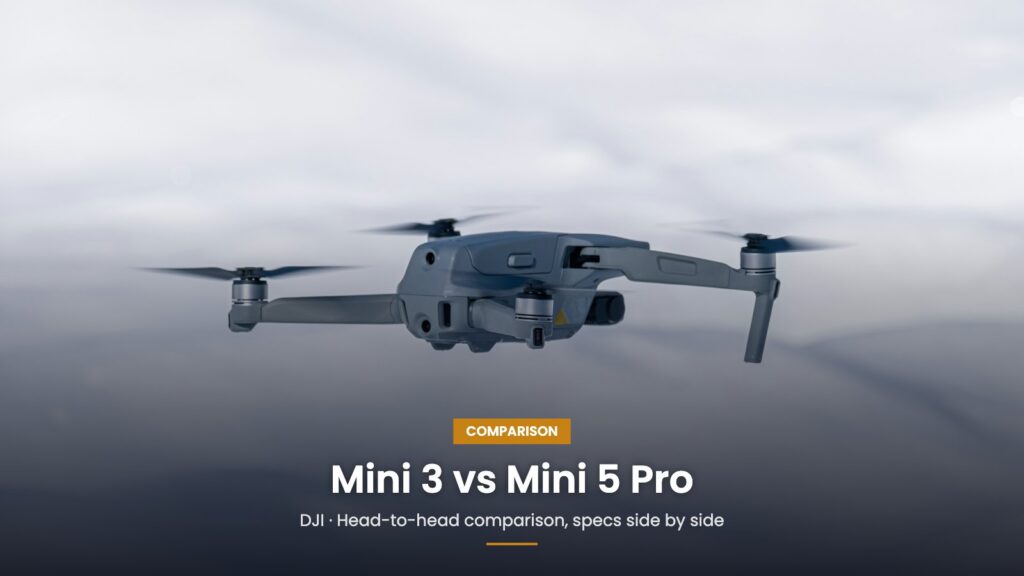
DJI Mini 3 vs DJI Mini 5 Pro
The Mini 5 Pro is the better drone for anyone who shoots serious video or flies near obstacles. It has a 1-inch 50 MP sensor, 4K/60fps HDR and 4K/120fps, 10-bit D-Log M, omnidirectional sensing with forward LiDAR and ActiveTrack 360°. The Mini 3 tops out…
DJI Mini 3
N/A
DJI Mini 5 Pro
N/A
Technical Specifications
Last updated: Oct 2026| Feature | DJI Mini 3 | DJI Mini 5 Pro |
|---|---|---|
| Weight | 248 g with standard battery; approximately 290 g with Plus battery | Approx. 249.9 g with standard battery; Plus battery raises the aircraft above the C0 weight threshold |
| Dimensions | 148×90×62 mm folded | Compact foldable Mini-series airframe |
| Volume | Approx. 826 cm³ folded bounding-box volume | N/A |
| Max Speed | 16 m/s in Sport mode (manufacturer-stated) | 18 m/s with standard battery; up to 19 m/s with Plus battery (manufacturer-stated) |
| Max Flight Distance | 18 km standard; 25 km Plus (manufacturer-stated) | Mission distance depends on battery, speed and operating conditions |
| Sensor Size | 1/1.3-inch CMOS | 1-inch CMOS |
| Megapixels | 48 MP | 50 MP |
| Max ISO | ISO 3,200 | Extended low-light imaging capability with dedicated night-oriented processing |
| Flight Time | 38 minutes standard; 51 minutes Plus (manufacturer-stated) | 36 minutes standard; 52 minutes Plus (manufacturer-stated) |
| Max Resolution | 4K up to 30fps with HDR support; 2.7K and FHD up to 60fps | 4K/60fps HDR; 4K/120fps slow motion |
| Movie Bitrate | 100 Mbps | High-bitrate H.265 recording with 10-bit professional color modes |
| Field of View | 82.1° | Wide-angle main camera with 48 mm equivalent 2× medium-tele mode |
| Transmission Range | O2: 10 km FCC; 6 km CE/SRRC/MIC | O4+: 20 km FCC; 10 km CE/SRRC/MIC |
| Wind Resistance | 10.7 m/s (Level 5) | Designed for operation below 12 m/s wind conditions |
| Obstacle Avoidance | Downward vision positioning only; no directional obstacle avoidance | Nightscape omnidirectional obstacle sensing with forward-facing LiDAR and multiple vision sensors |
| Battery Power | 2453 mAh, 18.1 Wh standard; 3850 mAh, 28.4 Wh Plus | 2788 mAh, 19.52 Wh standard; 4680 mAh, 33.51 Wh Plus |
| Charge Time | 64 minutes in aircraft or 56 minutes in charging hub with standard battery and 30W charger | Approx. 46 minutes standard or 56 minutes Plus using the supported 65W charger and charging hub |
| Internal Storage | None; microSD card required | 42 GB plus microSD expansion |
| GPS | Yes, GPS + GLONASS + Galileo | Yes |
| Obstacle Detection | No dedicated obstacle avoidance; downward positioning system only | Yes, night-capable omnidirectional sensing with forward LiDAR |
| Return to Home | Yes | Yes, next-generation Smart RTH with route-memory capability under supported conditions |
| Removable Battery | Yes | Yes |
| Shoots RAW | Yes, JPEG and DNG RAW | Yes |
| HDR Mode | Yes, HDR photos and HDR video up to 30fps | Yes, 4K/60fps HDR |
| Weather Sealed | No official IP rating | No; DJI states that Mini 5 Pro is not waterproof |
| Best For | Travel creators and hobbyists who want value, endurance and vertical shooting | Creators who want advanced video, tracking and obstacle sensing in a Mini-class drone |
| Main Camera Sensor | 1/1.3-inch CMOS | 1-inch CMOS |
| Maximum Photo Resolution | 48 MP | 50 MP |
| Camera Aperture | f/1.7 | f/1.8 |
| Maximum HDR Video | 4K/30fps HDR | 4K/60fps HDR |
| Maximum Slow Motion | FHD/60fps in standard Mini 3 video modes | 4K/120fps |
| Professional Color Profile | Normal only | 10-bit D-Log M and HLG |
| HDR Dynamic Range | HDR supported at 24/25/30fps | Up to 14 stops in supported Auto video modes |
| True Vertical Shooting | Yes | Yes |
| Gimbal Flexibility | True vertical shooting and up to +60° controllable tilt | True vertical shooting plus 225° roll rotation |
| Standard Battery Flight Time | 38 minutes | 36 minutes |
| Plus Battery Flight Time | 51 minutes | 52 minutes |
| Standard Battery Capacity | 2453 mAh, 18.1 Wh | 2788 mAh, 19.52 Wh |
| Plus Battery Capacity | 3850 mAh, 28.4 Wh | 4680 mAh, 33.51 Wh |
| Maximum Forward Speed | 16 m/s | 18 m/s standard; 19 m/s Plus |
| Maximum Takeoff Altitude | 4000 m standard; 3000 m Plus | 6000 m standard; 4500 m Plus |
| Video Transmission System | DJI O2 | DJI O4+ |
| Maximum FCC Transmission Range | 10 km | 20 km |
| Maximum CE Transmission Range | 6 km | 10 km |
| Obstacle Sensing | Downward positioning sensors only | Nightscape omnidirectional sensing with forward LiDAR |
| Subject Tracking | No ActiveTrack | Upgraded ActiveTrack 360° |
| Smart Return to Home | Standard GPS-based RTH | Next-generation Smart RTH with route-memory support |
| Internal Storage | None | 42 GB |
| QuickTransfer | Wi-Fi transfer | Off-State QuickTransfer up to 100 MB/s under supported conditions |
| Standard Battery Charging | 56 minutes in charging hub with 30W charger | Approx. 46 minutes in charging hub with supported 65W charger |
The sensor size matters more than the megapixels
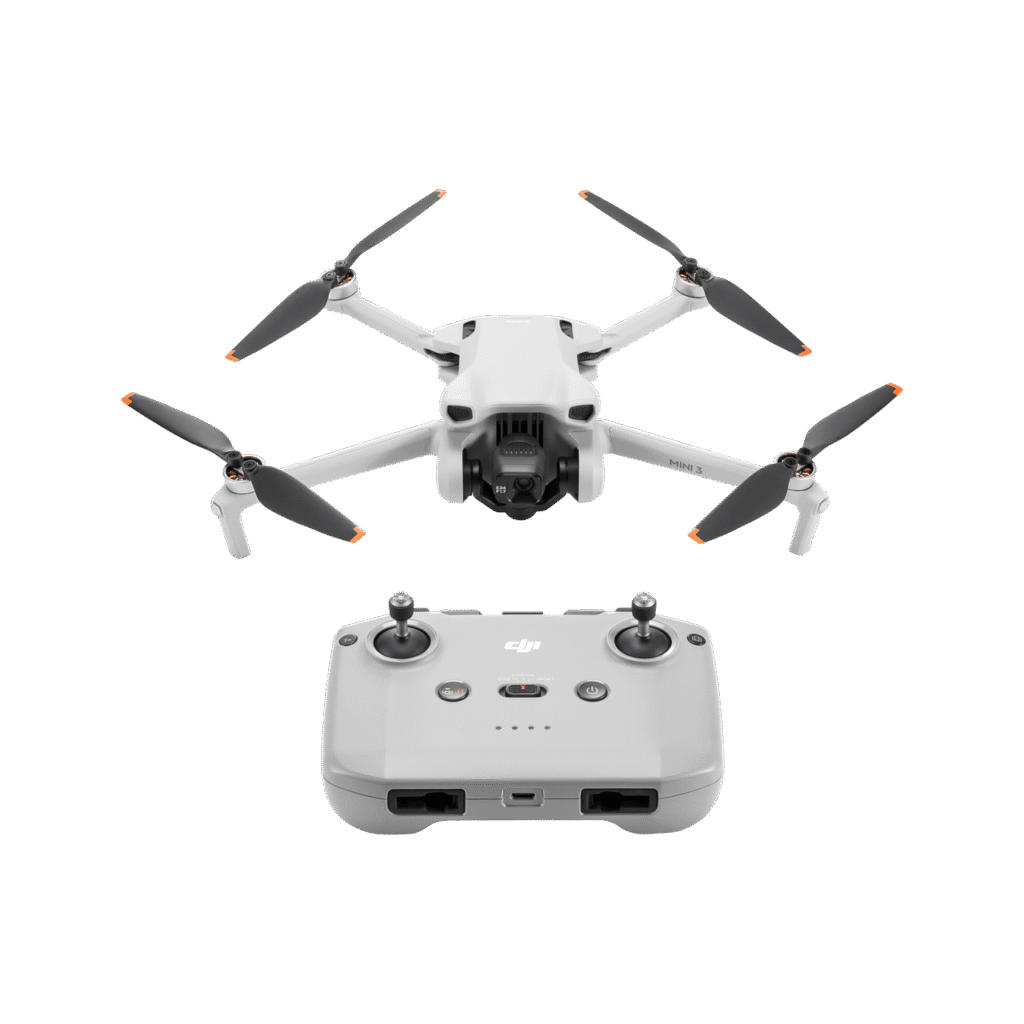
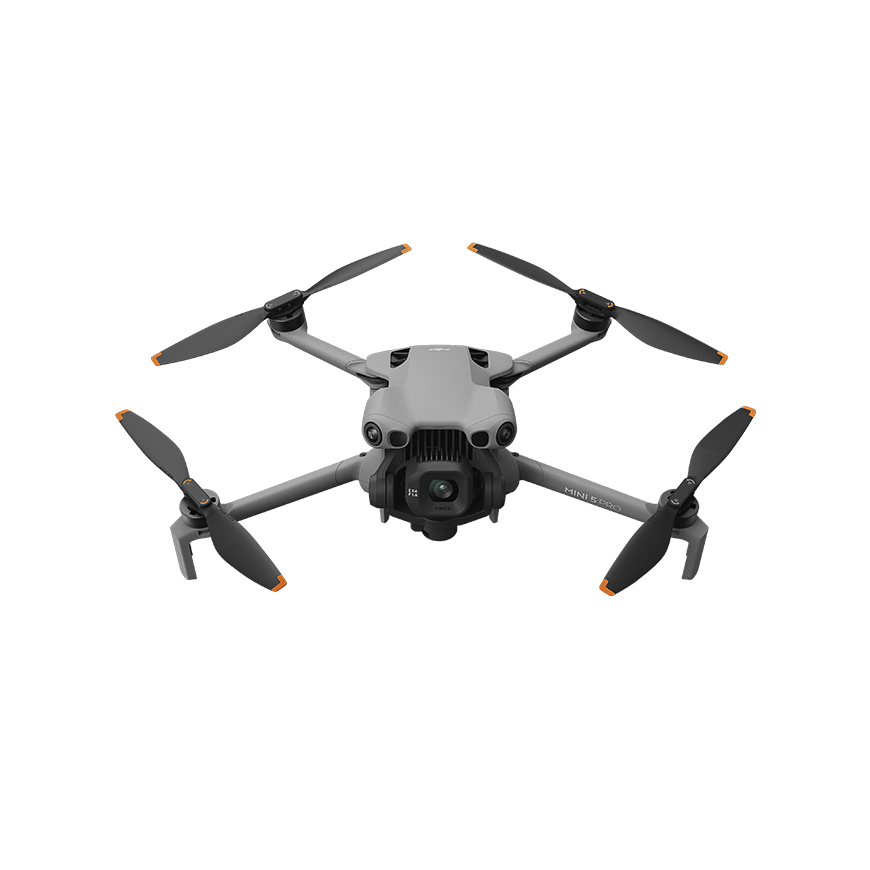
The Mini 3 uses a 1/1.3-inch 48 MP sensor with an f/1.7 lens, still a strong spec for a compact drone. The Mini 5 Pro moves to a 1-inch 50 MP sensor. The jump from 48 to 50 MP is trivial; the larger imaging area is what can help dynamic range, noise and exposure, especially in low light. Its f/1.8 lens is slightly narrower on paper, which does not cancel the sensor advantage. Both shoot RAW.
4K/30 against 4K/120, and 8-bit against D-Log M
The Mini 3 records 4K at up to 30fps, with HDR at 24, 25 and 30fps, and 2.7K and Full HD at up to 60fps. That is enough for ordinary travel footage. The Mini 5 Pro raises HDR to 4K/60fps and adds 4K/120fps, so you can slow down moving subjects without dropping below 4K.
Color is the other gap. The Mini 3 records in its Normal mode, which needs little grading but gives less room to adjust. The Mini 5 Pro adds 10-bit D-Log M, and DJI provides an official D-Log M to Rec.709 LUT. Log footage needs post-production, though; if you post straight from DJI Fly, a normal profile is simpler.
No obstacle avoidance on the Mini 3
The Mini 3 has only a downward vision system for positioning and hovering. It does not detect anything in front, behind, beside or above, so you keep clearance yourself, including during QuickShots. The Mini 5 Pro uses Nightscape omnidirectional sensing with vision sensors and forward LiDAR, which DJI says works under supported conditions above about 1 lux. That helps most in tracking and return-to-home, but lighting, surface texture and obstacle size still limit it, and thin wires and branches can be missed.
Tracking and the gimbal
The Mini 3 has QuickShots (Dronie, Helix, Rocket, Circle and Boomerang) but no ActiveTrack. The Mini 5 Pro adds ActiveTrack 360°, which recognizes different sports scenarios and picks a tracking behavior, useful for cycling or walking shots. Both rotate the camera for True Vertical Shooting, keeping the full sensor for Reels, TikTok and Shorts. The Mini 5 Pro's gimbal also rolls 225° for rotating and angled shots.
Battery: the Mini 3 lasts longer on the standard pack
DJI rates the Mini 3 at 38 minutes and the Mini 5 Pro at 36 on standard batteries. With Plus batteries it is 51 against 52. Both Plus setups add weight and can change the regulatory category, so check the registration rules by weight before buying the bigger pack.
The Mini 5 Pro is faster, at 18 m/s on the standard battery and 19 m/s with the Plus, against 16 m/s. Its rated maximum takeoff altitude is also higher (6000 m standard, 4500 m Plus, against 4000 m and 3000 m). Those are propulsion figures, not permission to fly that high.
Transmission and storage
The Mini 3 uses O2, rated at 10 km FCC and 6 km CE, with a 720p/30fps live view. The Mini 5 Pro uses O4+, rated at 20 km FCC and 10 km CE, with a 10-bit feed and better interference resistance according to DJI. In practice buildings, trees, interference and line-of-sight rules cut usable range well below either number.
The Mini 3 has no usable internal storage and needs a microSD card. The Mini 5 Pro has 42 GB built in plus a card slot, and Off-State QuickTransfer lets DJI Fly wake the drone over Bluetooth and pull files at up to 100 MB/s under supported conditions.
What the spec sheet can't tell you
This is a spec comparison, so it can't measure real dynamic range, low-light noise at matched settings, battery life while recording 4K in wind, or how reliably ActiveTrack follows a subject. For the step in between, see Mini 3 vs Mini 3 Pro and Mini 5 Pro vs Mini 4 Pro.
DJI Mini 3
Strengths
- 38-minute standard flight time, two minutes more than the Mini 5 Pro
- 1/1.3-inch 48 MP sensor with a bright f/1.7 lens
- True Vertical Shooting rotates the camera for portrait clips
- Plus battery extends rated flight time to 51 minutes
- DNG RAW photos
Drawbacks
- No forward, backward, side or upward obstacle avoidance
- 4K tops out at 30fps
- No D-Log M or HLG
- O2 transmission: 10 km FCC, half the Mini 5 Pro
- No internal storage
- No ActiveTrack
DJI Mini 5 Pro
Strengths
- 1-inch 50 MP sensor
- 4K/60fps HDR, 4K/120fps slow motion and 10-bit D-Log M
- Omnidirectional sensing with forward-facing LiDAR
- ActiveTrack 360°
- O4+ transmission up to 20 km FCC
- 42 GB internal storage and 225° gimbal roll
Drawbacks
- Expected to cost substantially more than the Mini 3
- 36-minute standard flight time, slightly below the Mini 3
- The Plus battery takes it past the EU C0 weight limit
- Sensing does not guarantee collision avoidance
- Larger files from 10-bit and 4K/120fps modes
- Not waterproof
Buy the Mini 5 Pro for video and safety, the Mini 3 for value
The Mini 5 Pro is the better drone for anyone who shoots serious video or flies near obstacles. It has a 1-inch 50 MP sensor, 4K/60fps HDR and 4K/120fps, 10-bit D-Log M, omnidirectional sensing with forward LiDAR and ActiveTrack 360°. The Mini 3 tops out at 4K/30fps and has no obstacle avoidance.
The Mini 3 still makes sense for travel photos, casual 4K and vertical social clips. It costs less, and on the standard battery it is rated for 38 minutes against 36 for the Mini 5 Pro. With Plus batteries the order flips, 52 minutes against 51.
My read: if you will never use tracking, grading or obstacle sensing, the Mini 3 is the sensible buy. Everyone else should pay for the Mini 5 Pro.
Check DJI Mini 5 Pro price on Amazon →Affiliate link. We may earn a commission at no extra cost to you.
The Friday Brief
One email a week on what changed in drones
FCC and FAA rule changes, DJI leaks checked against filings, and the week’s new comparisons. Every Friday, nothing else.
Free. Unsubscribe in one click. Sent with Kit; see our privacy policy.
Follow us on Google too: add Drone Ranker as a preferred source →

Alihan Demirdaş is the founder and editor of Drone Ranker. A software developer by profession, he researches drones the way he reads code: from the primary documents. Every review, comparison and news story on the site is written by him from manufacturer specification sheets, FCC and EU certification filings, aviation-authority rules and dated press releases, with the source linked. Unless a page is labelled hands-on, the analysis is documentary; when an aircraft is in his hands, the page says so and carries his own photographs and flight notes. He covers consumer, professional and agricultural drones and is based in Türkiye.