DJI Mini 5 Pro vs DJI Mavic 3 Pro
Buy the DJI Mavic 3 Pro if the camera system comes first: its 4/3 Hasselblad main camera is larger than the Mini 5 Pro's 1-inch sensor, and it adds 70 mm and 166 mm tele cameras that the Mini cannot match. Buy the Mini 5…
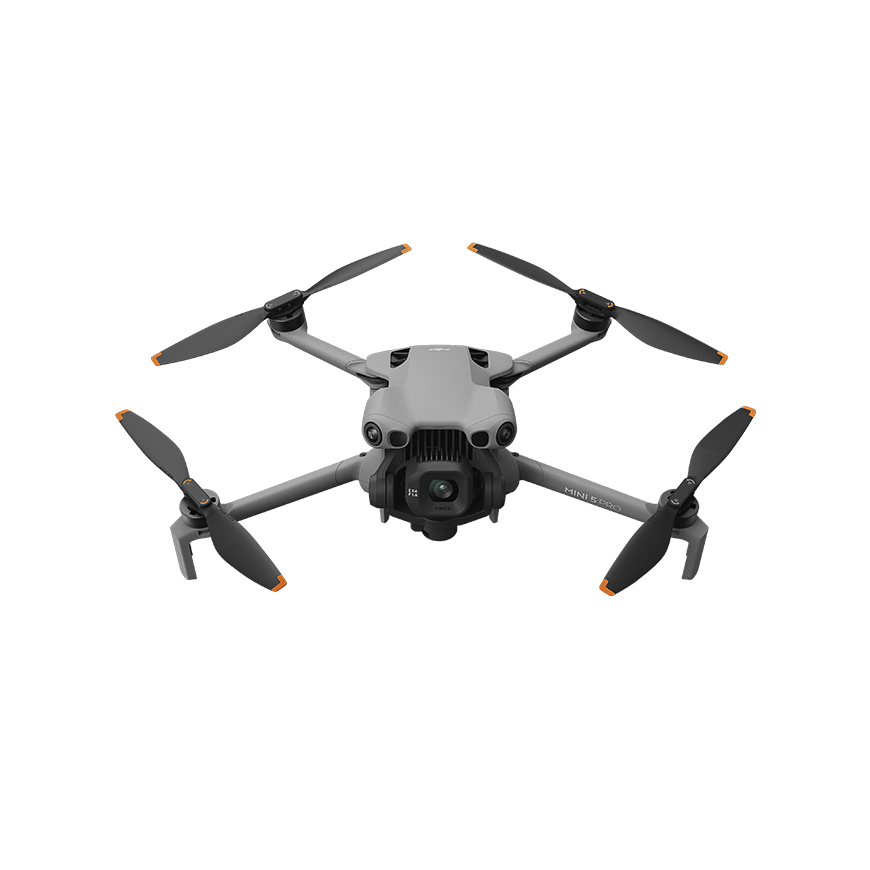
DJI Mini 5 Pro
$899
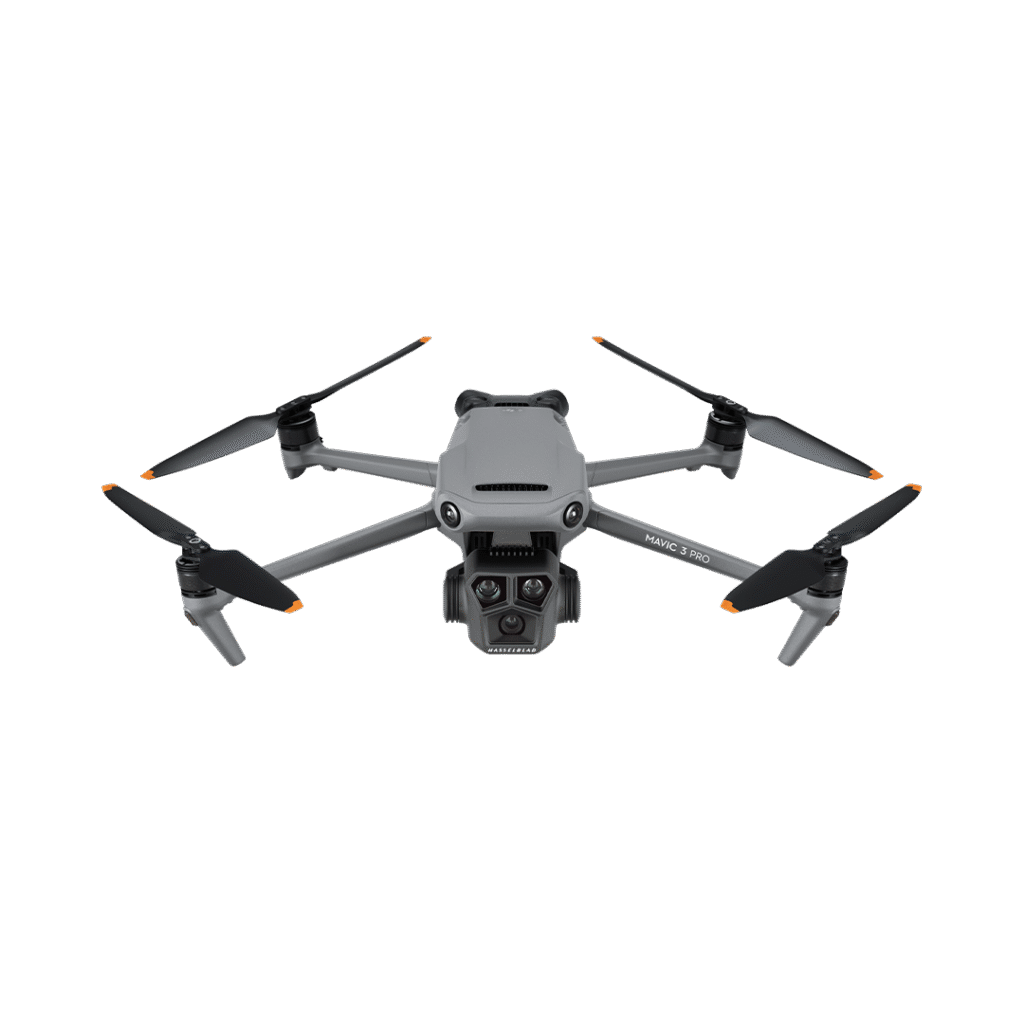
DJI Mavic 3 Pro
$2199
Technical Specifications
Last updated: Oct 2026| Feature | DJI Mini 5 Pro | DJI Mavic 3 Pro |
|---|---|---|
| Weight | 249 g with standard battery; Intelligent Flight Battery Plus raises takeoff weight above 249 g | 958 g standard Mavic 3 Pro; 963 g Mavic 3 Pro Cine |
| Dimensions | 157×95×68 mm folded | 231.1×98×95.4 mm folded; 347.5×290.8×107.7 mm unfolded |
| Volume | Approx. 1016 cm³ folded bounding-box volume | Approx. 2158 cm³ folded bounding-box volume |
| Max Speed | Up to 18 m/s with standard battery; up to 19 m/s with Plus battery (manufacturer-stated) | 21 m/s at sea level in no wind (manufacturer-stated) |
| Max Flight Distance | Not used as a headline metric here because battery configuration materially changes endurance | 28 km (manufacturer-stated) |
| Sensor Size | 1-inch CMOS | Triple camera: 4/3 CMOS Hasselblad + 1/1.3-inch medium tele + 1/2-inch tele |
| Megapixels | 50 MP | 20 MP main; 48 MP medium tele; 12 MP tele |
| Max ISO | Mode-dependent; not used as a headline winner in this comparison | Main-camera Night video up to ISO 12,800; mode-dependent across cameras |
| Flight Time | 36 minutes standard; 52 minutes Plus (manufacturer-stated) | 43 minutes (manufacturer-stated) |
| Max Resolution | 4K/60fps HDR; 4K/120fps slow motion | Main camera up to 5.1K/50fps and 4K/120fps; medium tele and tele up to 4K/60fps |
| Movie Bitrate | High-bitrate H.265 recording with 10-bit D-Log M/HLG support | Up to 200 Mbps H.264/H.265 on Hasselblad camera; higher ProRes bitrates only on Cine |
| Field of View | Wide-angle main camera; single-camera system | 84° main; 35° medium tele; 15° tele |
| Transmission Range | DJI O4+: 20 km FCC; 10 km CE/SRRC/MIC | DJI O3+: 15 km FCC; 8 km CE/SRRC/MIC |
| Wind Resistance | Designed for operation below 12 m/s wind conditions | 12 m/s |
| Obstacle Avoidance | Nightscape omnidirectional obstacle sensing with forward-facing LiDAR and multiple vision sensors | Omnidirectional binocular vision system with downward infrared sensor |
| Battery Power | 2788 mAh standard; 4680 mAh Plus | 5000 mAh, 77 Wh |
| Charge Time | Approx. 46 minutes standard battery in charging hub with supported 65W charger | Approx. 96 minutes with DJI 65W Portable Charger or 70 minutes with supported 100W charging hub |
| Internal Storage | 42 GB plus microSD expansion | 8 GB on Mavic 3 Pro; 1 TB SSD only on Mavic 3 Pro Cine |
| GPS | Yes | Yes, GPS + Galileo + BeiDou |
| Obstacle Detection | Yes, night-capable omnidirectional sensing with forward LiDAR | Yes, omnidirectional binocular vision sensing |
| Return to Home | Yes, next-generation Smart RTH with route-memory support under suitable conditions | Yes |
| Removable Battery | Yes | Yes |
| Shoots RAW | Yes | Yes, JPEG and DNG RAW |
| HDR Mode | Yes, 4K HDR up to 60fps | Yes, HLG and other HDR-oriented recording workflows are supported |
| Weather Sealed | No official IP rating; not waterproof | No official IP rating |
| Best For | Travel creators who want a high-end camera without Mavic-class size | Aerial cinematography that needs several focal lengths from one drone |
| Main Camera Sensor | 1-inch CMOS | 4/3 CMOS Hasselblad |
| Main Camera Resolution | 50 MP | 20 MP |
| Additional Cameras | None | 70 mm medium tele + 166 mm tele |
| 70 mm Medium Tele | No dedicated optical camera | 1/1.3-inch CMOS, 48 MP, f/2.8 |
| 166 mm Tele | No dedicated optical camera | 1/2-inch CMOS, 12 MP, f/3.4 |
| Main Lens Aperture | f/1.8 fixed | f/2.8-f/11 adjustable |
| Maximum Main-Camera Resolution | 4K/60fps HDR; 4K/120fps slow motion | 5.1K/50fps; 4K/120fps slow motion |
| Vertical Shooting | True Vertical Shooting plus 225° roll rotation | No mechanically rotated true-vertical camera |
| Standard Takeoff Weight | 249 g | 958 g |
| Cine Takeoff Weight | Not applicable | 963 g |
| EU Class | C0 with standard configuration | C2 |
| Standard Battery Flight Time | 36 minutes | 43 minutes |
| Extended Battery Flight Time | 52 minutes with Plus battery | No Plus battery configuration |
| Transmission System | DJI O4+ | DJI O3+ |
| Maximum FCC Transmission Range | 20 km | 15 km |
| Maximum CE Transmission Range | 10 km | 8 km |
| Obstacle Sensing | Nightscape omnidirectional vision + forward LiDAR | Omnidirectional binocular vision + downward infrared |
| Internal Storage - Standard Model | 42 GB | 8 GB |
| Internal Storage - Cine Model | No Cine variant | 1 TB SSD |
| Apple ProRes | No | Only on Mavic 3 Pro Cine |
| Standard Mavic 3 Pro Video Codecs | H.264/H.265 | H.264/H.265; ProRes not available on standard model |
| Travel Portability | 249 g compact Mini-class airframe | 958 g Mavic-class airframe plus larger batteries and accessories |
| Best Optical Framing Flexibility | Single wide camera | 24 mm, 70 mm and 166 mm equivalent cameras |
This is a comparison of DJI's published specs, not a flight test. It separates the standard Mavic 3 Pro from the Mavic 3 Pro Cine wherever storage or codecs differ.
The tele cameras are the real difference
The Mini 5 Pro is a single-camera drone. Tighter framing means flying closer or cropping. The Mavic 3 Pro adds a 70 mm-equivalent 1/1.3-inch 48 MP medium-tele camera and a 166 mm-equivalent 1/2-inch 12 MP tele camera. Those lenses change perspective rather than just magnifying, which helps with scenery, architecture, vehicles and subjects you need to film from a distance. The two tele cameras record up to 4K/60fps.
If you don't know whether you need 70 mm or 166 mm, you probably don't, and the Mini 5 Pro makes more sense.
Ignore the megapixel numbers
The Mini 5 Pro's 1-inch sensor is rated at 50 MP with an f/1.8 lens. The Mavic 3 Pro's 4/3 Hasselblad sensor has 20 MP effective resolution, but it is physically larger and has an adjustable f/2.8-f/11 aperture. For professional work, sensor size and aperture control count for more than the megapixel figure.
For video, the Mini 5 Pro offers 4K/60fps HDR, 4K/120fps, 10-bit recording, True Vertical Shooting and a 225° gimbal roll range, so it is the better fit for vertical social content. The Mavic's main camera reaches 5.1K/50fps and 4K/120fps.
Mavic 3 Pro or Mavic 3 Pro Cine?
The standard Mavic 3 Pro weighs 958 g, has 8 GB of internal storage and records H.264/H.265. The Cine weighs 963 g, has a 1 TB internal SSD and adds Apple ProRes 422 HQ, 422 and 422 LT. The camera array is the same. Pay for the Cine only if your production specifically needs ProRes and internal high-capacity storage.
Weight, travel and flight time
At 249 g the Mini 5 Pro is C0-certified in the EU and fits in a small camera bag with spare batteries and a controller. The Mavic 3 Pro weighs 958 g before accessories and sits in the C2 class, which brings different travel and operating rules. See EU and UK rules for DJI Minis.
The Mavic 3 Pro is rated for 43 minutes on its 5000 mAh battery; the Mini 5 Pro for 36 minutes standard. The Mini's Plus battery raises that to a rated 52 minutes, but it also takes the drone above 249 g and can change how it is regulated.
Sensing and transmission
The Mini 5 Pro combines omnidirectional vision with a forward LiDAR sensor, which DJI pitches for lower-light obstacle awareness. The Mavic 3 Pro uses omnidirectional binocular vision with a downward infrared sensor; its forward sensing reaches up to 200 m in suitable conditions. Any vision system still depends on light and contrast.
The Mini 5 Pro's O4+ lists 20 km FCC and 10 km CE/SRRC/MIC. The Mavic's O3+ lists 15 km FCC and 8 km CE/SRRC/MIC. Battery reserve, interference and line-of-sight rules limit you well before either figure.
DJI Mini 5 Pro
Strengths
- 1-inch 50 MP sensor in a 249 g, C0-class drone
- 4K/60fps HDR and 4K/120fps slow motion
- True Vertical Shooting and 225° gimbal roll
- Omnidirectional sensing with forward LiDAR
- 42 GB internal storage plus microSD
- O4+ up to 20 km FCC
Drawbacks
- Single camera: no 70 mm or 166 mm optical perspectives
- 1-inch sensor is smaller than the Mavic's 4/3
- No adjustable aperture
- Plus battery changes its weight and regulatory class
- No Cine version with SSD and ProRes
DJI Mavic 3 Pro
Strengths
- 4/3 Hasselblad main camera with f/2.8-f/11 aperture
- 70 mm medium-tele and 166 mm tele cameras
- 5.1K/50fps and 4K/120fps on the main camera
- 43-minute rated flight time
- Omnidirectional binocular vision sensing
- Cine version adds ProRes and a 1 TB SSD
Drawbacks
- 958 g, almost four times the Mini 5 Pro's weight
- Much larger aircraft and travel kit
- O3+ transmission with a shorter FCC maximum
- Standard model has only 8 GB internal storage
- Higher price and C2 class in the EU
Mavic 3 Pro for the cameras, Mini 5 Pro for travel
Buy the DJI Mavic 3 Pro if the camera system comes first: its 4/3 Hasselblad main camera is larger than the Mini 5 Pro's 1-inch sensor, and it adds 70 mm and 166 mm tele cameras that the Mini cannot match. Buy the Mini 5 Pro if you travel, because it does most of the job at 249 g instead of 958 g.
The Mini 5 Pro is C0-certified in the EU, has 42 GB of internal storage, O4+ transmission to 20 km FCC, 4K/60fps HDR, 4K/120fps slow motion and omnidirectional sensing with forward LiDAR. That is a lot of drone for its size.
One trap on the Mavic side: the standard Mavic 3 Pro has 8 GB of storage and records H.264/H.265. The 1 TB SSD and Apple ProRes belong to the Mavic 3 Pro Cine only.
Check DJI Mavic 3 Pro price on Amazon →Affiliate link. We may earn a commission at no extra cost to you.
Context and limitations
This comparison helps buyers choose between DJI Mini 5 Pro and DJI Mavic 3 Pro by translating the specification table into camera, flight, safety, workflow and value decisions. Recommendations are matched to user needs rather than based on a single headline number.
Limitations
The Friday Brief
One email a week on what changed in drones
FCC and FAA rule changes, DJI leaks checked against filings, and the week’s new comparisons. Every Friday, nothing else.
Free. Unsubscribe in one click. Sent with Kit; see our privacy policy.
Follow us on Google too: add Drone Ranker as a preferred source →

Alihan Demirdaş is the founder and editor of Drone Ranker. A software developer by profession, he researches drones the way he reads code: from the primary documents. Every review, comparison and news story on the site is written by him from manufacturer specification sheets, FCC and EU certification filings, aviation-authority rules and dated press releases, with the source linked. Unless a page is labelled hands-on, the analysis is documentary; when an aircraft is in his hands, the page says so and carries his own photographs and flight notes. He covers consumer, professional and agricultural drones and is based in Türkiye.