Drone Ranker

DJI Mini 4 Pro vs DJI Mini 5 Pro vs DJI Air 3S vs DJI Mavic 4 Pro

For most travel creators the Mini 5 Pro is the one to buy: it adds a 1-inch camera without the bigger airframe. The Mavic 4 Pro has the best camera system and the most lens choice, but it only pays off for paid productions. The…

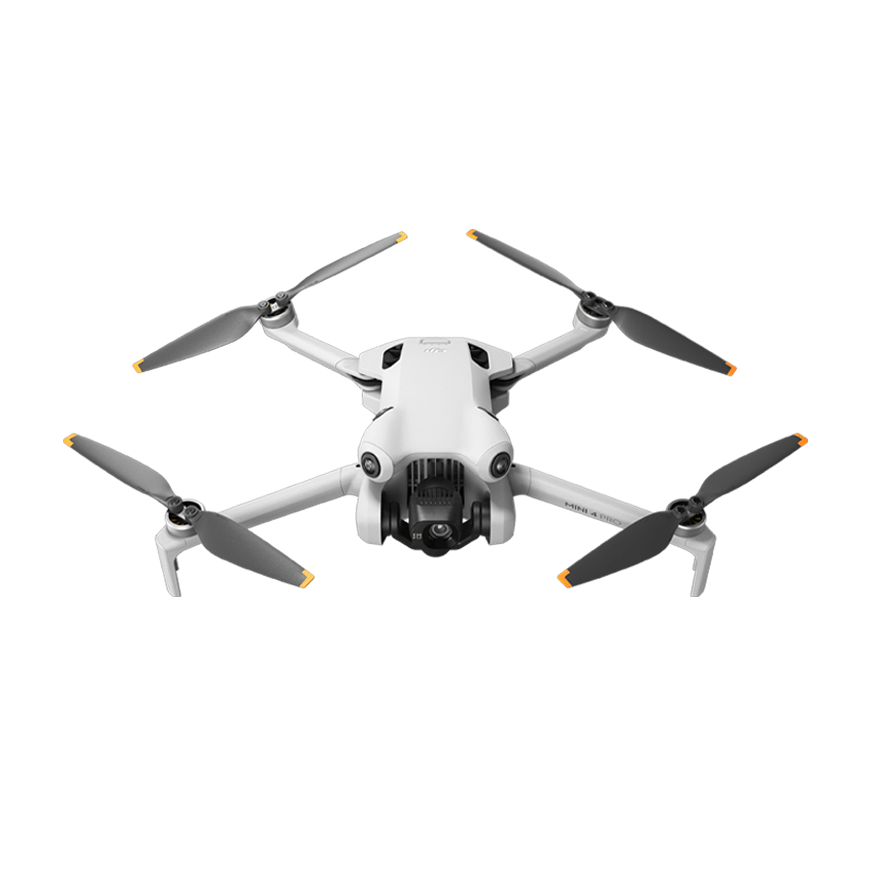
DJI Mini 4 Pro

DJI Mini 4 Pro

From $759 (region-dependent)

The light, proven travel drone with true vertical shooting.

Best for: Travel creators who care most about low weight and price

  • Under 249 g with the standard battery
  • 4K/60fps HDR, 4K/100fps slow motion and 10-bit profiles
  • Omnidirectional obstacle sensing
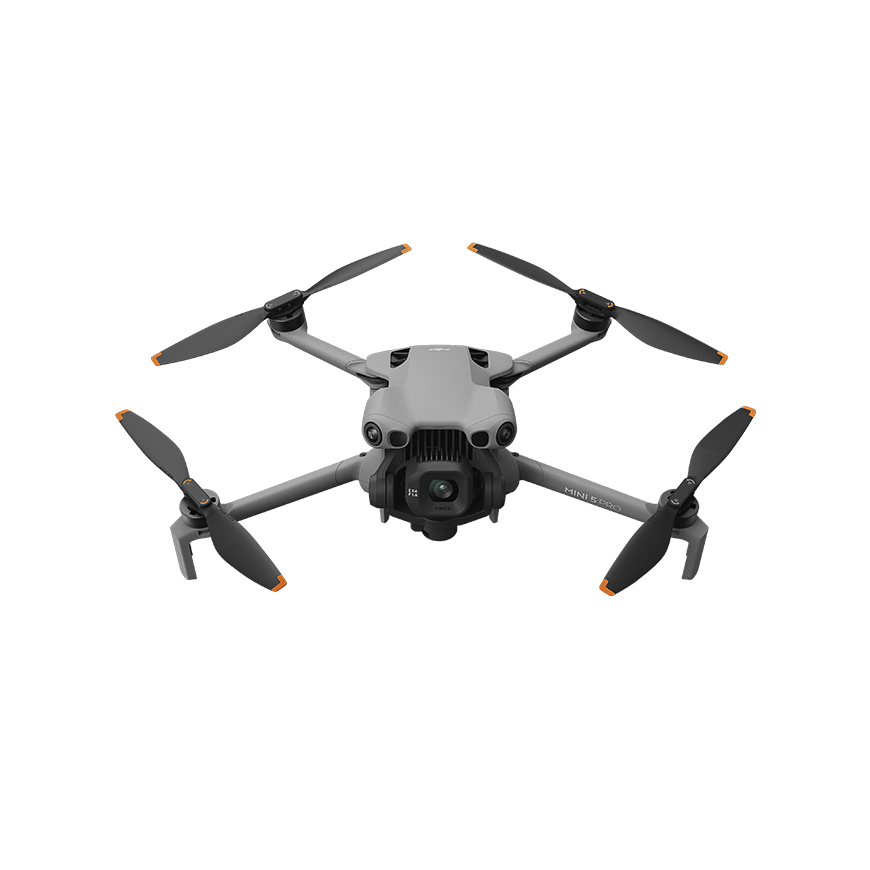
DJI Mini 5 Pro

DJI Mini 5 Pro

From $759 (region-dependent)

A compact drone with a 1-inch sensor.

Best for: Travel creators who put image quality first but want to stay compact

  • 1-inch 50 MP sensor
  • 36-minute standard flight time, up to 52 minutes with the Plus battery
  • Omnidirectional sensing with forward LiDAR
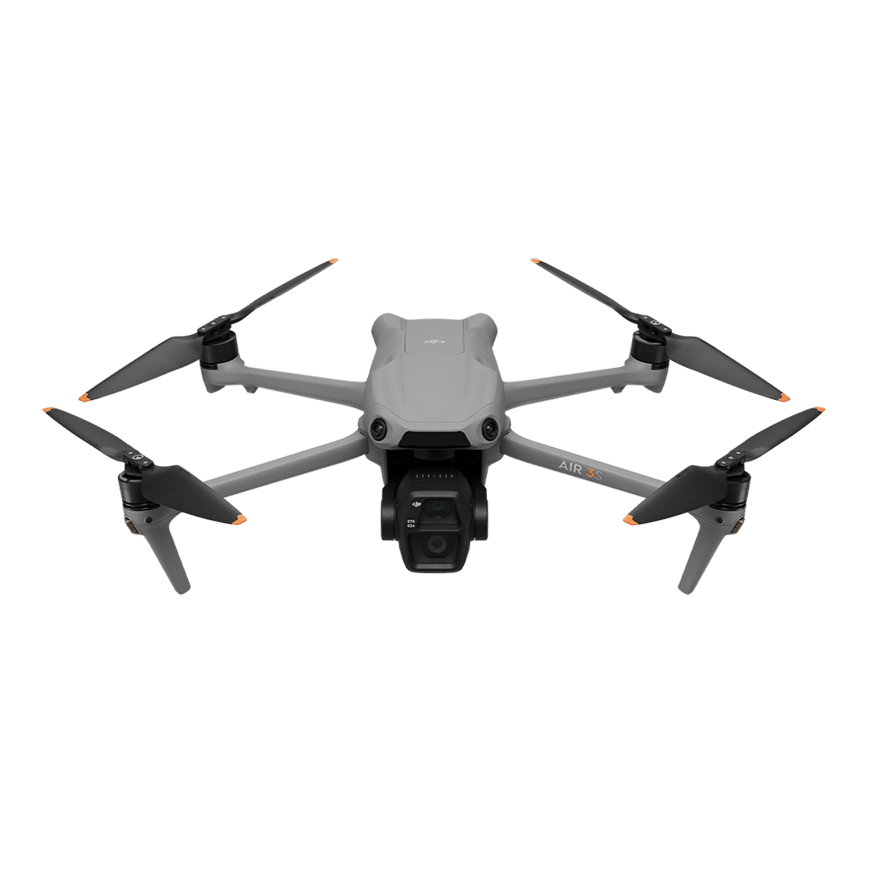
DJI Air 3S

DJI Air 3S

From $999 (region-dependent)

Dual-camera travel drone with a 1-inch wide and a 70 mm tele.

Best for: Creators who often want a tighter 70 mm framing

  • 1-inch 50 MP main camera plus 70 mm medium tele
  • 45-minute rated flight time
  • Omnidirectional sensing with forward LiDAR for night
Our pick
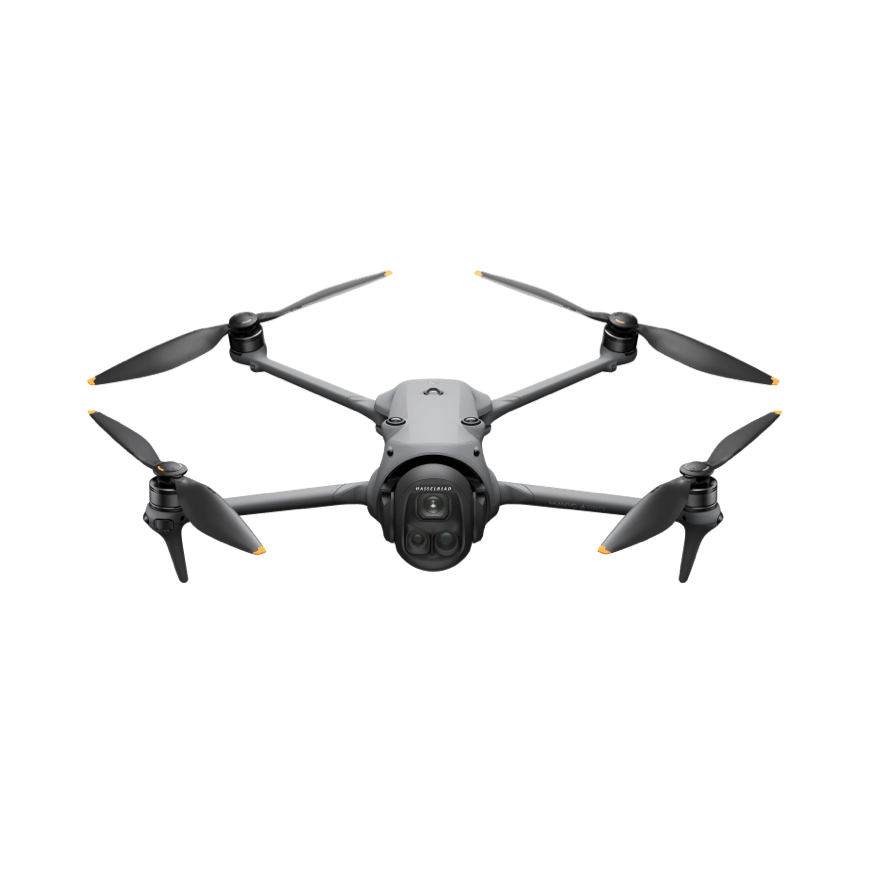
DJI Mavic 4 Pro

DJI Mavic 4 Pro

From $2,049 (region-dependent)

DJI's triple-camera flagship with an Infinity gimbal.

Best for: Commercial filmmakers who need several focal lengths

  • 4/3 Hasselblad main camera with 100 MP photos and 6K/60fps HDR
  • 70 mm and 168 mm-equivalent tele cameras
  • Infinity gimbal with 70-degree upward shooting and 360-degree rotation
Side by side

Technical Specifications

Swipe horizontally on small screens
Feature DJI Mini 4 ProDJI Mini 5 ProDJI Air 3SDJI Mavic 4 Pro
Weight <249 g with standard battery 249.9 g with standard battery 724 g 1,063 g
Dimensions 148×94×64 mm 157×95×68 mm 214×101×89 mm 257.6 x 124.8 x 106.6 mm
Volume 893 cm³ 1017 cm³ 1922 cm³ 3426 cm³
Max Speed 16 m/s 19 m/s 21 m/s 25 m/s
Max Flight Distance 25 km 32 km 32 km 41 km
Sensor Size 1/1.3-inch CMOS 1-inch CMOS 1-inch + 1/1.3-inch CMOS 4/3 CMOS
Megapixels 48 MP 50 MP 50 MP + 48 MP 100 MP
Max ISO 6400 ISO 12800 ISO 12800 ISO 12800 ISO
Flight Time 34 min standard / up to 45 min with Plus battery 36 min standard / up to 52 min with Plus battery 45 min 51 min
Max Resolution 4K/100fps 4K/120fps 4K/120fps 6K/60fps
Movie Bitrate 150 Mbps 130 Mbps 130 Mbps 180 Mbps
Field of View 82.1° 84° 84° + 35° 72°
Transmission Range 20 km FCC / 10 km CE (O4) 20 km FCC / 10 km CE (O4+) 20 km FCC / 10 km CE (O4) 30 km FCC / 15 km CE (O4+)
Wind Resistance 10.7 m/s 12 m/s Level 6 (12 m/s) Level 6 (12 m/s)
Obstacle Avoidance Omnidirectional Omnidirectional (Lidar) Omnidirectional (LiDAR) Omnidirectional (Lidar)
Battery Power 2590 mAh 2788 mAh 4276 mAh 6654 mAh
Charge Time 1.17 hours 1.15 hours 1.33 hours 0.85 hours
Internal Storage 2 GB 42 GB 42GB 64GB
GPS Yes Yes Yes Yes
Obstacle Detection Yes Yes Yes Yes
Return to Home Yes Yes Yes Yes
Removable Battery Yes Yes Yes Yes
Shoots RAW Yes Yes Yes Yes
HDR Mode Yes Yes Yes Yes
Weather Sealed No No No No
Best For Travel creators who care most about low weight and price Travel creators who put image quality first but want to stay compact Creators who often want a tighter 70 mm framing Commercial filmmakers who need several focal lengths
Camera Count 1 1 2 3
Main Sensor 1/1.3-inch 1-inch 1-inch 4/3 Hasselblad
Longest Optical Perspective 24 mm equivalent 24 mm equivalent 70 mm equivalent 168 mm equivalent
True Vertical Capture Yes Yes Vertical crop mode Infinity gimbal rotation

DJI Mini 4 Pro

Strengths

  • • Under 249 g with the standard battery
  • • 4K/60fps HDR, 4K/100fps slow motion and 10-bit profiles
  • • Omnidirectional obstacle sensing
  • • True vertical shooting

Drawbacks

  • • Smaller 1/1.3-inch sensor than the Mini 5 Pro or Air 3S
  • • Only 2 GB internal storage
  • • 34-minute standard flight time trails the larger models
  • • No tele camera

DJI Mini 5 Pro

Strengths

  • • 1-inch 50 MP sensor
  • • 36-minute standard flight time, up to 52 minutes with the Plus battery
  • • Omnidirectional sensing with forward LiDAR
  • • 4K/120fps and 10-bit D-Log M / HLG
  • • 42 GB internal storage and true vertical shooting

Drawbacks

  • • Costs substantially more than the DJI Flip or Neo 2
  • • Single wide-angle camera, no tele lens
  • • Plus battery changes takeoff weight and may change how local rules treat it
  • • Open propellers need more clearance around people

DJI Air 3S

Strengths

  • • 1-inch 50 MP main camera plus 70 mm medium tele
  • • 45-minute rated flight time
  • • Omnidirectional sensing with forward LiDAR for night
  • • 4K/120fps and 10-bit color
  • • 42 GB internal storage

Drawbacks

  • • 724 g body needs more carrying space and regulatory planning
  • • More expensive than the Mini series
  • • Vertical video is a crop, not a rotating camera
  • • No longer tele than 70 mm

DJI Mavic 4 Pro

Strengths

  • • 4/3 Hasselblad main camera with 100 MP photos and 6K/60fps HDR
  • • 70 mm and 168 mm-equivalent tele cameras
  • • Infinity gimbal with 70-degree upward shooting and 360-degree rotation
  • • 51-minute rated flight time
  • • O4+ transmission and omnidirectional night sensing

Drawbacks

  • • High purchase and accessory cost
  • • 1,063 g body needs more transport and regulatory planning
  • • Three cameras and large files make editing heavier
  • • Overkill for casual daylight social clips

Which DJI tier fixes the problem you actually have?

For most travel creators the Mini 5 Pro is the one to buy: it adds a 1-inch camera without the bigger airframe. The Mavic 4 Pro has the best camera system and the most lens choice, but it only pays off for paid productions. The Mini 4 Pro stays the value pick for light daylight travel, and the Air 3S is the step up for a second, 70 mm lens.

Pick the tier that removes a known bottleneck. If weight keeps your drone at home, stay with a Mini. If low light or grading room is the problem, the Mini 5 Pro is the logical step. If you keep having to fly closer to frame a subject, the Air 3S adds optical reach. If clients want several focal lengths, 6K masters and unusual gimbal moves, the Mavic 4 Pro becomes defensible.

Mini 4 Pro owners who shoot mostly in daylight and are happy with the results may get more from extra batteries or better editing tools than from an upgrade.

Four drones, four different constraints

The Mini 4 Pro keeps weight and cost down while still offering RAW, D-Log M and omnidirectional sensing. The Mini 5 Pro keeps the compact body but adds a 1-inch main camera and better night sensing. The Air 3S gives up pocketability for a dual-camera system and a heavier, steadier airframe. The Mavic 4 Pro is the production tier: a 4/3 Hasselblad main camera, two tele cameras and an Infinity gimbal.

Extra lenses are the real step up

Sensor size is only half the decision. Both Minis give you a single 24 mm-equivalent view, with the Mini 5 Pro moving to a 1-inch sensor. The Air 3S adds a 70 mm-equivalent lens, so you can change the framing without flying closer. The Mavic 4 Pro goes further with 24, 70 and 168 mm-equivalent views. Longer lenses help with scenery, vehicles, architecture and keeping a safe distance, but they add cost, weight and more files to manage.

In low light, the 1-inch sensors in the Mini 5 Pro and Air 3S have an advantage around sunset, in shadows and under high-contrast skies. The Mini 4 Pro does best in good light. The Mavic 4 Pro's 4/3 sensor and 6K recording leave the most room for cropping and grading. If you mostly post social video, the top tier is hard to justify.

Weight, wind and sensing

The Air 3S (724 g) and Mavic 4 Pro (1,063 g) are heavier, faster platforms that generally sit more steadily in wind, but they need more space in the bag and more attention to local operating categories. The two Minis fit small kits and are easy to carry all day. Keep standard and Plus battery figures apart when you compare: the Plus pack changes weight and, in some places, the rules.

All four have omnidirectional sensing. The Mini 5 Pro and Air 3S add forward LiDAR, and the Mavic 4 Pro pairs night-capable sensing with its own navigation system, while the Mini 4 Pro relies on vision sensors that work best in decent light. None of them detects every wire or branch.

The body price is not the full cost

Controllers, batteries, chargers, storage and cases can reshuffle the price ladder, and official prices and availability differ sharply by market. The Mini 4 Pro wins on value when its camera is good enough. The Air 3S earns its premium through the second lens. The Mavic 4 Pro pays back only when its three cameras and production features get regular use. Rated flight times and transmission ranges are manufacturer maximums and drop in wind, cold and interference.
How this comparison was made

I compare these drones from manufacturer specifications, regulatory filings and documented owner reports. I have not flown them, so flight feel and real-world battery life are not judged here.

Editorial research

Context and limitations

Verified Sep 15, 2026

Four-level camera-drone upgrade ladder from portable travel drone to dual-camera and flagship production platform. Search demand was checked with Google Trends worldwide over the last 90 days on September 15, 2026. Recommendations are based on mission fit rather than a single headline specification.

Limitations