Amazon Drone Delivery in Cleveland: 9 Things to Know

Amazon drone delivery has arrived in the Cleveland area. Prime Air began operating from Amazon’s CLE2 fulfillment center in North Randall, Ohio, on September 24, 2026, bringing the company’s MK30 delivery drone to its first site in the state.
Amazon drone delivery Cleveland service matters beyond Northeast Ohio. It shows how Amazon is moving Prime Air from isolated trials toward a network tied to existing fulfillment infrastructure. It also places Amazon’s service close to another active drone-delivery operator: Cleveland Clinic’s Zipline prescription program in nearby Beachwood.
For customers, the practical questions are simpler: Who is eligible? How far can the drone fly? What can it carry? How does it deliver without landing? What happens when a yard is blocked, a pet is outside, or the weather changes?
This guide separates confirmed facts from assumptions and explains what the Cleveland launch means for residents, customers and the wider drone-delivery market.
Quick answer: Amazon Prime Air now operates MK30 drone deliveries from North Randall, serving eligible addresses within roughly 7.5 miles of the facility. Eligible packages must generally weigh five pounds or less and fit the service’s size limits. Amazon says deliveries can arrive within 60 minutes. The drone descends to about 13 feet above a selected delivery point, checks for hazards and releases the package without touching the ground.
Update, 30 September 2026. The legal ground under every US drone delivery hub shifted this week: fifteen states and Harris County, Texas petitioned a federal court to vacate the FAA environmental clearance the whole programme runs on.
Amazon drone delivery Cleveland: quick facts
| Question | Confirmed detail | Important context |
|---|---|---|
| Launch date | September 24, 2026 | First Prime Air delivery site in Ohio |
| Operating site | CLE2 fulfillment center, North Randall | Located at the former Randall Park Mall site |
| Aircraft | Amazon Prime Air MK30 | Electric six-rotor delivery drone |
| Service radius | Up to 7.5 miles | Eligibility varies by exact address and delivery point |
| Delivery time | Within 60 minutes | Product, weather and operational availability apply |
| Package limit | Up to five pounds | The item must also meet size and handling rules |
| Delivery method | Hover-and-lower release | The aircraft does not land in the customer’s yard |
| Delivery height | About 13 feet during release | The drone scans the area before releasing the parcel |
| Human oversight | Ground-based flight monitors | The aircraft flies highly autonomously |
Table of Contents
- What launched in Cleveland
- Where Amazon’s drone service is available
- How the MK30 delivery works
- What customers can order
- How fast delivery can be
- Safety, obstacle avoidance and weather
- Noise, cameras and privacy
- FAA authorization and operating limits
- Amazon versus Zipline and Wing
- How to check eligibility
- Frequently asked questions
1. What Amazon launched in Northeast Ohio
Amazon began Prime Air deliveries from North Randall on September 24. The operation uses the MK30, the current aircraft at the center of Amazon’s U.S. drone-delivery expansion.
The launch site is integrated with the CLE2 fulfillment center rather than built as a completely separate drone base. That is strategically important. Amazon has long argued that drone delivery will scale more effectively when aircraft are connected to the same inventory and logistics network that already processes ordinary orders.
Local reporting ahead of the launch described an initial operation designed to grow as customer awareness and demand increase. The first reported Ohio delivery was an electric-bike charger. That is a useful example of the service’s intended role: a relatively small item that a customer may want quickly, rather than a large weekly order.
Amazon has not said that every Cleveland-area Prime member can use the service. The operation covers eligible addresses around North Randall, and each address still needs a usable delivery point. Calling it “Cleveland drone delivery” is geographically convenient, but the launch does not mean the whole city or metropolitan area is inside the service zone.
2. Where is Amazon drone delivery available near Cleveland?
The MK30 has a published operating range of up to 7.5 miles from an Amazon delivery facility. A perfect 7.5-mile circle would cover about 177 square miles, but a real service map is not a perfect circle of guaranteed eligibility.
Airspace, terrain, property boundaries, operational procedures and the location of a safe delivery area can narrow the usable footprint. A home may appear close to CLE2 and still be ineligible. Another address near the outer edge could qualify if the route and delivery point meet Amazon’s requirements.
The North Randall site sits southeast of central Cleveland and can potentially reach several nearby suburbs. The only authoritative customer-level test is the drone-delivery option shown for a specific Amazon address and item during shopping or checkout.
This distinction prevents two common misunderstandings:
- A 7.5-mile aircraft range is not the same as universal service throughout a 7.5-mile circle.
- A city being named as a launch market does not mean every address in that city is eligible.
Customers also should not assume that eligibility is permanent. Temporary weather, maintenance, airspace or staffing conditions may make drone delivery unavailable even at an approved address.
3. How Amazon’s MK30 delivers a package
The delivery sequence begins before the aircraft launches. Amazon’s systems evaluate the order, delivery address, selected drop point, route, weather and current airspace conditions. Eligible customers can identify or adjust a preferred drone delivery point in their address settings or during checkout.
After launch, the MK30 follows a planned route using GPS, onboard perception and flight-planning data. Amazon describes the aircraft as highly autonomous, while trained flight monitors oversee operations from the ground.
At the destination, the drone does not land. Amazon says the MK30 descends to approximately 13 feet above the chosen spot and uses cameras and sensors to examine the area. It looks for people, pets, vehicles and unexpected objects.
If the area is clear, the aircraft releases the package and climbs away. If the delivery point is unsafe, the MK30 may decline the delivery and return to its facility.
That return decision is a feature, not automatically a malfunction. A system designed to abort when conditions differ from the approved delivery setup should occasionally bring an order back rather than force a drop.
Customers can make the process more reliable by choosing a flat, open location away from trees, wires, furniture, vehicles and areas where people or animals are likely to enter during delivery.
4. What can the Amazon drone carry?
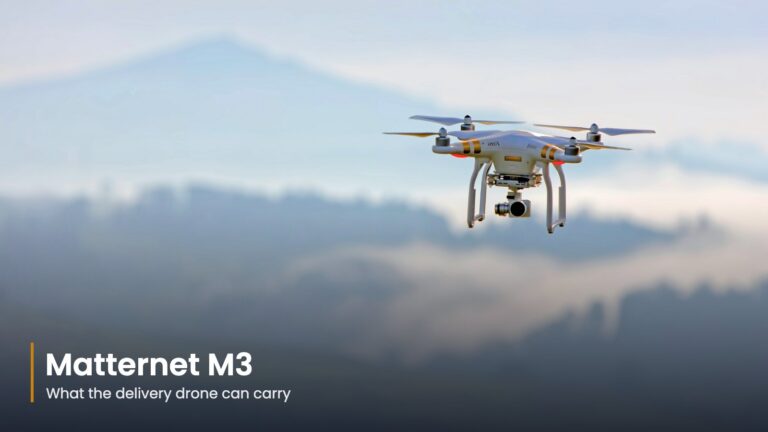
Amazon’s published maximum package weight is five pounds. Weight is only one part of eligibility. The product and its packaging must fit the aircraft’s size, balance and handling requirements, and the item must be stocked at the participating facility.
Likely use cases include small electronics, chargers, household essentials, health products and other compact items that customers may value quickly. Large boxes, heavy products and orders containing several bulky items remain better suited to ordinary delivery vehicles.
The five-pound limit should not be interpreted as five pounds of merchandise plus unlimited packaging. Amazon determines eligibility at checkout using the prepared order, not the customer’s estimate of the product’s weight.
Availability can also change as inventory moves. An item that qualifies for drone delivery on one day may be unavailable from the relevant site later. Conversely, Amazon can expand the selection as it places more suitable inventory near the drone operation.
5. Can an Amazon drone really deliver in under an hour?
Amazon says the MK30 can deliver eligible orders within 60 minutes. The drone cruises at more than 60 mph, so the flight itself can be short for customers near the facility. Most of the promised hour includes selecting and packing the item, preparing the aircraft, conducting safety checks and completing both legs of the mission.
An under-an-hour promise is not the same as a guaranteed 10-minute flight for every order. Distance, order processing, weather, aircraft availability and other operations affect timing.
The real advantage appears when a lightweight item is needed immediately and local road travel is slow or indirect. A drone can fly a planned aerial route without traffic lights or congestion. The value is smaller when the customer is ordering several large items or does not care whether a package arrives today or tomorrow.
Prime Air therefore complements Amazon’s vans and same-day network rather than replacing them. Drones handle a narrow but time-sensitive part of the catalog; ground vehicles remain the efficient choice for most volume.
6. MK30 safety, obstacle avoidance and bad weather
The MK30 uses onboard cameras and other sensors to detect obstacles and other aircraft. Amazon says it can adjust its path when it identifies a hazard and can return to the station when a delivery cannot be completed safely.
The aircraft is designed for beyond-visual-line-of-sight operations. That means it can travel farther than a person standing at the launch site could directly see, subject to Amazon’s FAA authorizations and operating procedures.
Amazon says the MK30 can operate in light rain and in temperatures below freezing or above 110°F. Those claims expand the useful operating window compared with a fair-weather demonstration drone, but they do not make the aircraft all-weather.
Thunderstorms, strong winds, icing, heavy precipitation, poor visibility or changing local conditions can delay or cancel flights. Customers should expect drone availability to be more sensitive to weather than van delivery.
Amazon previously described an extensive MK30 test program involving more than 6,300 flights and 1,070 flight hours before the aircraft entered service. Test totals demonstrate development effort, but ongoing public reporting and operational data will matter more as the fleet grows across populated areas.
The safest way to read any delivery-drone claim is conditionally: the system is designed to perform within documented limits, not to complete every delivery regardless of circumstances.
7. How loud is the MK30, and what do its cameras record?
Amazon says the MK30’s perceived sound is comparable to a residential HVAC unit and that it is substantially quieter than the previous generation. Perceived noise depends on distance, background sound, route, altitude and how frequently aircraft pass a location.
A single brief flight and a high-volume delivery corridor can produce different community reactions. The Cleveland launch will provide a practical test of how residents experience the aircraft during normal operations rather than at a demonstration event.
The MK30 also uses cameras for navigation and obstacle avoidance. Amazon says those onboard cameras are not watched live by a person and that collected information is used for safety and customer-experience improvement.
That explanation answers part of the privacy question, but residents may reasonably want more operational detail: how long data is retained, what triggers review, how imagery is protected and how a person can report a concern. As drone delivery scales, transparent policies will matter alongside technical assurances.
Residents should distinguish sensing from surveillance. A drone requires visual perception to avoid wires, trees, people and pets. The relevant privacy questions concern how that sensor data is processed, stored, accessed and deleted.
8. What role does the FAA play?
Commercial package delivery by an aircraft is not simply a matter of a retailer deciding to fly. Amazon operates Prime Air under Federal Aviation Administration approvals, including rules and authorizations that support commercial delivery and beyond-visual-line-of-sight operations.
FAA environmental documents for other MK30 markets describe an aircraft with a maximum takeoff weight of about 83.2 pounds, a 7.5-mile maximum operating range and potentially high daily flight volumes at mature facilities. Those documents provide useful context, but figures proposed for another market should not be presented as the confirmed daily schedule for North Randall.
Amazon says every Prime Air operation is FAA-authorized. At the same time, the exact authorization path for a new location may not always appear as a separate city-specific public document. The FAA adopted a broader programmatic environmental approach in 2026 that can streamline review for sites fitting defined conditions.
Local governments generally cannot write their own aircraft-safety rules or control navigable airspace, because those are federal responsibilities. They may still influence land use, facility approvals, emergency coordination and other local matters, depending on state and federal law.
For customers, the important point is that Prime Air is a regulated aviation operation. For policymakers, the continuing question is whether public information and complaint channels remain clear as approvals become more standardized.
9. Amazon Prime Air versus Zipline and Wing
Northeast Ohio is unusually interesting because Amazon’s new service operates close to Cleveland Clinic’s Zipline prescription-delivery program. The two systems solve different versions of the last-mile problem.
Amazon uses the MK30 to carry eligible retail products from its fulfillment network. Zipline’s local service focuses on prescriptions and uses its own aircraft and delivery architecture. Their service radii, payload systems and customer workflows are not interchangeable.
Wing, which recently expanded a partnership with Lowe’s and DoorDash, follows another model built around retailer locations and its lightweight delivery aircraft. Our guide to Lowe’s drone delivery explains how that rollout differs from Amazon’s warehouse-centered approach.
The competition is no longer only about which drone flies farthest. Operators are competing on inventory access, safe delivery-point availability, regulatory approvals, aircraft reliability, noise, customer demand and the economics of maintaining many local sites.
For Cleveland residents, overlapping programs could reveal which deliveries people actually value. Prescriptions, urgent household items and forgotten accessories may justify aerial speed more clearly than routine purchases that already arrive efficiently by road.
How to check whether your address is eligible
Customers should use Amazon’s own address and checkout flow rather than a third-party coverage map.
- Sign in to the Amazon account connected to the Cleveland-area delivery address.
- Confirm that the full street address is selected.
- Look for eligible products carrying a drone-delivery option.
- Review or set the designated delivery point when prompted.
- Check the current delivery estimate and any fee displayed before ordering.
An address may fail eligibility because it is outside the service area or lacks a safe drop point. An individual order may fail because the product is too heavy, too large, unavailable locally or incompatible with drone handling.
Do not place people, pets or objects in the delivery area to watch the aircraft more closely. A blocked area can cause the drone to abort the delivery. Observe from a safe distance and follow the instructions shown in the order experience.
What the Cleveland launch could change
The strongest signal from North Randall is operational integration. Prime Air is using a major fulfillment site to make drone delivery another option inside Amazon’s existing shopping flow.
If the model works, the company can repeat a standard combination: suitable warehouse, approved launch infrastructure, selected nearby inventory and an eligible residential service zone. That is more scalable than building a unique stand-alone aviation facility for every city.
The hard part is utilization. Aircraft, maintenance, charging, trained staff and compliance cost money whether customers order by drone or not. The service needs enough suitable orders within a relatively small radius to keep the fleet productive.
Community acceptance is equally important. Low incident rates, clear communication and predictable routes can build trust. Frequent noise, confusing eligibility or unanswered safety questions can slow adoption even when the underlying aviation approval is in place.
Watch these indicators over the next several months:
- Expansion of the eligible product catalog
- Changes in the customer fee
- The number of addresses offered drone delivery
- Weather-related availability during an Ohio winter
- Public reporting on aborted deliveries and precautionary landings
- Additional Prime Air locations in Ohio
- Coordination with local emergency services
Frequently asked questions
Is Amazon drone delivery available in Cleveland now?
Yes, Prime Air began deliveries from North Randall on September 24, 2026. Service is limited to eligible addresses and orders in the operating area; it is not available throughout the entire Cleveland metro.
How far can the Amazon MK30 fly?
Amazon publishes a service range of up to 7.5 miles from the delivery facility. Address eligibility may be narrower because of airspace, route and delivery-point requirements.
How much can an Amazon delivery drone carry?
Eligible packages can weigh up to five pounds and must meet Amazon’s size, packaging, inventory and handling requirements.
Does the Amazon drone land in the yard?
No. Amazon says the MK30 descends to approximately 13 feet above the selected delivery point, checks the area and releases the package without landing.
Can Amazon’s drone fly in rain or snow?
Amazon says the MK30 can fly in light rain and across a wide temperature range. Actual availability depends on current wind, precipitation, icing, visibility and operational limits. A cold day alone does not guarantee a flight, and severe weather can stop service.
Are people watching through the drone cameras?
Amazon says the cameras are used for navigation and safety and are not viewed live by a person. The company says collected data is used for safety and improving the customer experience.
How fast is Amazon drone delivery?
Amazon advertises delivery within 60 minutes for eligible orders. The aircraft cruises above 60 mph, but total delivery time also includes order preparation and safety checks.
Is Amazon drone delivery free for Prime members?
Do not assume the service is automatically free. Earlier Cleveland launch information described a $4.99 option, but the current fee and terms should be checked at checkout because pricing can change and may vary by account or promotion.
What happens if a pet walks into the delivery area?
The MK30 scans for hazards before releasing a parcel. Amazon says the aircraft may cancel the drop and return to the facility if a person, pet, vehicle or unexpected object makes the location unsafe.
Is the MK30 autonomous?
The aircraft navigates and completes the delivery highly autonomously, while trained flight monitors oversee operations from the ground. Autonomous flight does not remove Amazon’s operational or regulatory responsibilities.
Sources and editorial method
This article uses Amazon’s Prime Air technology page and Amazon’s MK30 launch material for aircraft and delivery-process claims; the FAA’s public drone environmental-review page for regulatory and aircraft context; and Northeast Ohio reporting for the North Randall launch details. Claims about current local availability are dated September 26, 2026. Manufacturer statements are attributed where independent operating data is not public.
Primary references:
- https://www.primeair.amazon/technology
- https://www.aboutamazon.com/news/operations/mk30-drone-amazon-delivery-packages
- https://aws.amazon.com/solutions/amazon/one-amazon-lane/air-delivery/
- https://www.faa.gov/uas/advanced_operations/nepa_and_drones
- https://northrandall.com/hiddenblog/
Last checked: September 26, 2026. Service boundaries, fees, eligible inventory and operating availability may change.
Sources
Primary references used for factual claims in this article.
Continue Reading
All News