FCC Component Rule Gets Its First Case: Huawei Chips Blocked in a Dash Cam and a Video Transmitter

The FCC component rule has its first enforcement case, and it is not a drone. On 22 October 2026 the Commission announced that its Office of Engineering and Technology had blocked a dashboard camera and a wireless video transmitter from the US market because each one contained a chip made by HiSilicon, the chip design arm of Huawei.
Drone makers should still pay attention. The rule that caught these two devices is the same one that, since 13 October, stops a new US-built drone from getting FCC authorization if a logic-bearing part from a Covered List company sits inside it. We explained how that works for DJI parts in our guide to the FCC component rule. This first case shows how the FCC intends to use it.
Table of Contents
What the FCC blocked, and why HiSilicon counts
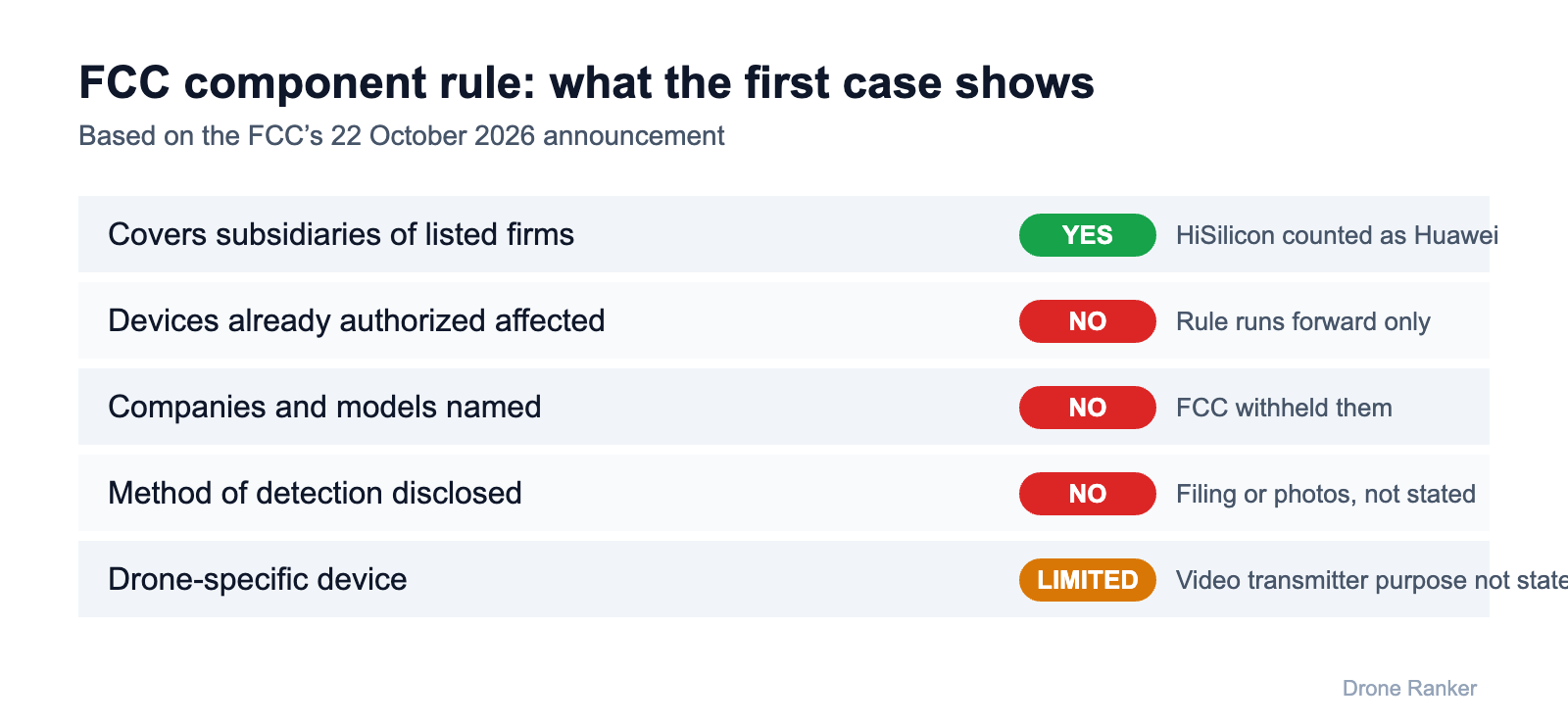
The FCC did not name the manufacturers, the models or the chip part numbers. It said only that one device was a dash cam and the other a wireless video transmitter, and that neither had been authorized. Chairman Brendan Carr credited the engineering office with stopping them before they could get the approvals needed for sale, and called video devices with such chips “an obvious and unacceptable risk.”
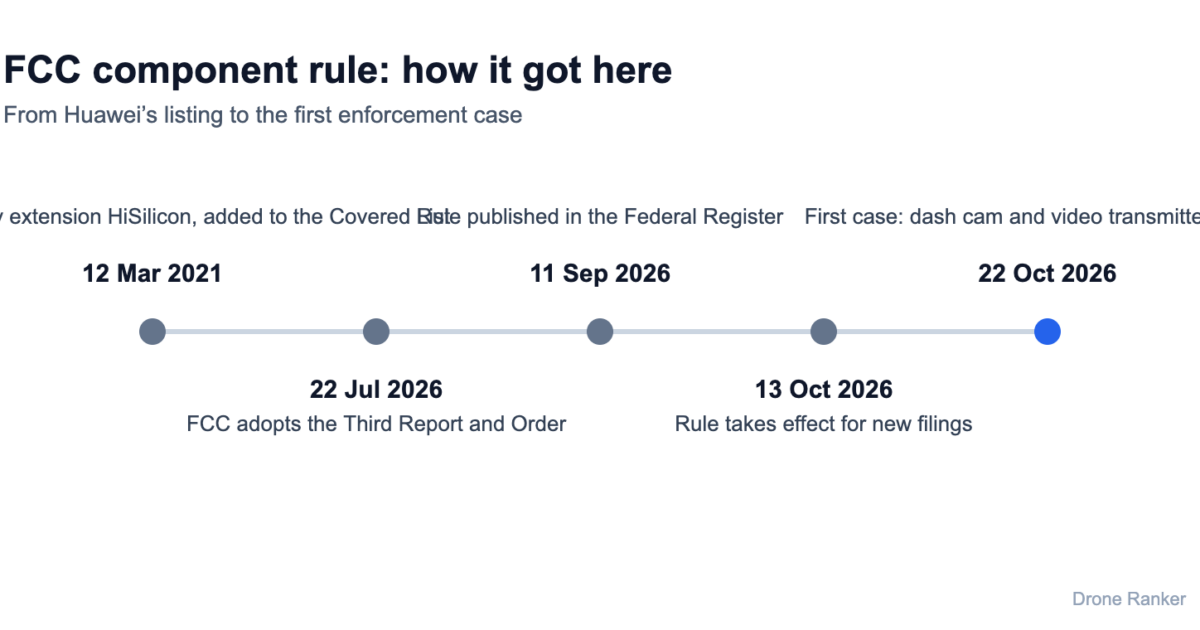
HiSilicon is not on the Covered List by name. Huawei has been on it since 12 March 2021, and the list states that each named company includes its subsidiaries and affiliates. The FCC’s announcement describes HiSilicon as a Huawei subsidiary, which puts its chips inside the rule. As evidence of risk, the Commission quoted HiSilicon’s own marketing, which describes the chip as designed for the surveillance market with built-in face detection.
How the FCC component rule works in practice
The rule comes from the Third Report and Order adopted on 22 July 2026, published in the Federal Register on 11 September and in force from 13 October. It runs forward only. Equipment authorized before 13 October keeps its authorization, and applications already pending that day are exempt unless the applicant later adds, swaps or changes a logic-bearing component.
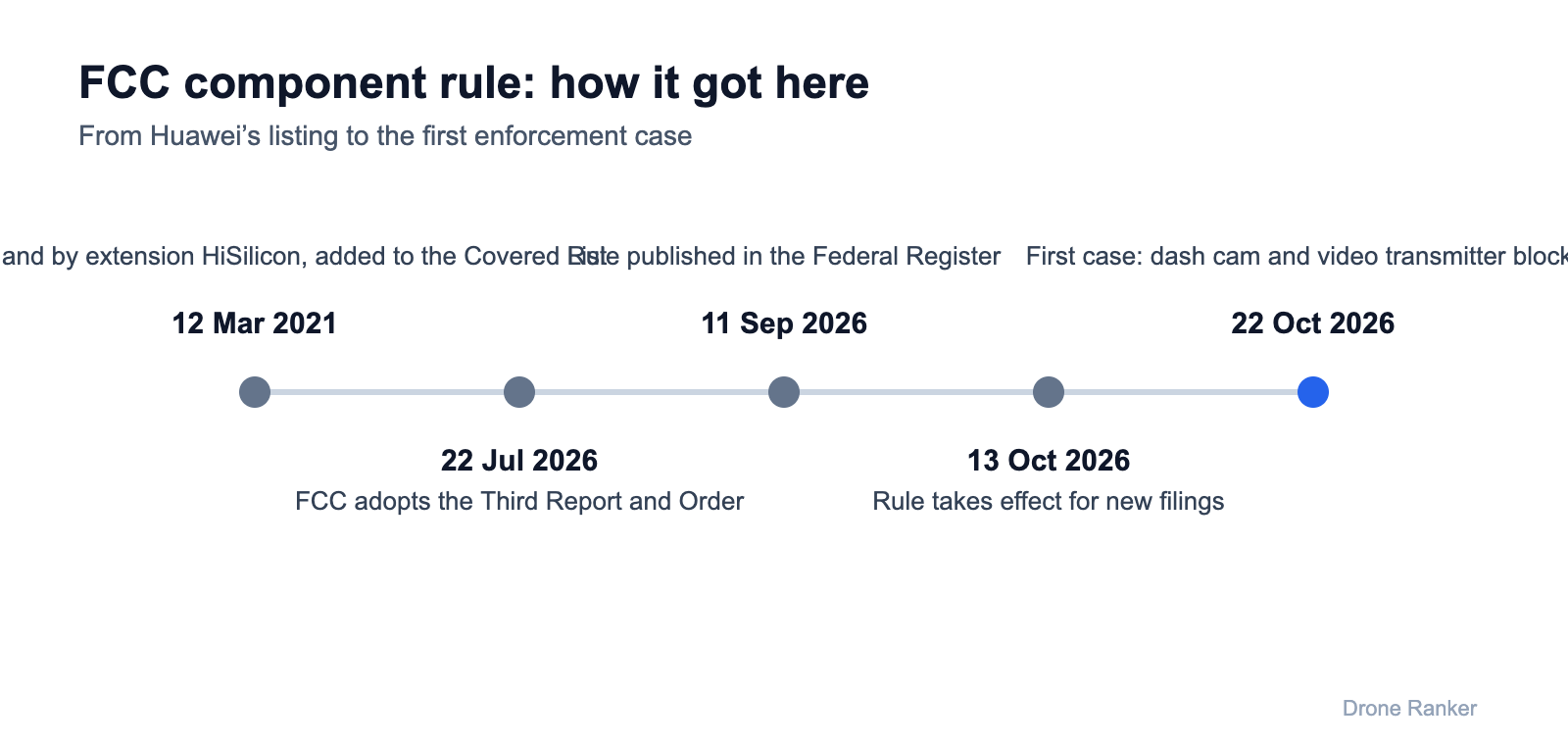
That timing tells us something about this case: both blocked filings must have been made, or amended, on or after 13 October. The FCC announced the outcome nine days after the rule took effect.
The rule still rests on paperwork. The applicant attests that the device contains no covered component, and a false attestation can lead to a fast revocation. The FCC’s release does not say whether these applicants disclosed the HiSilicon parts or whether staff spotted the chips in the internal photos that every certification filing must include. A pending proposal in the same order asks whether every application should carry a hardware and software bill of materials, which would put the chip list in the filing itself.
What the FCC component rule means for US drone makers
For drones, the FCC already treats foreign-produced data transmission devices as critical components on the Covered List. The release does not say whether the blocked video transmitter was built for drones, but drone video links are exactly the kind of product where a camera or encoder chip from a listed company could sit on the board.
The practical lesson for a US drone company is to audit every logic-bearing part before filing, not after. A board that reuses a DJI flight controller, an Autel module or a HiSilicon video encoder will not pass, and amending a pending application to change such a part removes the grandfather protection. Buyers should not see any change to drones already on shelves, because existing authorizations stand. For the bigger picture of what can still be sold, see which drones are banned in the US and the foreign drones the FCC has exempted.
What to watch next
Two things will show how strict the FCC component rule becomes. The first is whether the FCC names companies in future cases, which would create real pressure on suppliers. The second is the bill-of-materials proposal: if every filing must list its chips, enforcement moves from spotting parts in photos to checking a declared list. The FCC also has a 29 October open meeting with drone items on the agenda, and we will update this page if either question moves.
The Friday Brief
One email a week on what changed in drones
FCC and FAA rule changes, DJI leaks checked against filings, and the week’s new comparisons. Every Friday, nothing else.
Free. Unsubscribe in one click. Sent with Kit; see our privacy policy.
Follow us on Google too: add Drone Ranker as a preferred source →
Continue Reading
All News