FCC Drone Ban Public Comments: Massive 98.6% Rejection

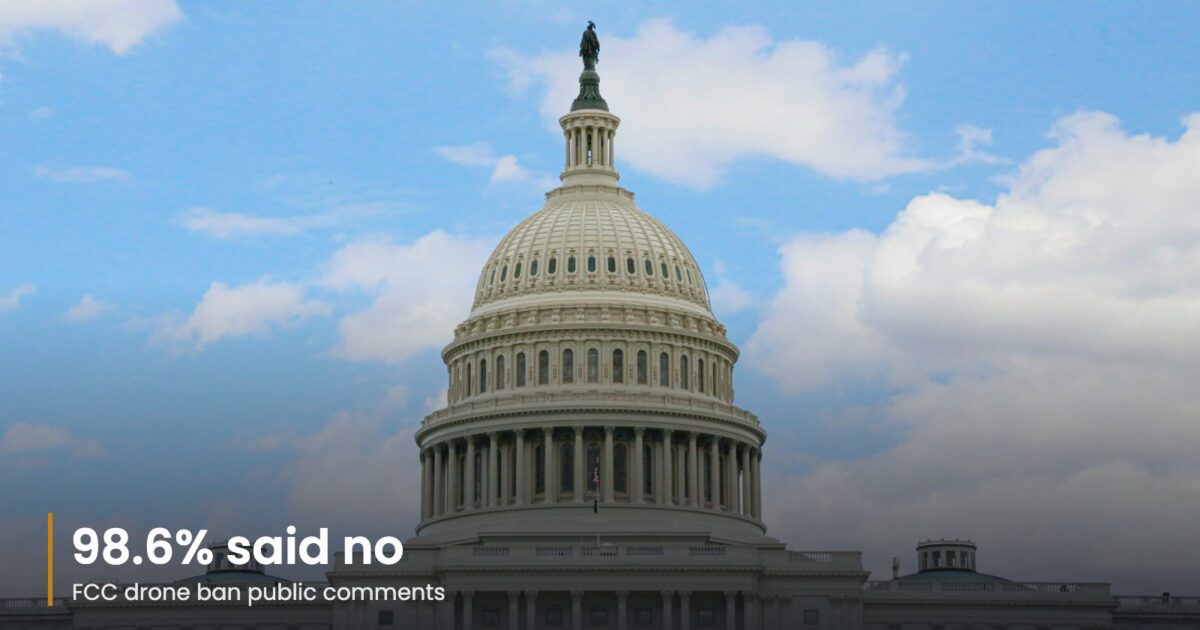
FCC drone ban public comments have delivered an unusually one-sided message: a third-party analysis found that 98.6% of 3,824 readable filings opposed the proposed rule as written.
That does not automatically kill the proposal, and it is not an official FCC vote. But it does show how strongly drone pilots, public-safety agencies, businesses and manufacturers reacted to a plan that could restrict the future importation and sale of certain previously authorized foreign-made drones.
For DJI owners, the immediate answer is simple: the FCC has not ordered existing owners to stop flying their drones, and the September 2 comment deadline was not a ban date. The important question now is what the agency does with the record.
Table of Contents
FCC Drone Ban Public Comments: The Numbers at a Glance
| Readable filings analyzed | 3,824 |
| Opposed to the rule as written | 98.6% |
| Rejected the proposal outright | About 77% |
| Supported the security goal but not the current wording | About 21% |
| Supported the proposal as written | 16 filings, or about 0.4% |
| Final FCC decision issued? | No |
The FCC drone ban public comments were reviewed by Pilot Institute, and the figures come from its analysis of the public record, as reported by TechRadar. They should be read as an analysis of submitted comments, not as a scientific survey of all U.S. drone users.
What Did the FCC Actually Propose?
The FCC drone ban public comments respond to PS Docket No. 26-189, which asks whether the FCC should prohibit the continued importation and marketing of certain previously authorized foreign-produced drones and critical components that are on the agency’s Covered List and meet its proposed definition of “military-grade.”
The word “military-grade” sounds narrow, but the proposed technical categories are broad. They include some drones or components involving LiDAR, thermal imaging, agricultural dispensing, automated docking, heavier aircraft and certain swarm or coordinated-flight capabilities.
The Federal Register notice focuses on future importation and marketing. It does not announce that every foreign-made drone is grounded, nor does it publish a final model-by-model ban list.
Our earlier DJI ban 2026 explainer covers the proposal’s full technical scope and the consumer models that may intersect with it.
Why Are DJI Owners Watching This So Closely?
Several current DJI products use technology named in the FCC’s proposed categories. The DJI Air 3S, Mini 5 Pro and Neo 2, for example, use forward-facing LiDAR as part of their obstacle-sensing or low-light navigation systems.
That does not mean the FCC has individually banned those models. It means their published specifications create a possible overlap with the proposal’s wording. The distinction matters because LiDAR in a compact camera drone is normally a safety feature, not evidence that the aircraft was designed for military use.
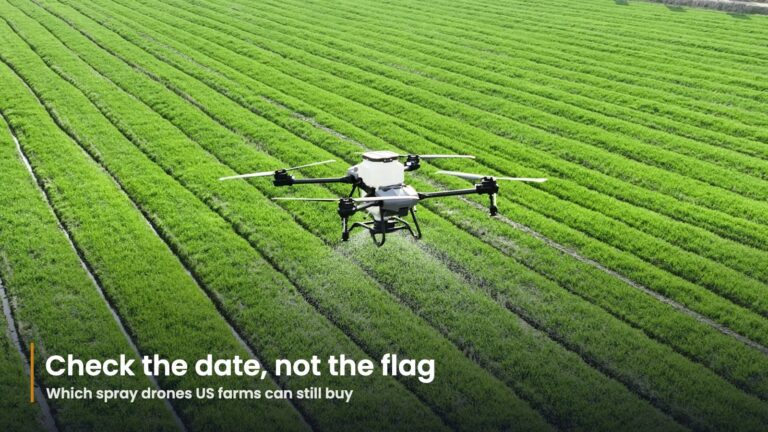
Thermal enterprise drones, DJI Dock systems and Agras agricultural aircraft could raise similar questions under other portions of the proposal. This is one reason many commenters argued that the definition could capture ordinary commercial equipment far beyond what most consumers would consider military hardware.
Does 98.6% Opposition Stop the FCC Drone Ban?
No. FCC drone ban public comments are not referendum ballots, and agencies do not decide rules simply by counting comments for and against.
The FCC is expected to consider the substance of the filings: legal arguments, security evidence, technical definitions, economic effects and proposed alternatives. A detailed submission from a public-safety organization or manufacturer may carry different analytical weight from a short individual comment, even though both belong in the public record.
Still, the scale of opposition is politically and procedurally significant. It gives the agency a large record of claimed real-world consequences to address if it moves forward without narrowing the rule.
What Happens After the Comment Period?
The FCC drone ban public comments window closed on September 2, 2026. There is no automatic ban triggered by that deadline.
The FCC can now take several paths:
- adopt a final rule close to the proposal;
- narrow the definition of covered “military-grade” equipment;
- create exemptions for consumer, public-safety, agricultural or other uses;
- change the implementation schedule or transition period;
- seek more information before acting; or
- decline to adopt the proposal in its current form.
Until the agency publishes a final action, headlines claiming that every named DJI model has already been banned go beyond the public record.
Can Existing DJI Owners Keep Flying?
Nothing in this proposal tells existing owners to stop operating an otherwise legal drone. Flight operations remain governed by FAA rules, airspace restrictions, Remote ID requirements and any applicable state or local laws.
The main risk addressed in this FCC proceeding is future market access: whether covered products that were previously authorized could continue to be imported or marketed in the United States.
That could eventually affect availability, replacement aircraft and fleet planning, especially for professional operators. It is not the same as remotely disabling drones that consumers already own.
Should You Buy a DJI Drone Right Now?
A buyer should separate operational legality from supply risk.
- For recreational buyers: there is no final FCC order making current DJI drones illegal to fly. Avoid paying panic-driven prices based only on social-media rumors.
- For professional fleets: consider long-term access to replacement aircraft, batteries, controllers and service support before making a large purchase.
- For LiDAR or thermal models: follow the final wording closely because those technologies are specifically relevant to the proposed categories.
Separate tariff changes can also affect pricing even without a final FCC rule. Our DJI drone price and tariff guide tracks that issue independently.
Why the Debate Extends Beyond DJI
The proceeding is broader than one brand. Fire departments use thermal drones to find people and hotspots. Farmers use aircraft that dispense agricultural products. Infrastructure teams rely on mapping sensors and automated docks. Entertainment companies use coordinated fleets for drone light shows.
Those uses explain why many commenters supported legitimate national-security screening while objecting to a definition they considered too broad. Even opposition to the current proposal should not automatically be interpreted as opposition to security reviews.
The same uncertainty has already affected smaller brands. See our report on the Skyrover S1 FCC ban question and our coverage of the HOVERAir VERSA FCC dispute.
What the Comment Record Does—and Does Not—Prove
The FCC drone ban public comments establish that the current wording has generated broad and detailed resistance from people who say they rely on foreign-made drones. The record gives the agency concrete claims about costs, equipment availability, emergency response, farming, inspection work and consumer use that may need to be addressed in any final decision.
However, the record does not prove that every commenter has the same concern or that every filing is equally persuasive. It also does not settle the underlying national-security debate. A public docket can contain technical evidence, legal analysis, personal experience, form letters and brief statements, and the FCC evaluates those materials rather than treating them as identical votes.
The 98.6% figure therefore supports one careful conclusion: the proposal as written faces overwhelming opposition among the readable submissions analyzed. It should not be stretched into a claim that the FCC has reversed course, that no drone could present a security risk or that a final rule is impossible.
Three Signals DJI Owners Should Watch Next
- A final FCC order: This is the document that would confirm whether the proposal was adopted, narrowed or rejected and would identify the legal basis and effective date.
- Definitions and exemptions: Small changes to the meaning of LiDAR, thermal imaging, docking or coordinated flight could determine whether consumer and public-safety products are captured.
- Implementation guidance: Retailers, importers and fleet operators will need to know which authorizations remain valid, whether a transition period applies and how replacement components are treated.
Until those signals appear, product-specific “banned” lists circulating online should be treated cautiously. A drone can be relevant to a proposed technical definition without having been individually prohibited by the FCC.
Four Different “DJI Ban” Questions Readers Should Separate
The phrase “DJI ban” is often used for several different legal and commercial questions. Treating them as interchangeable is one of the main reasons online discussions become confusing.
- Can a new product receive FCC equipment authorization? This affects whether a new radio-frequency device can enter the U.S. market through the normal authorization process. It is primarily a market-access question, not an instruction to owners to stop flying.
- Can a previously authorized product continue to be imported and sold? This is the central issue in PS Docket No. 26-189. The proposal asks about continued importation and marketing of certain covered products that already received authorization.
- Can a government agency purchase or use a particular drone? Federal, state or local procurement restrictions can apply to public agencies even when private consumers can still buy or operate the same aircraft.
- Can an owner legally fly the drone? Operational questions generally fall under FAA airspace and flight rules rather than this FCC marketing proceeding. A sales restriction does not automatically cancel an owner’s ability to operate equipment that was legally purchased.
This distinction is especially important when interpreting FCC drone ban public comments. Many filings discuss supply, repair parts, fleet replacement and economic effects because the proposal concerns future availability. Those concerns are serious, but they are different from an immediate nationwide grounding order.
Readers should also watch the date and document behind any claim. A public notice asks questions, a proposed rule describes a possible approach, a final order announces an agency decision and an effective date determines when enforceable requirements begin. Headlines that collapse all four stages into the word “ban” can create unnecessary panic.
FAQ
What do the FCC drone ban public comments mean for owners?
The FCC drone ban public comments show strong opposition to the proposal as written, but owners should wait for a final agency order before treating any model as newly prohibited. Current flight operations remain subject to existing FAA and local rules.
Is DJI banned in the United States now?
There is no blanket order making every DJI drone illegal to own or fly. The current proceeding concerns potential restrictions on the future importation and marketing of certain covered, previously authorized foreign-made products.
Did 98.6% of all Americans oppose the proposal?
No. The figure describes readable submissions in the FCC docket analyzed by a third party. Public commenters are self-selected, so the result is not a representative poll of the entire U.S. population.
Is the DJI Air 3S banned?
The FCC has not published a final notice individually banning the Air 3S. Its forward-facing LiDAR makes it relevant to the debate, but technical overlap with a proposed category is not the same as a final product designation.
When will the FCC make a final decision?
No confirmed decision date has been published. The agency must review the record and decide whether to adopt, revise or abandon the proposal.
Bottom Line
The FCC drone ban public comments reveal overwhelming opposition to the proposal as currently written, but they do not decide the case by themselves.
For current owners, there is still no order grounding existing DJI drones. For buyers and professional operators, the real uncertainty is future supply if the FCC applies new restrictions to previously authorized products.
Drone Ranker will update this report when the FCC publishes a final decision, narrows the covered categories or announces an implementation timeline.
Editorial note: Updated September 16, 2026. The 98.6% figure is a third-party analysis of readable public filings, not an official FCC poll or final agency finding. This article distinguishes proposals from adopted rules.
Sources
Primary references used for factual claims in this article.
Continue Reading
All News