Spray Drone Sales Fell 59% in 2025 While Sprayed Acres Rose: What Farmers Should Know

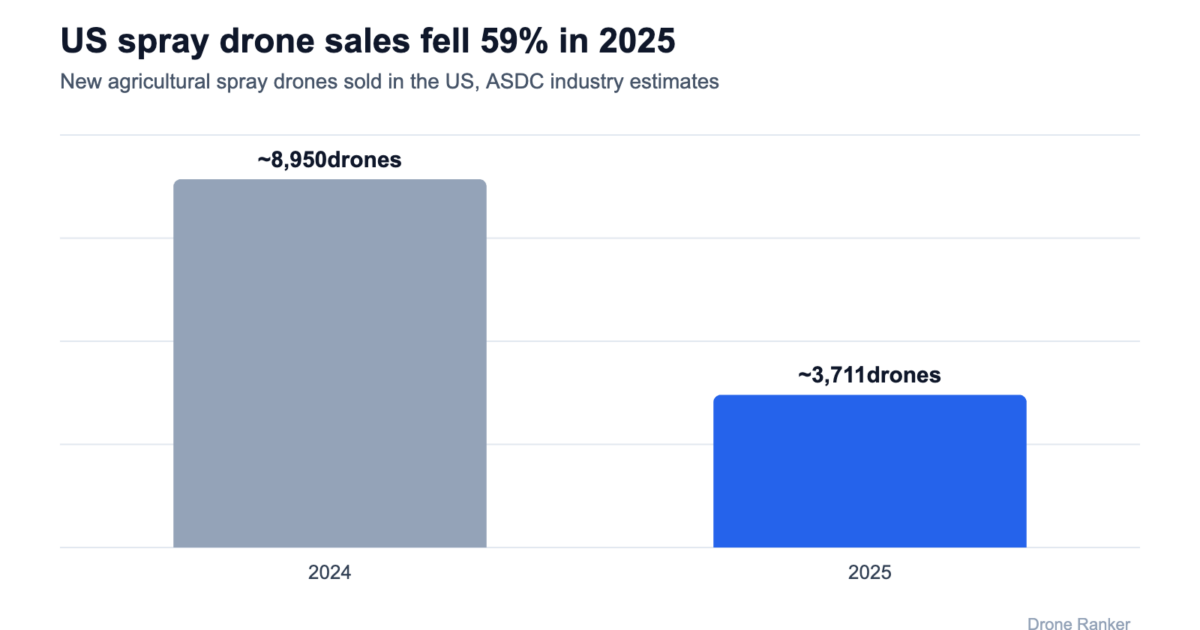
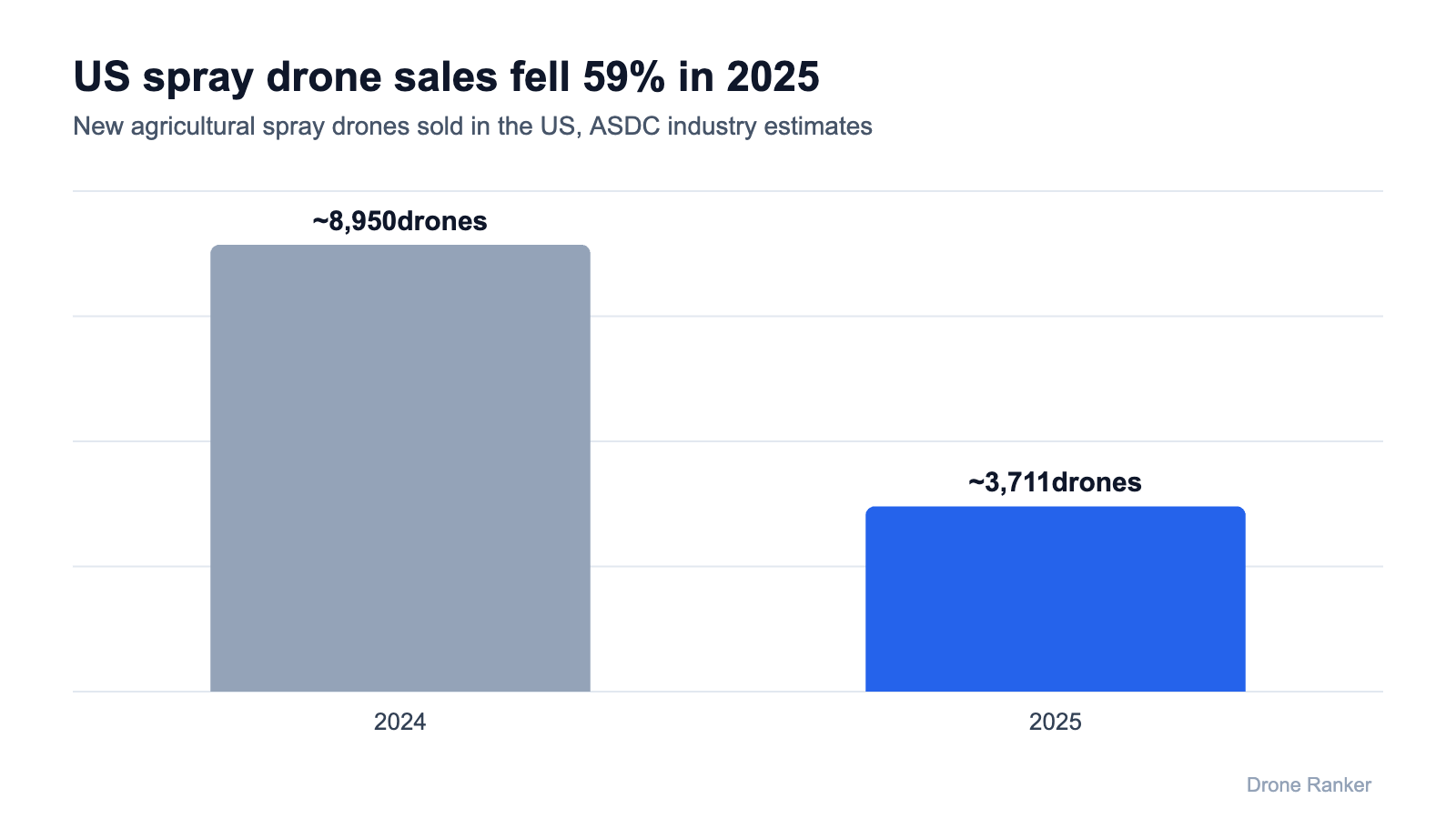
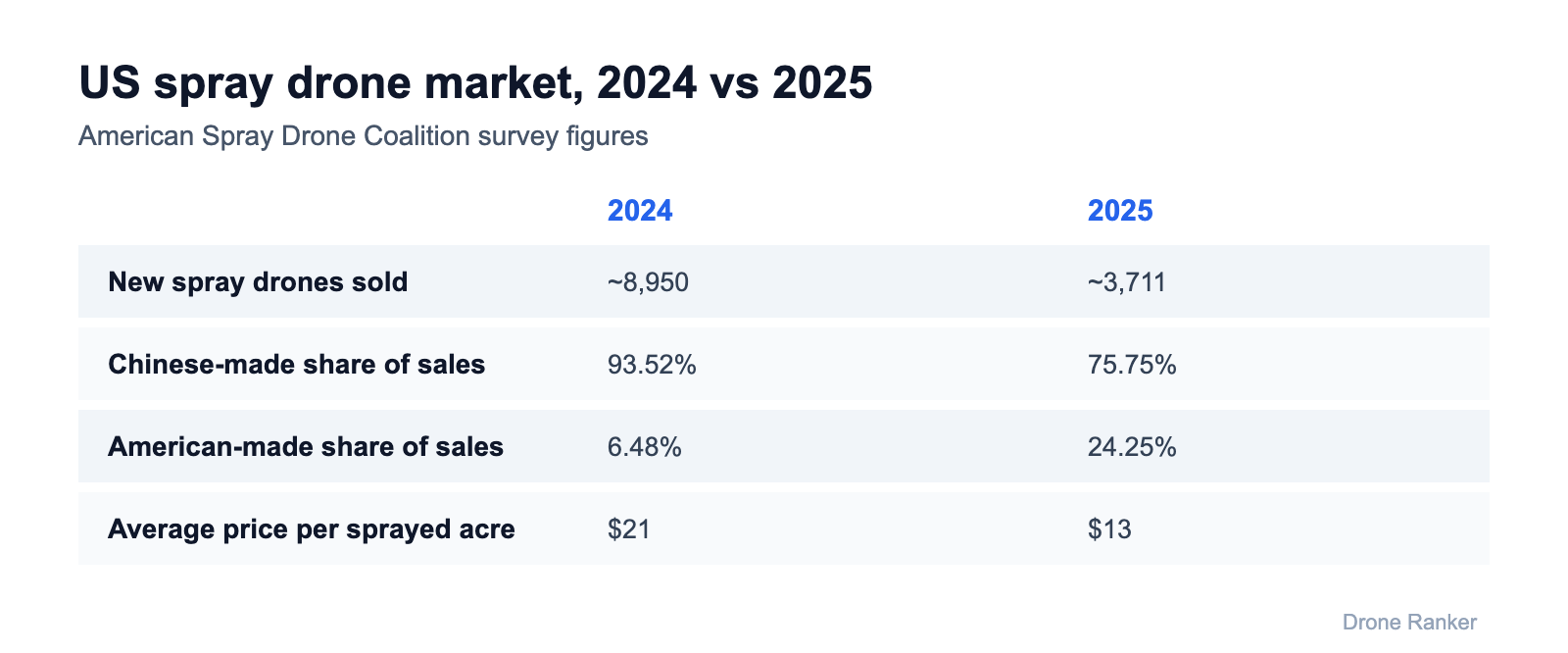
US spray drone sales fell by more than half in 2025. The American Spray Drone Coalition (ASDC), whose members handle close to 80% of US sales, counts about 3,711 new agricultural spray drones sold last year, down from about 8,950 in 2024, a 59% drop. The group blames the hold US Customs and Border Protection placed on DJI shipments in October 2024 under the Uyghur Forced Labor Prevention Act. DJI calls the forced-labor claims behind that hold categorically false.
The odd part is that farms did not spray less. The same survey puts drone-sprayed acreage at more than 16.4 million acres in 2025, up 58.7%. The coalition is now using those numbers to ask the FCC to keep farm sprayers out of its next restriction, DroneXL reported on 21 October.
Table of Contents
Spray drone sales fell while sprayed acres rose
The gap is explained by operators, not aircraft. The FAA counted 1,710 approved Part 137 drone operators in 2025, up 58.3%, and the average area each one treated held at about 9,584 acres. More businesses flying existing drones harder covered the acreage that new sales did not.
ASDC president Eric Ringer told AgFunderNews the drop “was not because of a lack of demand.” His description of the market is one of scarcity: some DJI shipments clear customs and others sit in ports, so operators buy whatever existing DJI models they can find.
These are industry estimates. The survey polled Part 137 certificate holders, and its unit counts come from manufacturer and distributor interviews and public statements rather than customs records. Treat the 59% as a direction and a scale, not an audited figure.
Where the buyers went instead of DJI
Mostly to other Chinese brands. Chinese drones made up 75.75% of US spray drone sales in 2025, down from 93.52% in 2024. XAG and EAVision gained the most. American-made aircraft nearly quadrupled their share, to 24.25%, but the coalition reads that as filling the hole DJI left rather than a shift in preference.
The survey backs that reading. Of the operators who answered, 49% said they would pay no premium at all for an American-made drone, and another 41% would pay at most 25% more. Productivity ranked first, and country of origin had little influence on what they buy. US builders such as Texas-based Hylio are working on the cost gap, but domestically sourced batteries and motors still cost far more than Chinese parts.
Cheaper spraying, and a complaint about who is doing it
The average price farmers paid per sprayed acre fell 38%, from $21 to $13. ASDC members put part of that on undercutting by operators flying without a Part 137 certificate. For a farmer, cheaper spraying looks like good news. For a certified operator who has paid for the paperwork, insurance and training covered in our guide to starting a drone business, it is margin pressure from people skipping the rules.
What the FCC military-grade proposal would do to farm drones
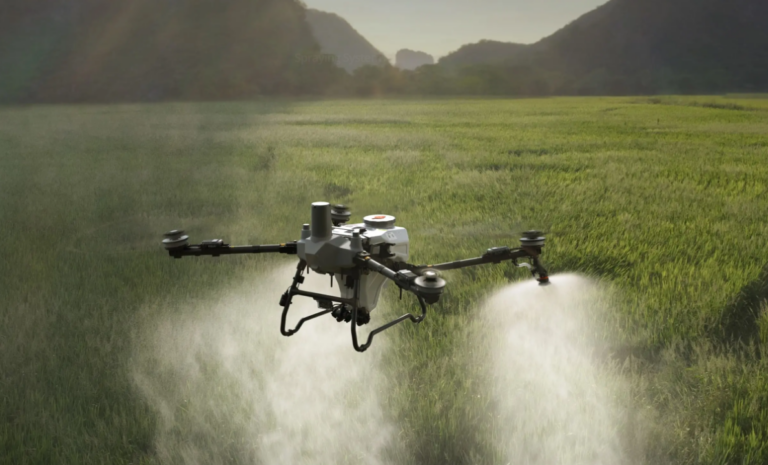
The FCC’s July proposal would treat as “military-grade” any foreign drone able to dispense “economic poison”, the FAA Part 137 term for pesticides, defoliants and drying agents. That definition describes every crop sprayer. If adopted, importing and marketing foreign drones in that category, and their critical components, would stop 180 days after the order is published in the Federal Register. Drones already on farms could keep flying, and domestic aircraft would be exempt. Comments closed on 2 September and, as of 21 October, the FCC bureaus had not adopted the plan.
The ASDC filing asks for three things:
- Exclude FAA Part 137 spray drones from the military-grade category, with a multi-year off-ramp for operators.
- Guarantee two years of imports of flight controllers, motors, batteries and repair modules for the more than 15,000 spray drones already in US service, with audits so “spare parts” cannot become new aircraft.
- Send tariff revenue from foreign drone imports into a rebate for buyers of American drones from makers holding FCC approval.
What this means if you are buying a spray drone now
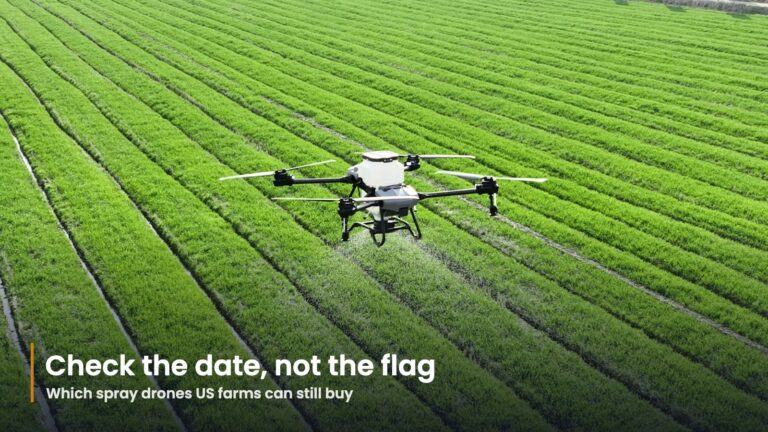
The parts request is the one that matters most to a farm. A typical spray drone package costs more than $40,000, according to the filing, and a fleet that cannot get motors or batteries loses value fast. If you are buying, ask the dealer two questions: when did this model get its FCC authorization, and what parts stock do they hold. Our guide to which spray drones US farmers can still buy explains why the FCC date matters more than the brand, and our XAG P200 analysis shows how a 2026 flagship can end up with no US route at all.
My read: the sales collapse is a supply story, not a demand story, and the acreage numbers prove it. That gives the coalition a strong argument for a parts window. A full Part 137 exclusion is a harder ask, because the FCC’s concern is the spraying capability itself. Watch the FCC agenda for any move on the military-grade notice.
The Friday Brief
One email a week on what changed in drones
FCC and FAA rule changes, DJI leaks checked against filings, and the week’s new comparisons. Every Friday, nothing else.
Free. Unsubscribe in one click. Sent with Kit; see our privacy policy.
Follow us on Google too: add Drone Ranker as a preferred source →
Continue Reading
All News