Beijing Drone Ban 2026: 7 Rules Owners and Tourists Must Know

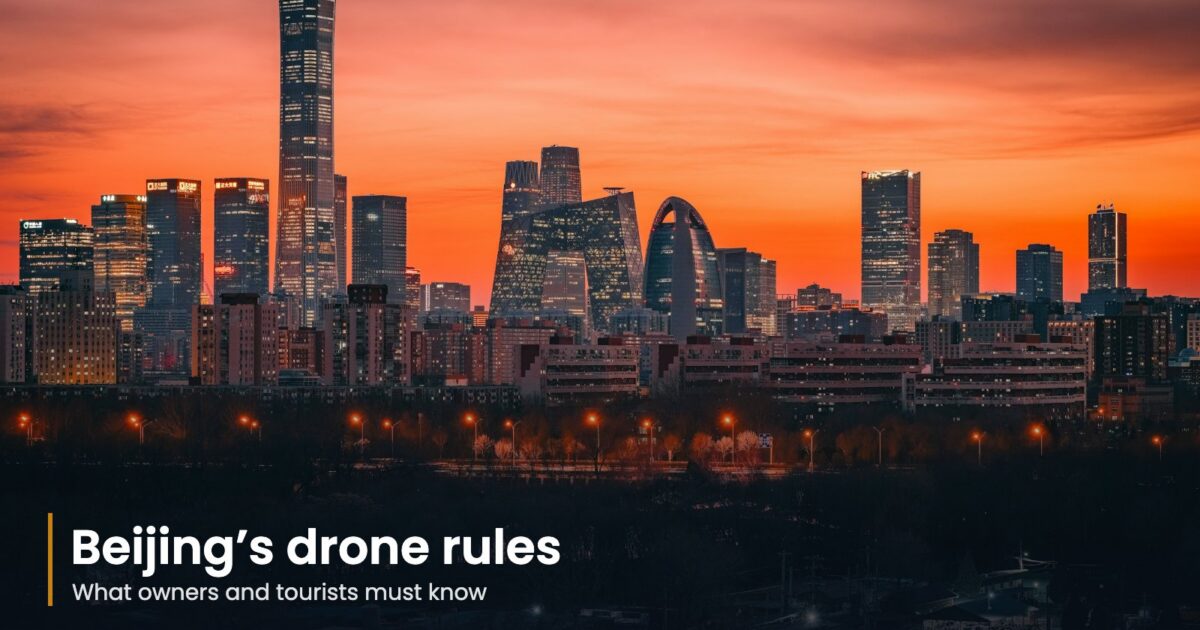
Beijing’s drone ban becomes much stricter on November 15, 2026. From that date, most people and businesses will not only be barred from flying a drone anywhere in the municipality; they will also be prohibited from possessing, storing, selling, renting, or bringing drones and listed core components into Beijing.
The revised Beijing drone ban is unusually broad. It affects residents, companies, visitors, online sellers, and anyone who planned to travel through the Chinese capital with a camera drone in their luggage. It is a Beijing municipal rule, however—not a nationwide ban on drone ownership across China.
Here are the seven parts of the Beijing drone ban that owners and travelers need to understand before the November deadline.
Beijing Drone Ban: Quick Answer
| Question | Answer |
|---|---|
| When does the revised rule start? | November 15, 2026 |
| Can an ordinary person fly a drone in Beijing? | No. The entire municipality is designated controlled airspace. |
| Can an ordinary person keep a drone at home? | Not after the rule takes effect, unless a specific exception applies. |
| Can a tourist bring a drone into Beijing? | No. Transporting or carrying a drone or covered core component into the municipality is prohibited. |
| Is this a China-wide ownership ban? | No. The revised regulation applies to Beijing municipality. |
| What is the final disposal date? | Existing equipment must be handled or moved out by November 14, 2026. |
The primary sources are the revised regulation published by the Beijing Public Security Bureau and the Beijing municipal government’s disposal guidance. Both are in Chinese, so pilots should use the original text for any legal or compliance decision.
1. The Rule Bans Possession, Not Only Flights
The most important Beijing drone ban change is the move from flight control to possession control. Article 3 of the revised regulation says that Beijing’s entire administrative area is controlled airspace and prohibits drone flight activity. It then separately prohibits possessing or storing unmanned aircraft and their core components.
That distinction matters. Keeping a drone switched off in an apartment, office, hotel room, warehouse, or vehicle does not avoid the rule. The text targets possession and storage independently of whether the aircraft is ever powered on.
The exact list of covered “core components” is to be prepared by Beijing’s economic and information technology authorities with other departments. Owners should not assume that removing a battery, camera, or propellers turns an aircraft into an unrestricted object.
2. You Cannot Carry a Drone Into Beijing
The Beijing drone ban also prohibits transporting or carrying an unmanned aircraft or covered core component into the municipality. For travelers, this may be the most practical part of the new policy.
A tourist who plans to visit Beijing and then continue to another Chinese city should not treat a hotel as temporary drone storage. The wording covers bringing the equipment into Beijing in the first place. That includes arrival by air, rail, or road unless an authorized exception applies.
Travelers should confirm the latest requirements with their carrier and Chinese authorities before departure. Airline battery rules remain a separate issue: compliance with cabin-baggage rules does not create permission to take a drone into Beijing.
3. Sales, Rentals, and Online Listings Are Covered
The Beijing drone ban prohibits selling or renting drones and covered core components to individuals and organizations inside Beijing. It also requires e-commerce businesses to take effective measures to enforce that restriction.
This means the rule reaches beyond local hobby shops. Online marketplaces and sellers must consider the buyer’s location and delivery destination. A product being available on a national shopping platform does not mean it can lawfully be delivered to a Beijing address.
Production, assembly, unauthorized modification, software unlocking, and changes to factory performance parameters are also restricted. Anyone working with custom FPV builds or modified firmware should read the official text closely rather than assuming the regulation only targets ready-to-fly camera drones.
4. Limited Special-Purpose Exceptions Remain
The Beijing drone ban is not written as an absolute prohibition for every government-approved use. Article 6 provides a special-support process for certain activities after a security assessment by municipal public-security authorities and other departments.
The listed categories include counterterrorism and security work, emergency rescue, major events, teaching, technology research and development, manufacturing, and agricultural or forestry production. Approved organizations must establish purchasing, transport, storage, and use controls designed to prevent lending, loss, theft, or other security failures.
These are not automatic exemptions for anyone who describes a flight as research, agriculture, or emergency work. The rule calls for assessment and list-based management. Ordinary recreational filming, travel photography, real-estate shooting, and casual content creation are not listed as general exceptions.
5. Owners Have Four Ways to Handle Existing Drones
Official Beijing drone ban guidance gives current owners a transition period ending on November 14. The city describes four practical routes for equipment already in Beijing:
- Sell through an approved buyback location. District governments are expected to publish participating businesses and locations.
- Turn the aircraft in for scrapping and recycling. Government-designated collection points will verify the equipment.
- Ship it outside Beijing by EMS. The official guidance says verified outbound shipments can be sent without a delivery charge during the program period.
- Carry it out of Beijing yourself. Owners may move equipment by air, rail, or road before the revised regulation takes effect.
The municipal notice says equipment already stored in Beijing must be transferred outside the city or handled through an approved channel before November 15. Waiting until the final day creates obvious risks, including appointment availability, verification delays, packaging requirements, and battery-shipping restrictions.
6. The Subsidy Shrinks as the Deadline Approaches
For eligible individual owners whose aircraft previously completed police information verification, the city has published a time-limited subsidy schedule.
| Disposal method | September 12–October 31 | November 1–14 |
|---|---|---|
| Approved buyback | 30% of the transaction price, up to CNY 3,000 per aircraft | 15% of the transaction price, up to CNY 1,500 per aircraft |
| Scrapping/recycling | CNY 200 per aircraft | CNY 100 per aircraft |
| EMS shipment outside Beijing | Shipping fee waived, subject to verification | Shipping fee waived, subject to verification |
The higher buyback and recycling amounts therefore end on October 31. The subsidy is not described as a universal payment for every drone. Eligibility depends on prior information verification and use of the approved disposal channel.
7. Violations Can Mean Confiscation and Fines
The enforcement provisions separate illegal flying from other prohibited conduct. An unauthorized flight can result in an order to stop, confiscation of the aircraft, and a fine of CNY 1,000 to CNY 10,000.
Violations involving possession, storage, transport, sales, or illegal modification can result in confiscation. Individuals may face fines of CNY 500 to CNY 5,000, while organizations may face CNY 5,000 to CNY 50,000. Different penalties apply to e-commerce businesses that fail to implement the sales restriction, including higher ranges for platform operators.
Conduct that also violates public-security or criminal law may trigger additional consequences. The figures above summarize the published municipal text and should not be treated as personal legal advice.
Does the Beijing Drone Ban Apply Across China?
No. The Beijing drone ban applies within Beijing municipality. Drone operations elsewhere in China remain subject to national registration, airspace, real-name identification, and local restrictions. Other cities or sensitive areas may impose their own controls.
The difference is important because headlines can make the measure sound like a nationwide Chinese ban on owning a DJI, Autel, or other consumer drone. It is not. The jurisdiction is Beijing, although the Beijing drone ban is significant because it covers a very large municipal area and targets storage as well as flight.
AP reported that the revision follows months of tighter local controls, including a May sales restriction and a real-name verification program for existing owners. Beijing had already treated the whole municipality as controlled airspace. The November rule closes the remaining path that allowed verified owners to keep registered aircraft under strict conditions.
What DJI and Other Drone Owners Should Do Now
Beijing drone ban owners should begin by confirming whether their equipment completed the earlier information-verification process. That status affects subsidy eligibility. They should then check their district government’s official channel for buyback and recycling locations rather than relying on an unverified social-media address.
Anyone shipping or carrying a drone out of Beijing should plan for lithium-battery rules separately. The safest route may depend on whether the battery can travel with the aircraft, must be carried in cabin baggage, or needs special packaging. Obtain instructions from the carrier or EMS service before arriving at a terminal.
Travelers should remove Beijing drone stops from their packing assumptions. If the trip includes another Chinese region where flying is permitted, consider secure storage outside Beijing rather than bringing the aircraft through the capital.
For readers comparing the Chinese rule with current US restrictions, our DJI ban 2026 explainer covers a very different legal mechanism. US FCC restrictions focus on equipment authorization and marketing of covered products; they do not create a general ban on owning or flying every previously authorized DJI drone.
Frequently Asked Questions
When does the Beijing drone ban take effect?
The revised regulation takes effect on November 15, 2026. Existing owners have until November 14 to use an approved disposal route or move equipment outside Beijing.
Can I keep a DJI drone in a Beijing apartment if I never fly it?
For an ordinary owner, no. The rule separately prohibits possession and storage, so leaving a drone switched off does not avoid the restriction.
Can tourists bring drones into Beijing?
The revised text prohibits transporting or carrying drones and covered core components into the municipality. Tourists should leave the equipment outside Beijing unless they have a confirmed authorized exception.
Is China banning all drones?
No. This is a Beijing municipal regulation, not a nationwide prohibition on drone ownership. National rules and other local restrictions still apply elsewhere in China.
How much is the Beijing drone buyback subsidy?
For eligible verified individual owners, an approved buyback completed by October 31 can receive 30% of the sale price up to CNY 3,000 per aircraft. From November 1 through 14, that falls to 15% up to CNY 1,500.
Are commercial and research drones exempt?
Not automatically. Certain public-safety, emergency, education, research, manufacturing, agriculture, and forestry uses may receive special support after a security assessment and approval process.
Bottom Line
The Beijing drone ban is one of the strictest municipal drone rules currently in force. Starting November 15, ordinary possession and storage become prohibited alongside flight, sales, rentals, and transport into the city.
Owners who qualify for the transition program have a short window to use the higher buyback or recycling subsidy. Visitors should treat the rule as a packing restriction as well as a flight restriction. Most importantly, this is a Beijing-specific measure—not evidence that private drone ownership has been prohibited throughout China.
Sources
Primary references used for factual claims in this article.
Continue Reading
All News