HOVERAir VERSA vs DJI Neo 2: Which Self-Flying Camera Is Better?

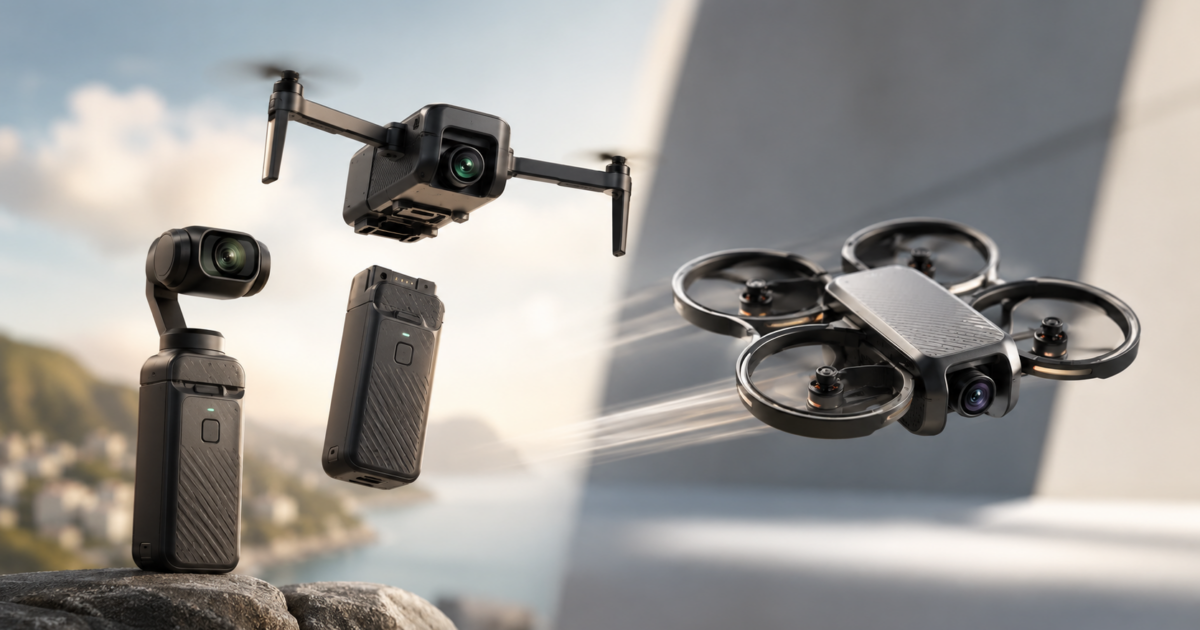
HOVERAir VERSA vs DJI Neo 2 is a pocket gimbal that flies against a drone that films you. If you want a self-flying camera today, the DJI Neo 2 is the easier recommendation: its specs are published and it has real obstacle sensing. The HOVERAir VERSA is the more interesting idea, a three-axis handheld pocket camera that becomes an autonomous flying camera when you attach its flight module, but as of August 11, 2026 HOVERAir had not published its sensor, video, weight, flight time or price.
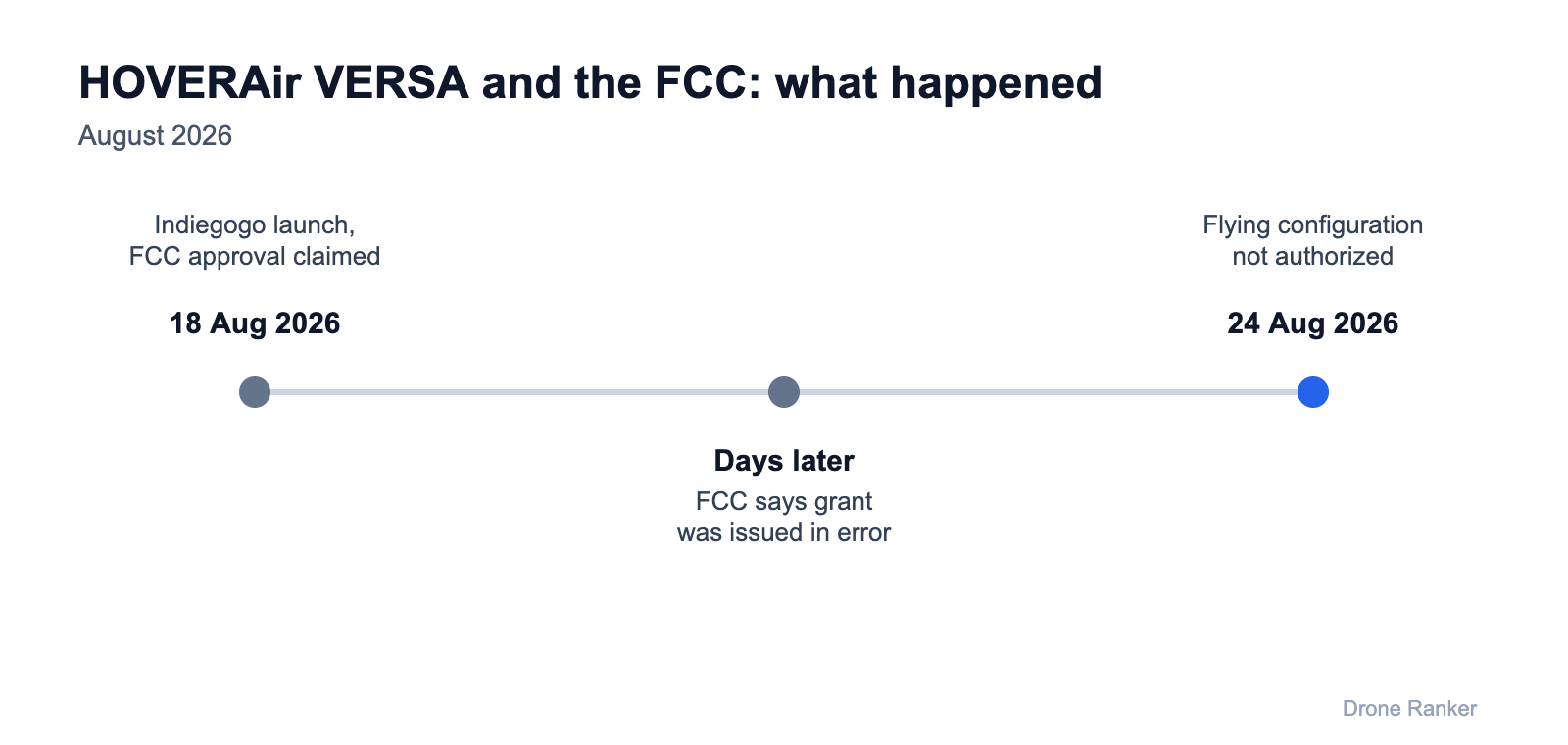
Note: the VERSA’s US status changed after this comparison was written; see our report on the FCC action. A Neo successor has also shown up in leaked packaging, covered in our DJI Neo 3 leak report.
So this comparison separates what is confirmed from what isn’t, and doesn’t fill the gaps with rumors.
Table of Contents
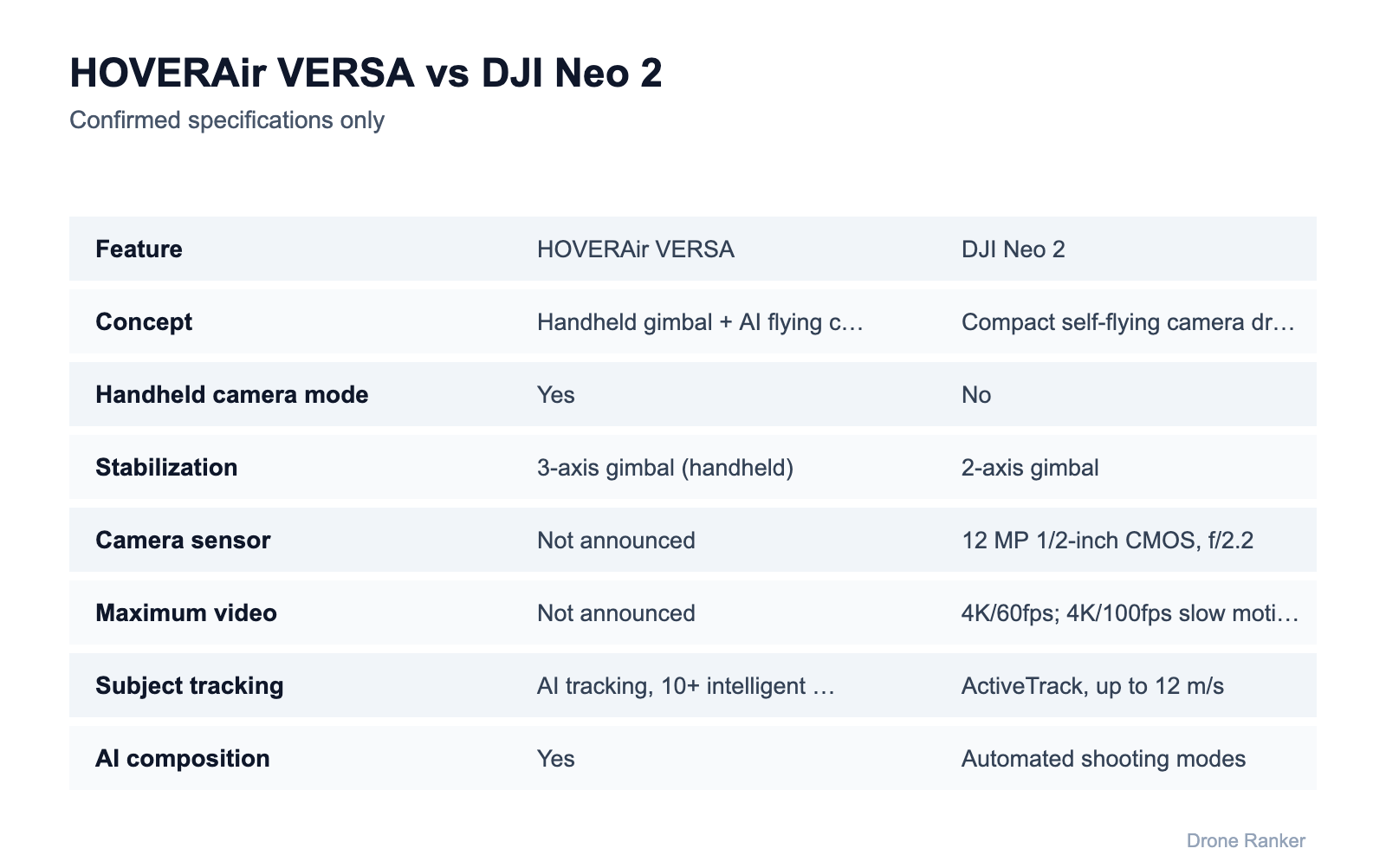
HOVERAir VERSA vs DJI Neo 2: confirmed specs
| Feature | HOVERAir VERSA | DJI Neo 2 |
|---|---|---|
| Concept | Handheld gimbal + AI flying camera | Compact self-flying camera drone |
| Handheld camera mode | Yes | No |
| Stabilization | 3-axis gimbal (handheld) | 2-axis gimbal |
| Camera sensor | Not announced | 12 MP 1/2-inch CMOS, f/2.2 |
| Maximum video | Not announced | 4K/60fps; 4K/100fps slow motion |
| Subject tracking | AI tracking, 10+ intelligent flight modes | ActiveTrack, up to 12 m/s |
| AI composition | Yes | Automated shooting modes |
| Obstacle sensing | Not fully disclosed | Omnidirectional vision + forward LiDAR + downward IR |
| Gesture control | Not fully disclosed | Yes |
| Traditional RC control | Not announced | Yes, with compatible hardware |
| Weight | Not announced | 151 g |
| Internal storage | Not announced | 49 GB |
| Maximum flight time | Not announced | Up to 19 min |
| Price and release | Not announced; previewed for 2026 | On sale |
The Neo 2 figures come from DJI’s published specifications. HOVERAir’s VERSA page confirms the three-axis handheld gimbal, the detachable flying configuration, AI tracking and intelligent shooting features, but has no full spec table.
The VERSA is not just a drone
This is the reason the VERSA could exist next to the Neo 2. Say you travel alone. With the Neo 2 you launch from your palm, let it track you, grab a few aerial sequences, land, and go back to filming with your phone or another camera. The VERSA is designed to remove that switch: film a walking vlog on its handheld gimbal, then attach the flight module and the same camera goes into the air. HOVERAir says its core autonomous flying needs no controller or piloting skills.
For solo travel vloggers, the question shifts from “which small drone should I buy?” to “do I still need to carry both a pocket camera and a drone?” That could be the VERSA’s strongest selling point.
Camera: known numbers vs a question mark
DJI has disclosed the Neo 2’s imaging hardware: a 12 MP 1/2-inch sensor behind an f/2.2 lens, 4K/60 recording and 4K/100 slow motion on a two-axis mechanical gimbal. That is a clear step up from the original Neo.
HOVERAir says the VERSA uses an advanced image processor meant to keep highlight and shadow detail and perform well in low light, but its official material gives no sensor size or maximum resolution. Until it publishes sensor, codec, bitrate, resolution and frame rates, any claim that the VERSA has the better camera is premature. The Neo 2 wins this one by default, because it can actually be measured.
Stabilization
The VERSA’s handheld camera uses a three-axis gimbal; the Neo 2 has two axes. Comparing those directly is misleading in the air, where drone movement, electronic stabilization and flight control all shape the footage. On the ground, though, the VERSA has an obvious edge: the Neo 2 can’t become a pocket gimbal when you land it, so the VERSA could replace a second device in your bag.
Tracking and AI framing
Both products are built to film their owner. The Neo 2 supports ActiveTrack with a cycling option, plus Spotlight, Point of Interest, SelfieShot, Dolly Zoom, MasterShots and QuickShots, and DJI claims tracking at up to 12 m/s under specified conditions. HOVERAir says the VERSA follows its subject automatically and offers more than 10 intelligent flight modes.
The VERSA’s more interesting claim is AI composition. HOVERAir says it can analyze a scene, suggest camera placement and then hold the chosen framing with an intelligent crop. Tracking answers where the person is; composition answers where they should sit in the frame. A drone can track you perfectly and still produce a boring shot, so if this works outside promotional demos it could be the VERSA’s best feature. Until owners and reviewers report on it, judge it on implementation, not marketing.
Safety in HOVERAir VERSA vs DJI Neo 2: the Neo 2 leads
The Neo 2 has an omnidirectional monocular vision system, forward-facing LiDAR and downward infrared sensing, designed to detect obstacles while it tracks you. The more a drone flies itself, the more that awareness counts. HOVERAir hasn’t published enough about the VERSA’s sensing to compare fairly, so the Neo 2 wins this for now.
The Neo 2 is also a conventional drone
DJI markets the Neo 2 as an easy self-flying camera, but it supports palm, gesture, smartphone and voice control (through a connected phone), plus compatible DJI remote controllers. You can start with selfie flights and later fly it conventionally. The VERSA is built around launching without a controller or manual input. For many people that simplicity is the point; if you enjoy flying, it’s a limitation.
3D Worlds
HOVERAir says the VERSA can fly a precise 360-degree pattern around a scene and reconstruct it as a 3D view you can explore from different angles. It calls this 3D Worlds, and pitches it for travel memories, landmarks, social posts and location showcases. There is no Neo 2 equivalent, and it underlines that HOVERAir sees the VERSA as a creative camera platform rather than another small quadcopter.
Weight, flight time and price
The Neo 2 weighs 151 g and DJI claims up to 19 minutes of flight. HOVERAir calls the VERSA pocket-sized but had not published a weight or flight time, and the full system includes the camera unit, handheld gimbal, detachable flying structure, battery and possibly accessories. Balancing camera hardware, three-axis stabilization, motors and battery in something pocketable is the hard part; if HOVERAir manages competitive flight time without bulk, the concept gets much stronger.
As of August 11, 2026, the official VERSA page gave no retail price or release date, so treat any precise price or spec list circulating before an announcement with caution.
Which one makes sense for you
Choose the Neo 2 if you want a self-flying camera now, with verifiable specs, obstacle sensing, ActiveTrack, the option of a conventional controller and a 151 g airframe; in short, if you want a drone.
Wait for the VERSA if you vlog alone, already carry a pocket gimbal and a small drone, prefer autonomous filming to piloting, and like the AI framing and 3D Worlds ideas. Its opportunity is making a separate handheld camera and a separate flying camera feel unnecessary.
The Neo 2 is the better buy today, simply because it is a finished product you can evaluate. The VERSA is the more intriguing concept, but camera quality, total weight, flight time, sensing and price will decide whether it becomes a better product, and HOVERAir hadn’t answered any of those when this was written.
Last updated: August 11, 2026. This comparison uses manufacturer-confirmed information; undisclosed VERSA specs are marked as not announced rather than estimated.
The Friday Brief
One email a week on what changed in drones
FCC and FAA rule changes, DJI leaks checked against filings, and the week’s new comparisons. Every Friday, nothing else.
Free. Unsubscribe in one click. Sent with Kit; see our privacy policy.
Follow us on Google too: add Drone Ranker as a preferred source →
Continue Reading
All News